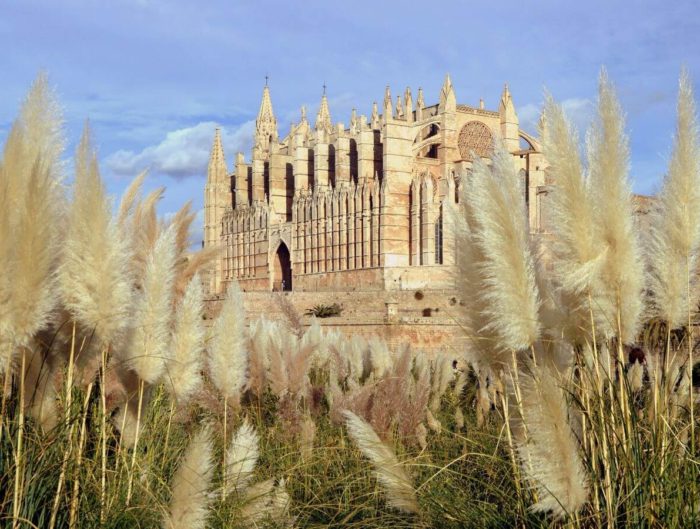
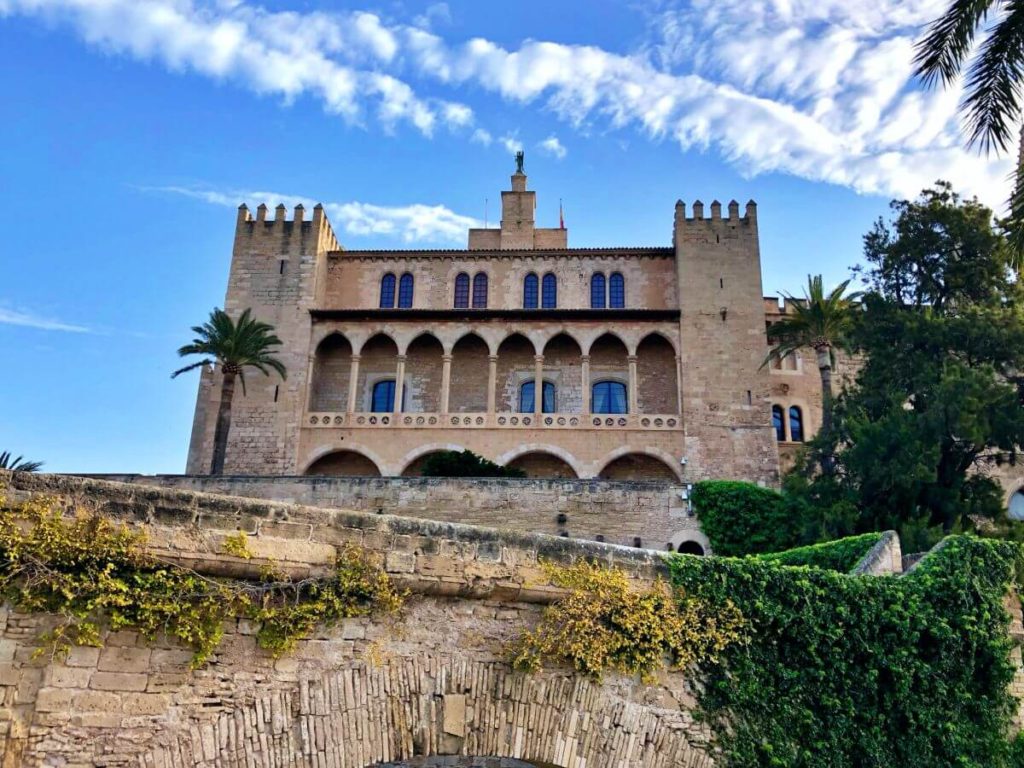
The Royal Palace of La Almudaina is one of Palma’s most important landmarks and a rewarding visit for anyone interested in Mallorca’s history. Standing opposite Palma Cathedral and beside the S’Hort del Rei gardens, this former fortress traces more than two thousand years of history, from the Roman settlement and the Islamic city of Madina Mayurqa to its present role as the official royal residence during visits to Mallorca.
Following extensive restoration completed in 2026, the palace offers a redesigned visitor route, newly opened rooms and updated displays. A chronological itinerary helps explain the development of the building and the former Kingdom of Mallorca.
The palace is managed by Patrimonio Nacional, the public body responsible for preserving and opening Spain’s royal heritage to visitors.
A redesigned visitor experience
The extensive restoration carried out by Patrimonio Nacional has brought the palace’s biggest transformation in decades.
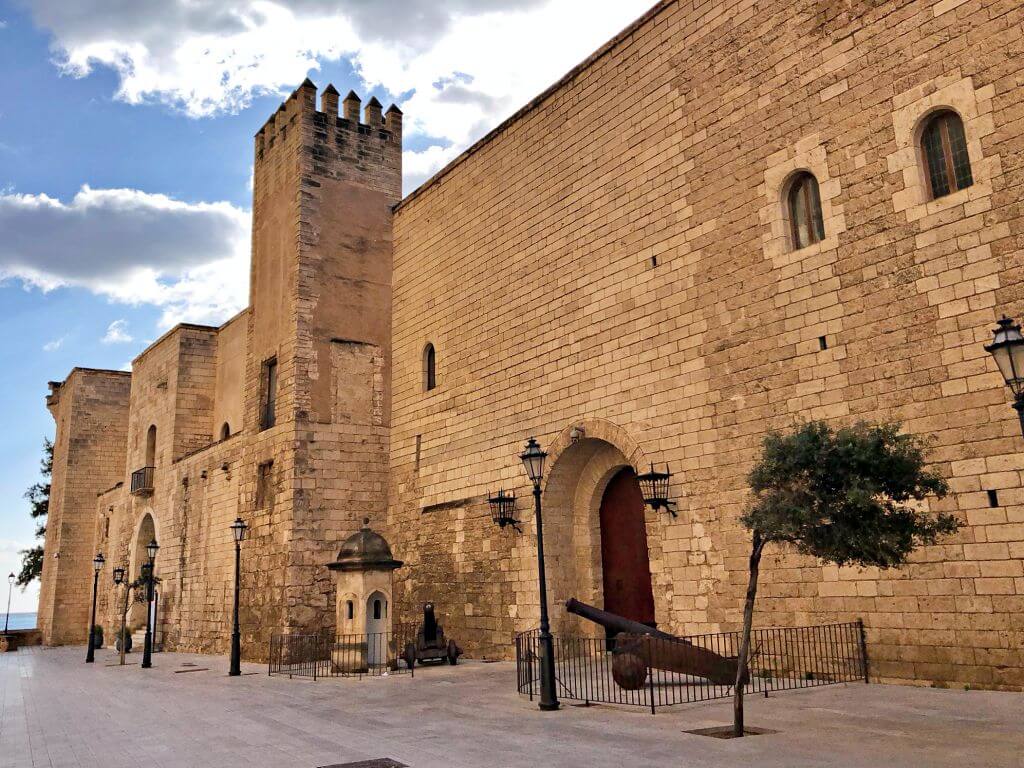
Visitors now enter through the Portal Mayor, crossing the main courtyard, the Patio de Armas, to reach the new Visitor Reception Centre. This fully accessible space includes ticket desks, a shop and lockers, with improved arrangements for entering the monument.
The visit follows a chronological route through the building’s history, from its Roman and Islamic origins to the Kings of Mallorca, the Crown of Aragon and the later Bourbon dynasty.
The updated displays combine audiovisual resources, interactive elements and a selection of historic works from Patrimonio Nacional’s collections, providing more context for the visit.
More than two thousand years of history
Although the palace’s present appearance largely reflects the Gothic building commissioned by King James II of Mallorca between 1305 and 1314, the site has been occupied since Roman times.
Under Islamic rule, it became the fortified palace of the rulers of Madina Mayurqa. Elements from that period survive within the present complex, including the Arab baths and other architectural structures.
After James I conquered Mallorca in 1229, the building became a residence for the Kings of Mallorca and later for the monarchs of the Crown of Aragon.
Today, it remains the official royal residence during official visits to the island.
The new visitor route
One of the main improvements has been the reorganisation of the route through the palace.
The exhibition begins on the ground floor of the King’s Palace, exploring the building’s development from Roman times to the establishment of the Kingdom of Mallorca.
Displays include archaeological finds, Roman coins, ceramics, historic furniture and objects associated with different periods of the palace’s history.
The route then returns to the Patio de Armas, where you can appreciate the building’s Mediterranean Gothic architecture and main façade.
From there, the visit continues to the upper floor.
The Queen’s Palace: newly opened rooms
A major addition following the restoration is the opening of the Queen’s Palace, a group of rooms previously reserved for receptions and official events.
These rooms explore the palace’s Bourbon period, with particular reference to Queen Isabella II’s visit to the Balearic Islands in 1860.
Visitors can now enter historic spaces that had never previously formed part of the public itinerary, making them one of the highlights of the redesigned visit.
The Throne Room
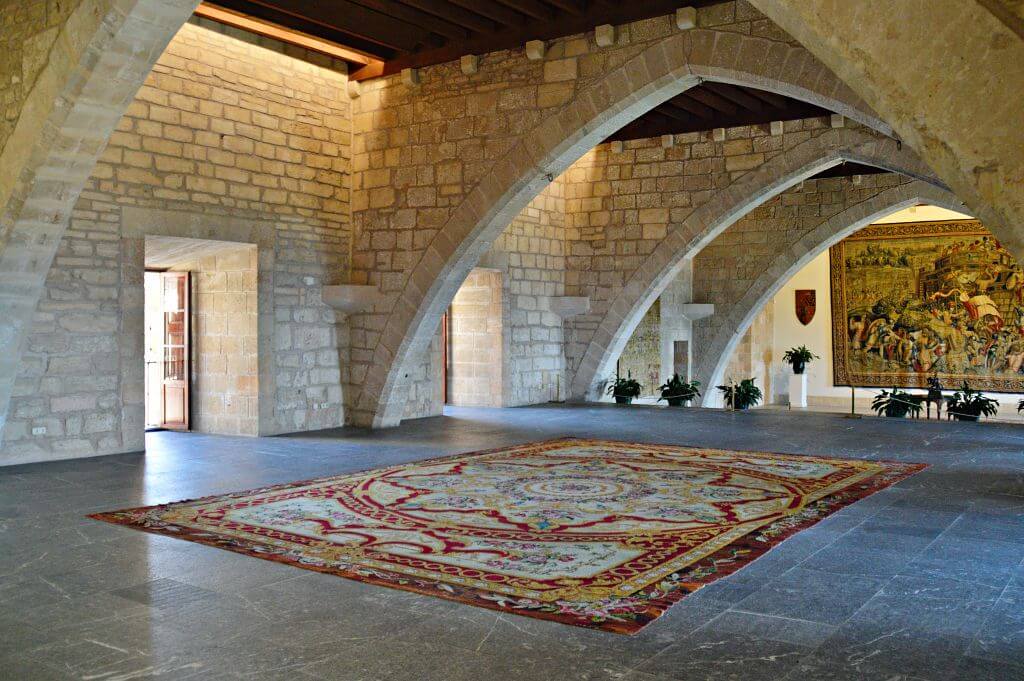
The restored Throne Room is one of the palace’s most representative spaces and a highlight of the visit.
Now presented as it was during the reign of Alfonso XIII, the room evokes the formal receptions held at La Almudaina and helps explain the building’s continuing role as the official royal residence in Mallorca.
The white marble lion
One of the most valuable objects on the new route is a striking 10th-century white marble lion, an Islamic sculpture originally associated with the pools of the former Queen’s Garden.
Previously displayed outside, it was restored and moved into an indoor gallery dedicated to the Islamic period to ensure its preservation.
Other notable objects include a 12th-century bronze griffin and the original medieval tympanum from the doorway of Saint Anne’s Chapel.
The Arab baths
The palace’s small Arab baths are among its most intriguing features. They were used as private baths by the Islamic rulers.
Parts of the original structure survive, helping visitors understand how a sophisticated heating system warmed the different rooms.
They are among the surviving traces of Madina Mayurqa within the palace.
Saint Anne’s Chapel
The visit finishes at Saint Anne’s Chapel, commissioned by James II.
Its doorway is one of Mallorca’s finest examples of late Romanesque architecture. Inside are the relics of Saint Praxedes, brought from Rome by James III.
Changing of the Guard at Almudaina Palace
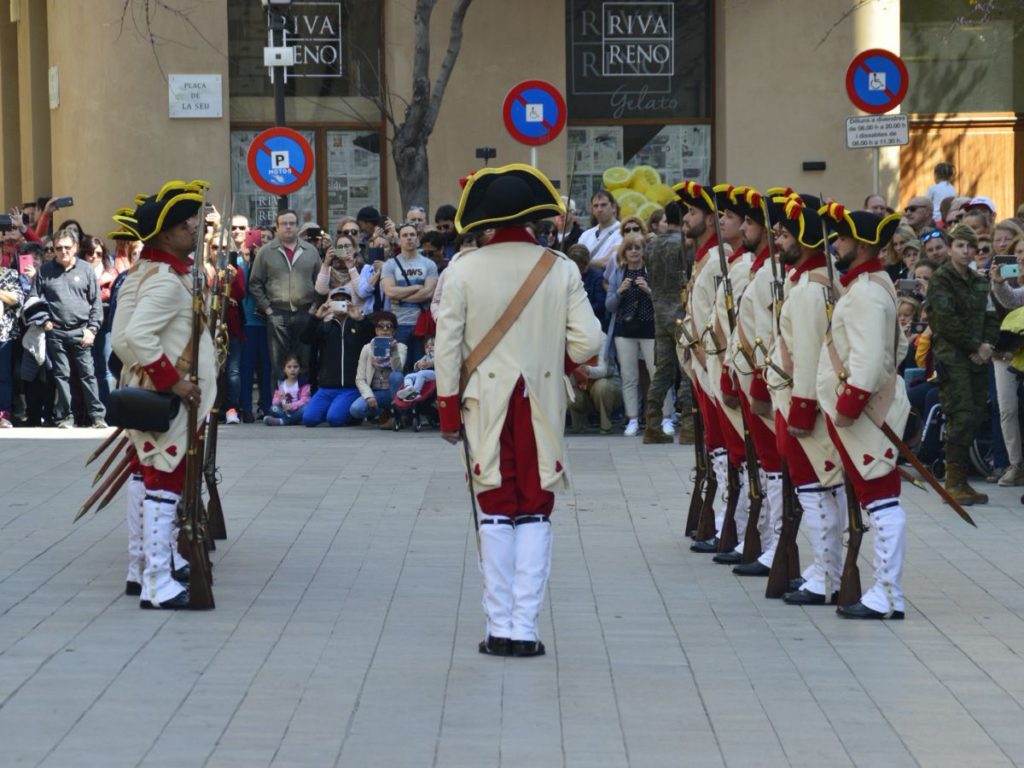
If you are visiting Palma on the last Saturday of the month, consider arriving in time for the ceremonial Changing of the Guard, starting at 12:00 outside the Royal Palace of La Almudaina.
Soldiers from the Palma Infantry Regiment No. 47 take part in historical uniforms inspired by those worn during the reign of Charles III. The ceremony recalls the changing of the guard when the palace was the residence of Mallorca’s viceroys.
The event is free to watch and offers a chance to see a historical military ceremony in Palma’s old town.
Arrive on time. The ceremony does not take place in July or August.
Is Almudaina Palace worth visiting?
In our view, yes.
The restoration has made the visit more informative and varied. The opening of the Queen’s Palace, the restored Throne Room, newly displayed historic objects and updated exhibitions help explain Mallorca’s history and the role this building has played over the centuries.
Its location opposite the Cathedral and beside the S’Hort del Rei gardens also makes it easy to combine with other sights in Palma’s historic centre.
Our tips
If you qualify for free admission, consider planning your visit around the free-entry periods offered by Patrimonio Nacional. Always check current opening arrangements, as official events can affect access.
Allow around an hour to an hour and a half to explore at a relaxed pace. Look beyond the grand rooms: the Arab baths, Saint Anne’s Chapel and the objects added after the restoration are also worth your attention.
If you are visiting on the last Saturday of the month, outside July and August, aim to arrive a few minutes before 12:00 to watch the Changing of the Guard before entering the palace.
Almudaina Palace: practical information
Address: Carrer del Palau Reial s/n, Palma, opposite the Cathedral.
Opening hours: always check before visiting, as official royal events or Patrimonio Nacional activities may affect access.
— Winter, October to March: Tuesday to Sunday, 10:00–18:00. Last admission at 17:00.
— Summer, April to September: Tuesday to Sunday, 10:00–19:00. Last admission at 18:00.
— Ticket sales and admission close one hour before the palace.
— Closed on Mondays.Admission: paid entry, with free admission for eligible visitors, including children under 5 and people with a recognised disability of 33% or more. Check the full free admission conditions.
Free-entry periods on Wednesdays and Sundays:
— April to September: 15:00–19:00, with last admission at 18:00.
— October to March: 15:00–18:00, with last admission at 17:00.These weekly free-entry periods apply to European Union citizens, residents and work-permit holders in the EU, and citizens of Ibero-American countries. Proof of nationality, residency or work-permit status is required. Tickets for these periods are available only at the ticket office.
Recommended visit time: 60–90 minutes.
Parking: there is no on-site car park. Public parking options in central Palma include Parc de la Mar, Plaça Major and Avinguda Antoni Maura.
Facilities: shop, lockers, toilets, audio guides and guided tours, subject to availability.
Accessibility: access for visitors with reduced mobility is available.
Official information, prices and opening hours: Royal Palace of La Almudaina — Patrimonio Nacional.
Frequently asked questions about Almudaina Palace
How long does a visit to Almudaina Palace take?
There is no fixed duration for a self-guided visit. We recommend allowing an hour to an hour and a half to explore at a relaxed pace, although you can complete the visit more quickly if you prefer.
What changed after the 2026 restoration?
The restoration introduced:
- A new visitor entrance.
- Public access to the Queen’s Palace.
- The restored Throne Room.
- Newly displayed historic objects.
- Renewed lighting throughout.
- A clearer chronological route with more information about the palace’s history.
- Improved accessibility.
Where is Almudaina Palace?
It stands in Palma’s historic centre, directly opposite Mallorca Cathedral and beside the S’Hort del Rei gardens. Nearby Parc de la Mar offers views of both the palace and the Cathedral.
When can you visit Almudaina Palace for free?
On Wednesdays and Sundays:
— April to September: 15:00–19:00, with last admission at 18:00.
— October to March: 15:00–18:00, with last admission at 17:00.
These periods are available to EU citizens, residents and work-permit holders in the EU, and citizens of Ibero-American countries, with proof of eligibility.
Tickets for these periods are available only at the ticket office.
Free admission is also offered on:
- 18 May, International Museum Day, except when it falls on a closure day.
- 12 October, Spain’s National Day, regardless of nationality.
Is Almudaina Palace suitable for children?
Yes. The variety of rooms, armour, courtyards, Arab baths and historic features can make it an engaging cultural visit. Introducing children to the palace’s story before you arrive can help spark their interest.
Can you take photographs?
Photography without flash is permitted for personal use, except in areas where it is expressly prohibited. Tripods and selfie sticks are not allowed. Always follow staff instructions.
When is the Changing of the Guard at Almudaina Palace?
The ceremony starts at 12:00 on the last Saturday of the month, outside the Royal Palace of La Almudaina. It does not take place in July or August.
It is free to watch and offers a chance to see a historical military ceremony in Palma.
Interesting facts about Almudaina Palace
- It remains the official royal residence during visits to Mallorca.
- Roman and Islamic remains survive beneath and within the present building.
- The redesigned visitor route opens the Queen’s Palace to the public for the first time.
- The white marble lion displayed inside is more than a thousand years old.
- A ceremonial Changing of the Guard takes place outside the palace on the last Saturday of the month, except in July and August.
You might also like