The circular walk to Cala Estellencs is a good outing with young children, including babies in a pushchair. It takes around an hour at a child’s pace, with a descent to the cove and a climb back up to the village.
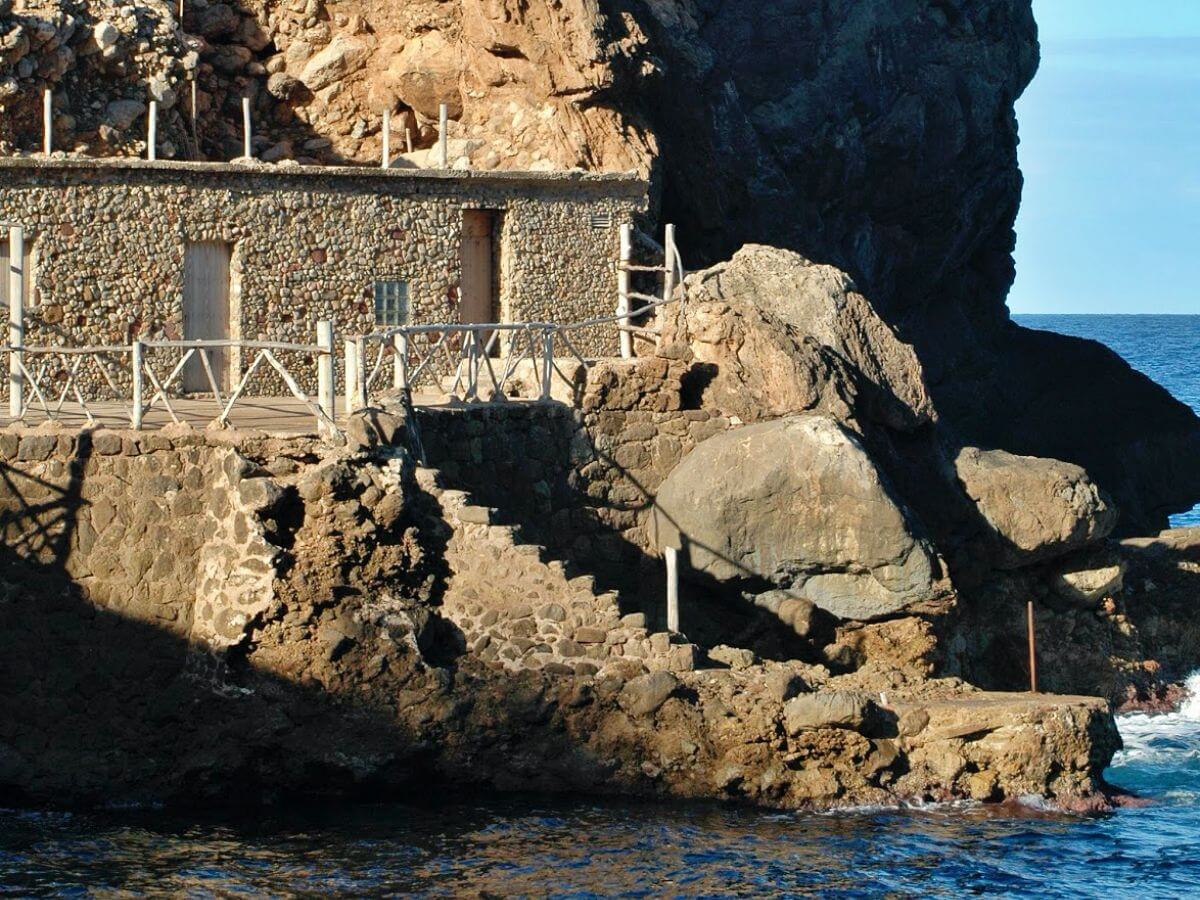
We can set off from Estellencs itself, where there’s a public car park on Carrer d’Eusebi Pascual. It’s a lovely village and usually quiet, except in summer when it gets busier. We’d suggest spring or autumn for the walk, although in summer we can finish with a dip. The little cove sits between red clay cliffs topped by pines. When there’s water in the stream, we can see fresh water tumbling down beside the sea.
The cove is about 1.4 km from the village by the route we take. Allow around 30 minutes at a child’s pace for the descent and another 35 to climb back up the other way. A short way downhill from the car park, on the right, there’s a sign for the paved road down to the cove. The road is shared with vehicles.
It’s a straightforward walk. Follow the road to the beach and, as we go down, we pass country houses, vineyards and a view of the village with the mountains behind it. At the bottom there’s a small fishing jetty and a stony beach. The seasonal Sa Punteta bar is by the cove. For the return, take the road on the right and follow it uphill all the way back to the village.
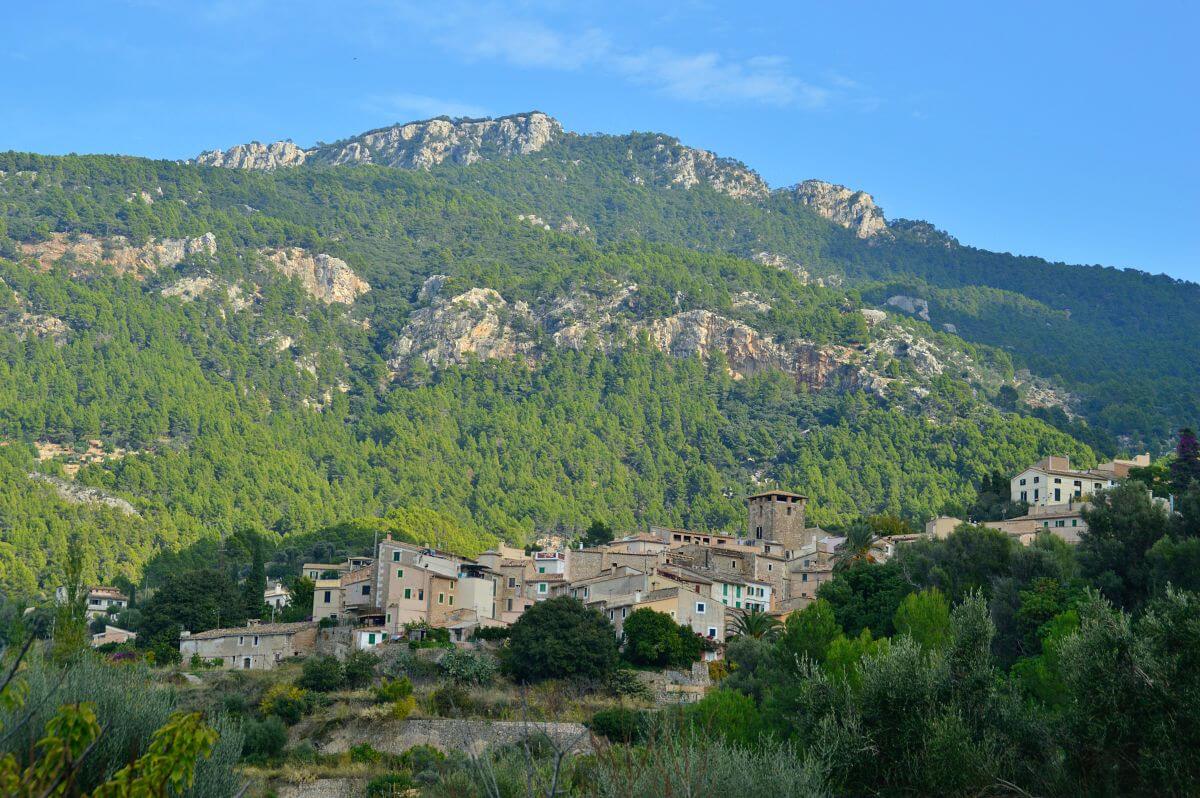
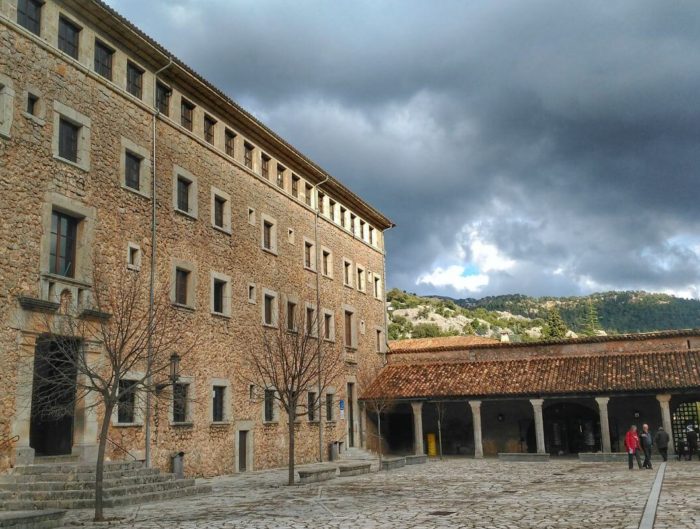
We can take the opportunity to explore Estellencs, a village of narrow streets and stone buildings. The mix of heritage and countryside makes it a special place in the Serra de Tramuntana. As we wander through the village, look out for the 17th-century church of Sant Joan Baptista, whose defensive tower now serves as a bell tower, the old washhouses and the 16th-century Torre de Tem Alemany.
There are several places to eat. If we’d rather stay in the village, Bar Sa Tanca is one option. We can also try some of the wines made in the area.
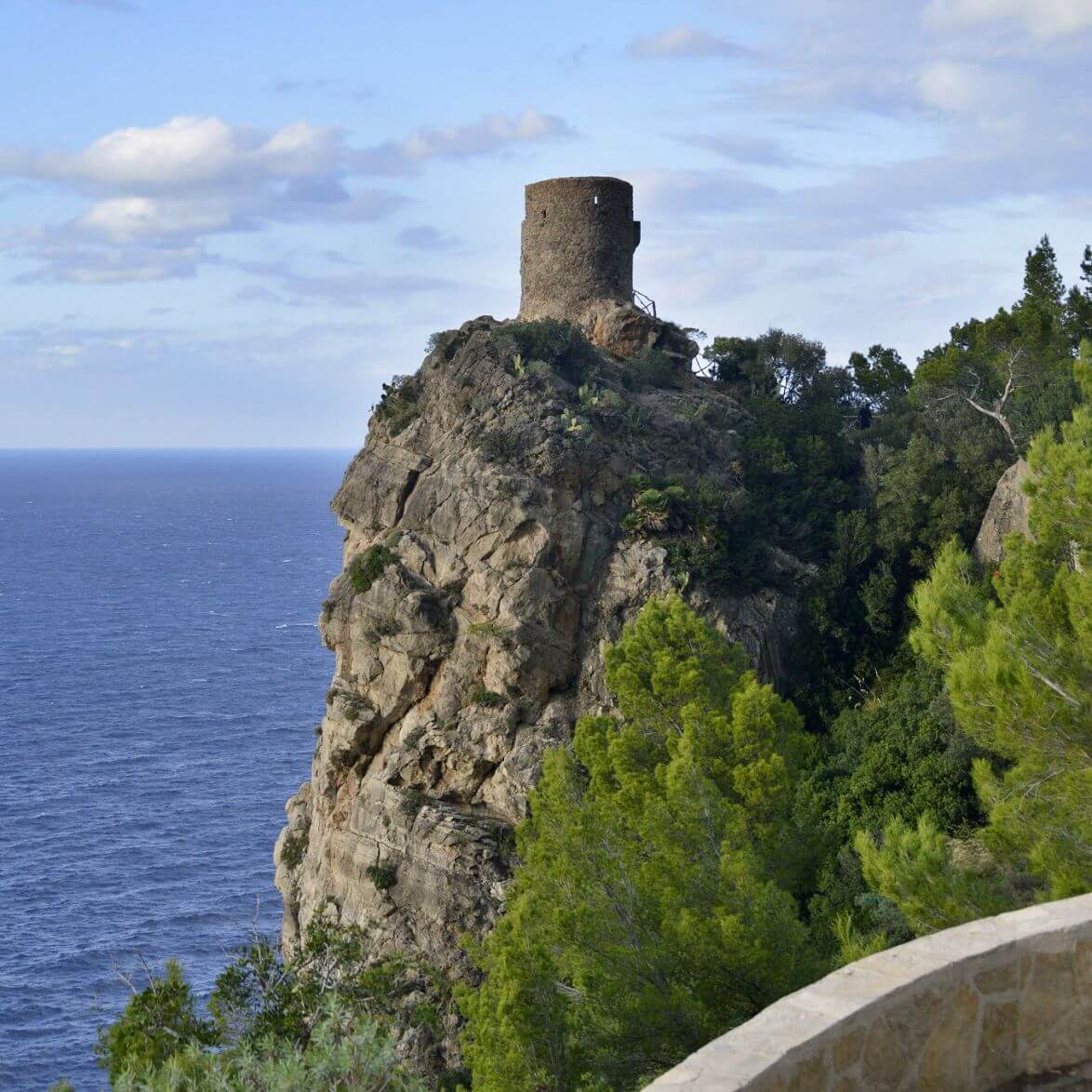
Torre des Verger watchtower
To round off the day, we recommend stopping at Torre des Verger, between Estellencs and Banyalbufar. If we’ve come from Palma via Banyalbufar, we’ll have passed it on the way. Depending on the time of day, we can save it for the return and might catch the sunset.
This landmark is also known as Torre de Ses Ànimes. It was part of a coastal lookout network that used smoke or fire signals to warn of danger from the sea. The tower is first documented in 1579.
Cala Estellencs circular walk details
You might also like