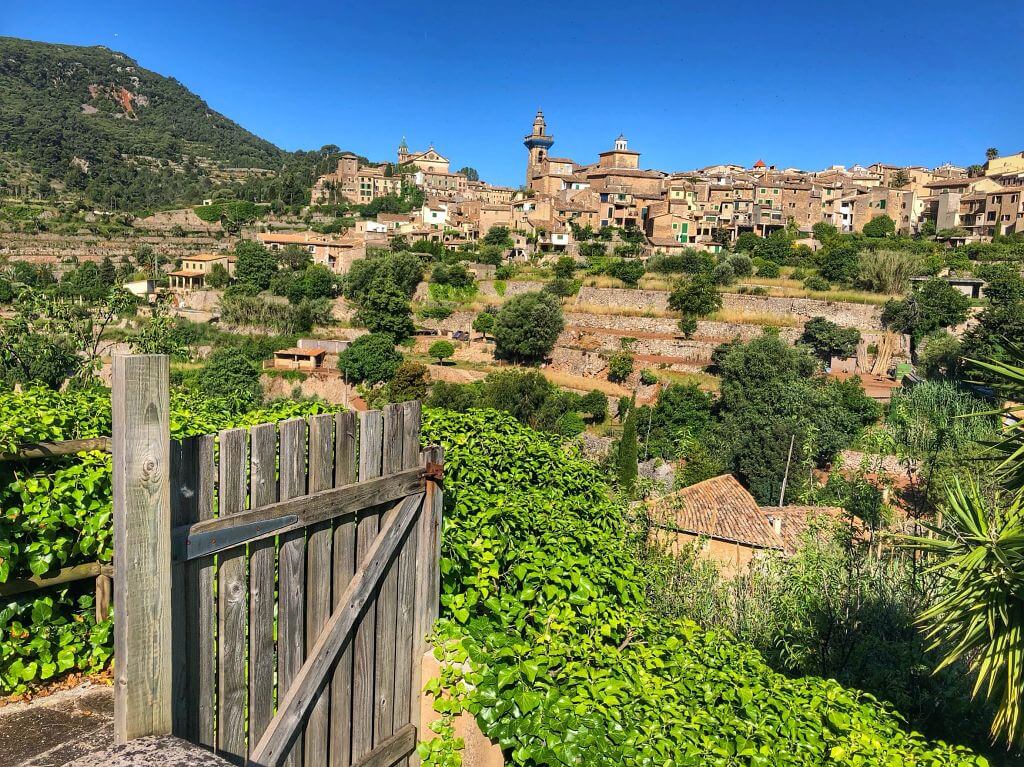
Valldemossa is one of the villages we recommend to anyone coming to Mallorca for the first time, and one we keep coming back to ourselves. It does get busy, especially around the Charterhouse, but we like to slip away from the square and head down the cobbled streets. Between the stone houses, the pots by the doorways and the mountains at the end of some lanes, it’s easy to forget the bustle of Palma for a while. Sometimes we come just for a stroll and a coca de patata. Other times Valldemossa is the start or finish of a walk in the Serra de Tramuntana.
What to see and do in Valldemossa
If it’s your first visit and you only have a morning, we’d stay in the village. We’d start at the Charterhouse, wander down towards La Beata’s house and leave time for a coca de patata. With a full day, you can head down to the harbour or carry on towards Deià.
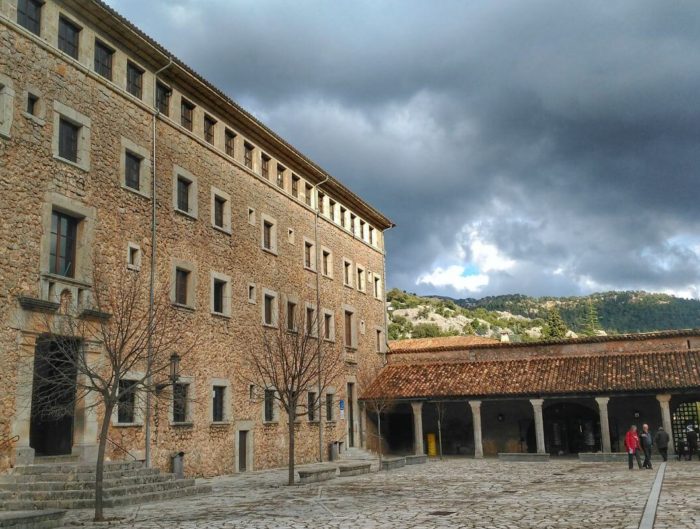
- The Charterhouse and its gardens. Stroll through the municipal gardens and visit the former monastery. Chopin and George Sand’s Cell No. 4 has a separate ticket.
- Sa Miranda des Lledoners. Cross the arch on Carrer de Jovellanos to see the bell tower of Sant Bartomeu above the rooftops.
- Carrer de la Rectoria and La Beata’s birthplace. This is where we’d slow down and look for the painted scenes on the tiles beside the doors.
- A coca de patata at Ca’n Molinas. Stop by the historic bakery on Carrer de la Rosa or sit down to enjoy one of these soft potato buns with hot chocolate.
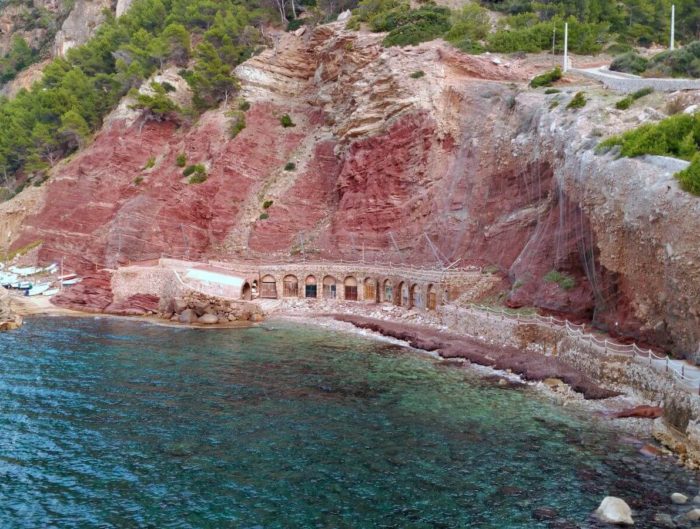
- Port de Valldemossa. If there’s time to head down to the coast, sa Marina has fishing boats and little houses by the water.
From the Charterhouse to Carrer de la Rectoria
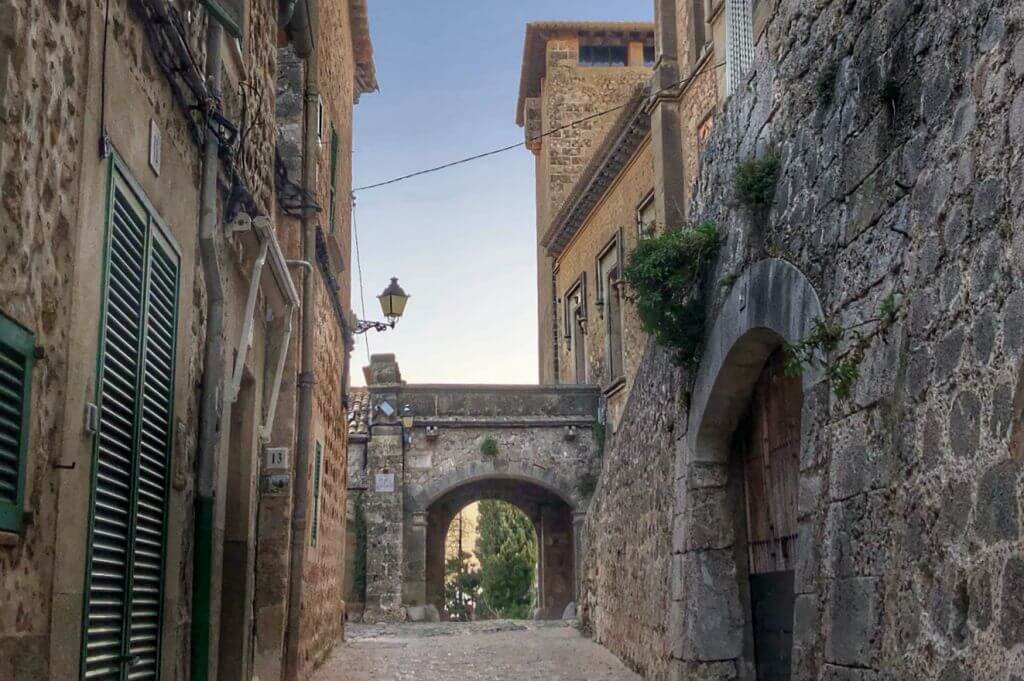
From the Charterhouse square we follow Carrer de Jovellanos to sa Miranda des Lledoners. Once through the stone arch, stop to spot the bell tower of Sant Bartomeu above the rooftops. The church is only a few minutes away on foot, and from there we can carry on towards Carrer de la Rectoria.
This is one of the best stretches for looking at the painted tiles beside the doors. If we’re with children, we can spot different scenes from the life of Saint Catalina Thomàs on the way to her birthplace. It’s now a small chapel that is free to visit when open. She’s known locally as La Beata, and Valldemossa holds festivities in her honour.
To extend the walk, we can follow the traces of water through the village. The old washhouses, or rentadors, were fed by the Font de na Mas. People went there to wash clothes and catch up on village news. The Font de la Beata is farther downhill and offers a glimpse of how the springs shaped the village as it grew.
The Charterhouse, its gardens and the winter of Chopin and George Sand
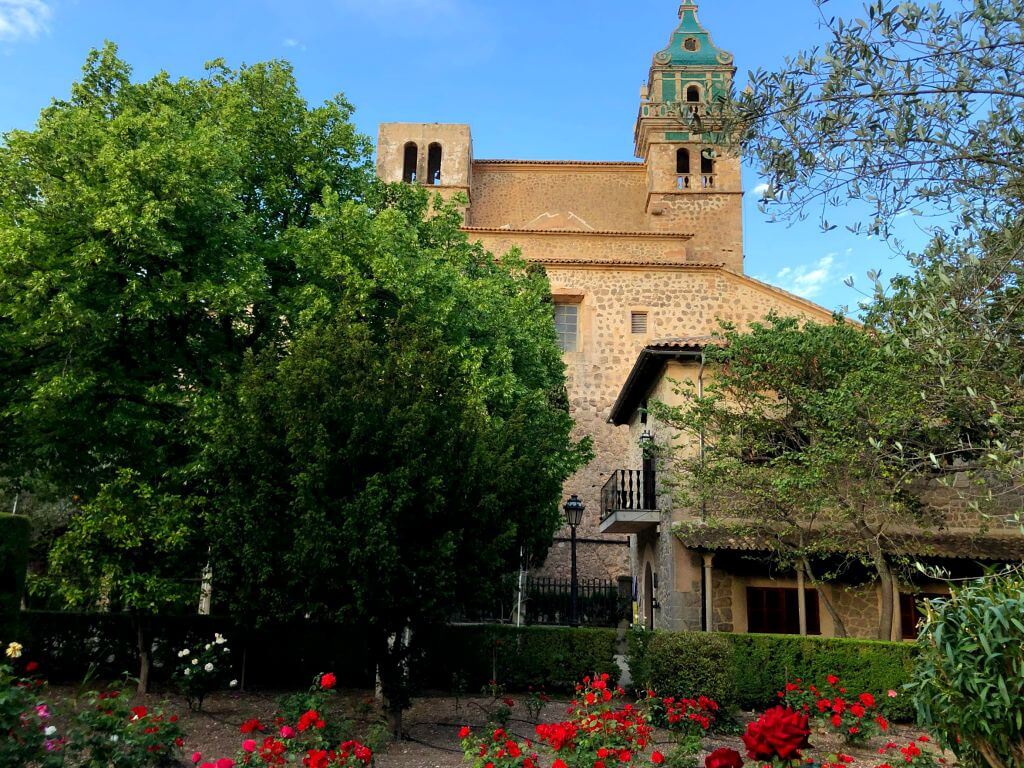
Before it became a monastery, the Charterhouse was a royal palace. The Carthusian monks arrived in 1399, and we can still get a sense of their daily life in the cloister, the old pharmacy and the prior’s cell. The municipal gardens beside the Charterhouse are free to enter. Hedges form a little maze and the roses bloom in spring. If we’re with children, this is often where they want to stay for a game of hide-and-seek.
The Palace of King Sancho is where the complex began. Much later, Gaspar Melchor de Jovellanos was held at the Charterhouse during his exile in Mallorca. He gave his name to the street we followed to the viewpoint.
Frédéric Chopin and George Sand spent the winter of 1838–39 here. Sand later wrote about their stay in A Winter in Majorca. General admission to the Charterhouse includes a short piano recital according to its programme. The museum in Chopin and George Sand’s Cell No. 4 has a separate ticket. Check each venue for its visiting arrangements.
Ca’n Molinas and its coca de patata

We like to make time for a coca de patata with hot chocolate at Ca’n Molinas. The Cañellas Estrades family came from Bunyola in the 1920s and set up their bakery at number 4 on Carrer de la Rosa, with an old wood-fired oven at its heart. It’s worth passing the original bakery, even if we sit down for the soft potato bun and chocolate at one of their other premises.
A stop at the Coll Bardolet Foundation
On Blanquerna we can stop at the Coll Bardolet Foundation to see how an artist who lived in Valldemossa for decades painted Mallorca’s landscapes and traditional dances.
Valldemossa in La caza. Tramuntana
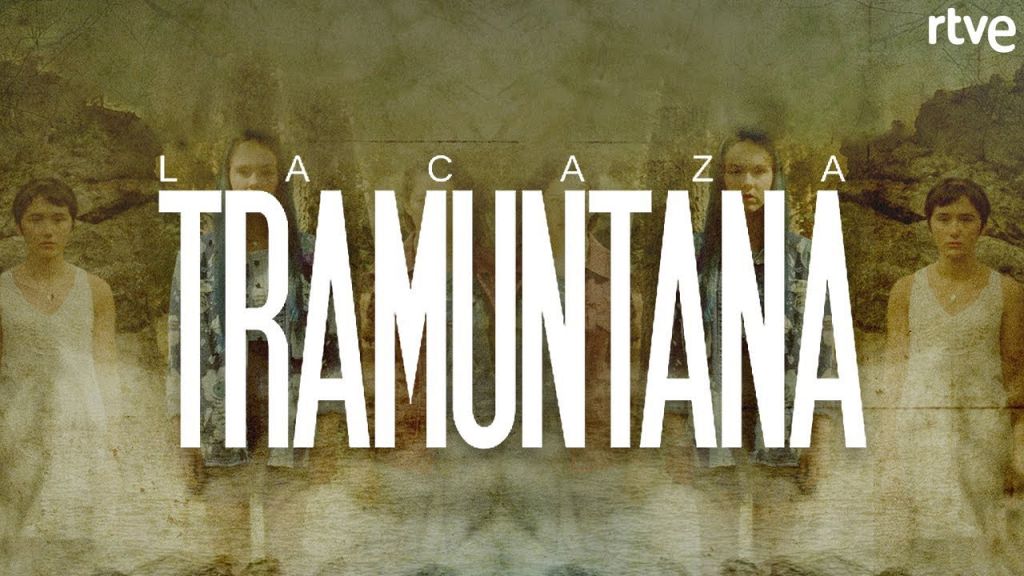
Valldemossa stood in for the fictional village of Tramuntana in the second series of La caza. As well as Blanquerna, filming took place in the Charterhouse square and Plaça de Bartomeu Estaràs. If you’ve seen the series, part of the fun is recognising the lanes and houses. We’ve also put together a guide to other filming locations in Mallorca (in Spanish).
A longer day, from the village to the coast
Port de Valldemossa, also known as sa Marina
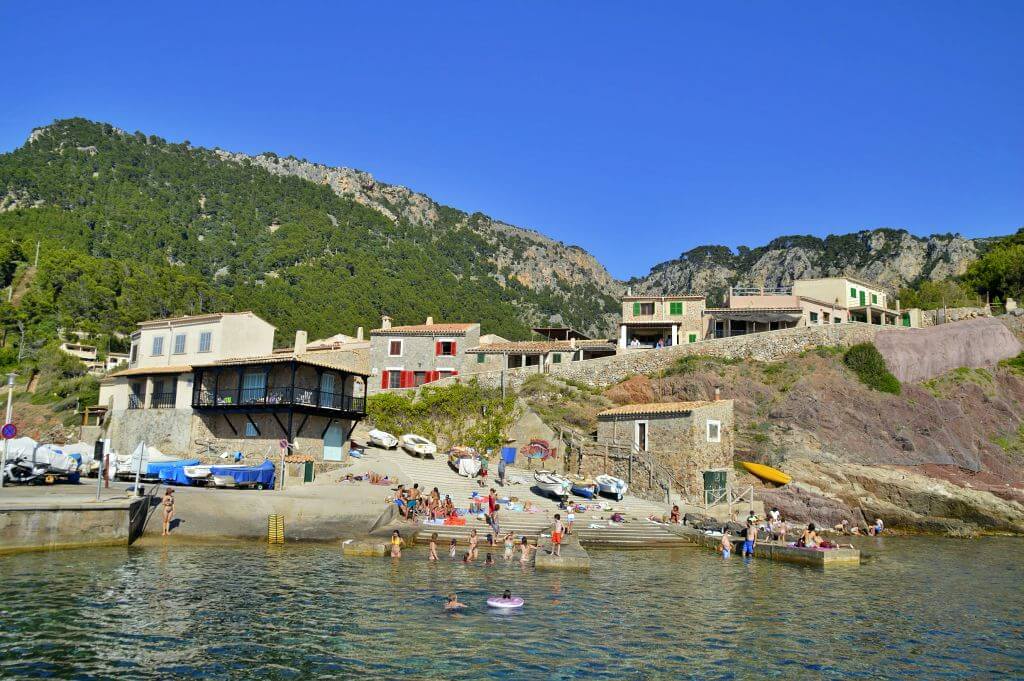
Although the village is in the mountains, its harbour is about six kilometres away. From the Ma-10, the turn-off for sa Marina takes you down the narrow, winding Ma-1131. At the bottom is a small settlement, with fishermen’s houses and boats moored close to shore. There are two stony swimming spots, a restaurant and limited parking.
Towards Deià, between paths and viewpoints
On the way to Deià, we can stop at La Trinitat hermitage, Miramar or the Son Marroig house museum (guide in Spanish). Another way to see the landscape change as we approach the sea is the Camí de s’Escolta, a walk linking several viewpoints (guide in Spanish).
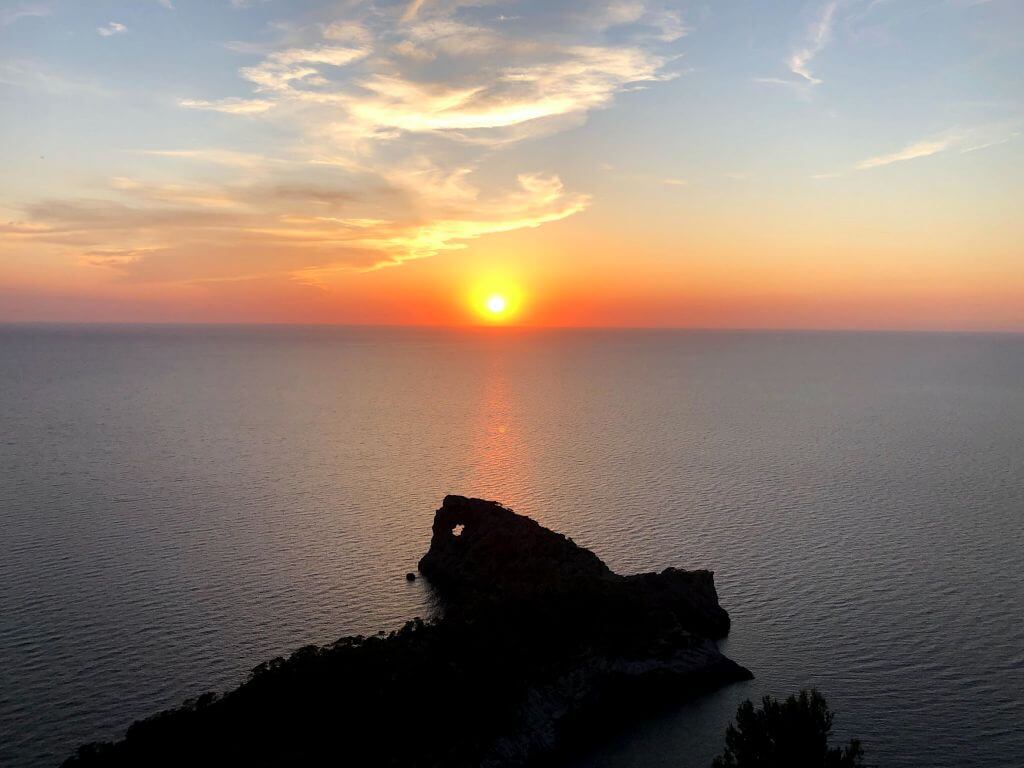
Next to Son Marroig is the Sa Foradada viewpoint, one of our favourite places to watch the sun go down in Mallorca. Parking is regulated and often fills up in summer. If we want to walk down to the famous pierced rock, we’d set aside more time for the Sa Foradada walk (guide in Spanish).
How to get to Valldemossa
From Palma we can take the TIB 203 bus. If we’re spending our time in the old town, the bus is a good option and we can explore on foot from the stop.
If you’re driving, check the parking information on Visit Valldemossa before setting off.
You might also like