If you’d like to visit a winery in Mallorca, the Binissalem wine route is a good place to start. You can take the train from Palma, book a winery visit in town and stay for lunch. With a little more time, you could head out to the hamlet of Biniagual or spend a morning among the vines in Sencelles. Here’s what each option involves so you can choose the one that suits you.
Three ways to explore the Binissalem wine route
| What you’re in the mood for | Where to go | How to plan it |
|---|---|---|
| A winery visit without a car | José Luis Ferrer or Vins Nadal | Take the train from Palma, walk through Binissalem and book one winery. |
| A walk and a tasting | Finca Biniagual | Combine the hamlet with the wine bar. Arrange the onward journey from Binissalem. |
| See the vines and stop for a bite | Santa Catarina in Sencelles | Choose the tour with pa amb oli and check which days are available. |
Wineries usually arrange visits by appointment. We’d book one winery per outing and leave time to explore the village or have a leisurely lunch. If anyone in your group wants to see the winery without taking part in the tasting, ask what’s available when you book.
1. Binissalem without a car from Palma
The train stops in Binissalem. From the station, walk through town to the winery you’ve booked. This is the easiest option if everyone wants to take part in the tasting. Afterwards, you could visit Plaça de l’Església and have lunch in town before heading back to the station.
José Luis Ferrer for a look at how the wine is made
The winery is at Carrer del Conquistador 103. Its guided tours take you through the old and modern winery buildings and explain how the wine is made. The Moll and Mantonegro tours take around 50 minutes and include a tasting for adults. The winery publishes separate conditions for younger visitors, so check the details of the tour you’re booking if you’re coming with children.
Vins Nadal, a family-run winery in town
This family-run Binissalem winery has been making wine since the 1930s. Its tours and tastings are a good way to learn how the family works and get to know the local grape varieties. Choose the visit that suits you and book ahead. If it’s your first tasting, try comparing two wines and asking which grapes go into each. There’s no need to finish every glass.
2. Biniagual, a hamlet walk and a winery visit
Biniagual lies outside Binissalem itself. The little hamlet has stone houses, a chapel and spots that reward a slow wander, like the fountain in the photo. You can combine the walk with a tasting at Finca Biniagual’s wine bar, which offers tastings with or without a winery tour. Book ahead and arrange the onward journey separately if you’re coming by train.
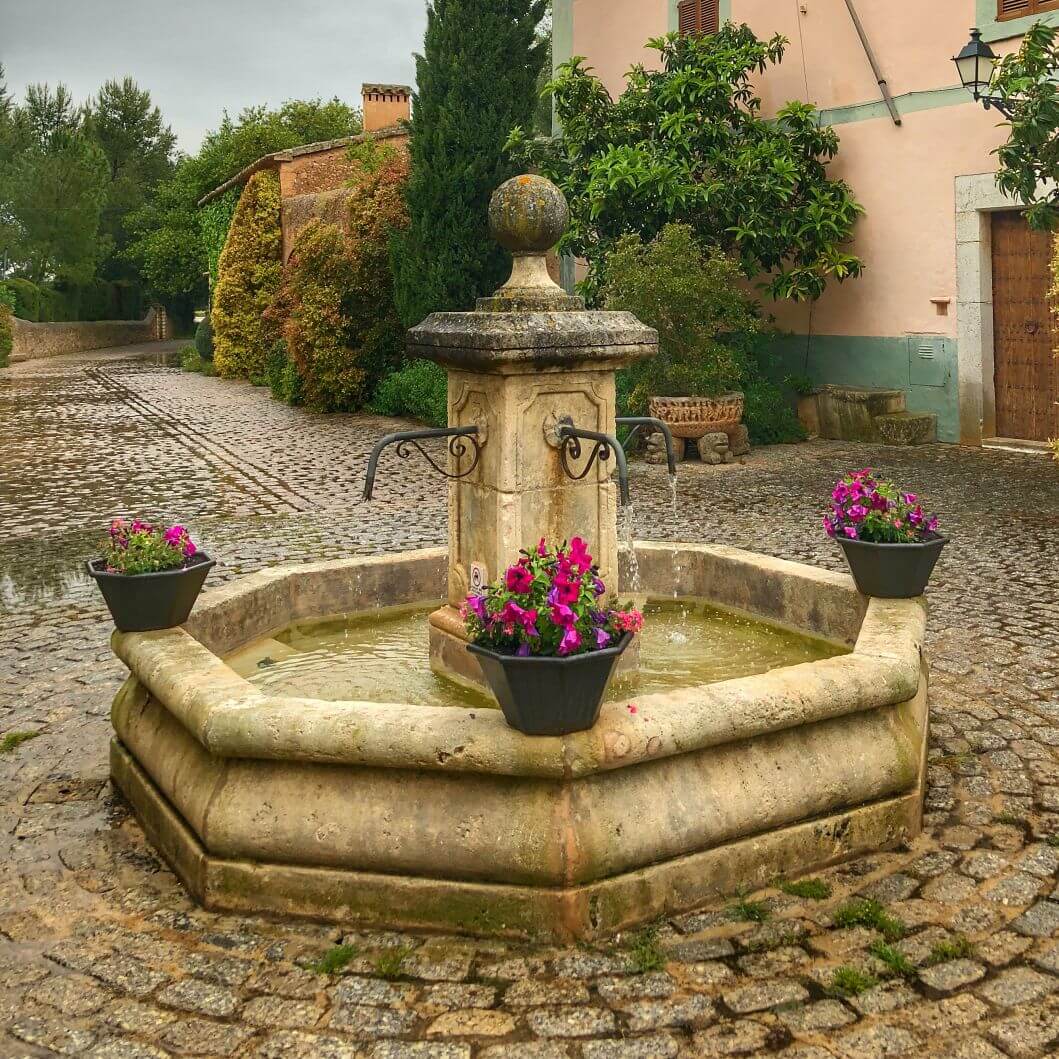
If you’d simply like to see the hamlet, use our guide to exploring Biniagual. You can visit the winery and walk around the hamlet separately.
3. Santa Catarina, vines and pa amb oli in Sencelles
At kilometre 3 on the road from Inca to Sencelles, you’ll find Santa Catarina. The winery offers vineyard and winery tours with several tasting options, including one with pa amb oli, Mallorcan bread with olive oil, served with cheese and cured meats.
That’s the one we tried. We started among the vines, went through the rooms where the wine is made and stored, and finished with pa amb oli. We particularly liked seeing the Serra de Tramuntana from the estate and learning what each of the winery’s three buildings was used for. If you have a few hours and are interested in the landscape as well as the winemaking, this is the visit we’d give the most time to. The winery lists weekday opening, so check availability before building it into a weekend trip.
Mallorca’s wines and how to read the label
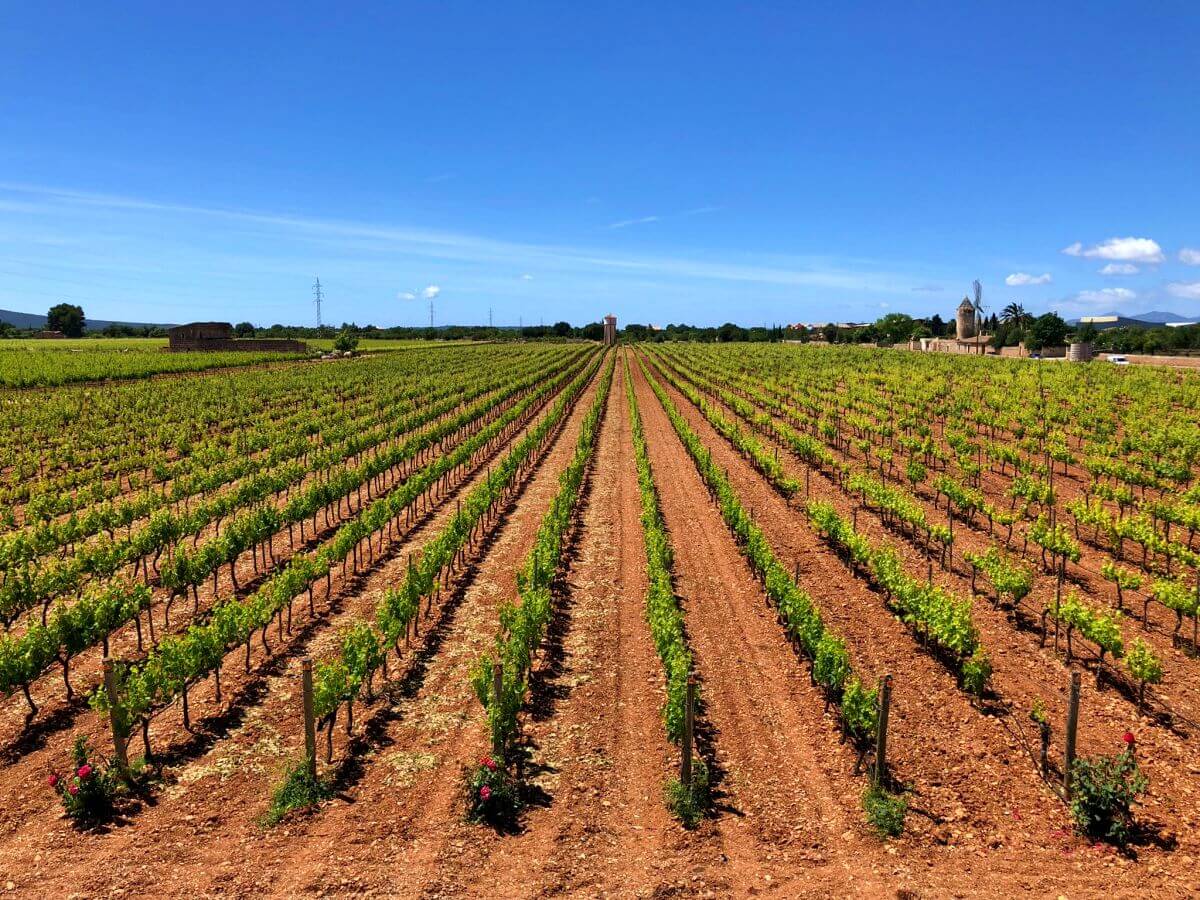
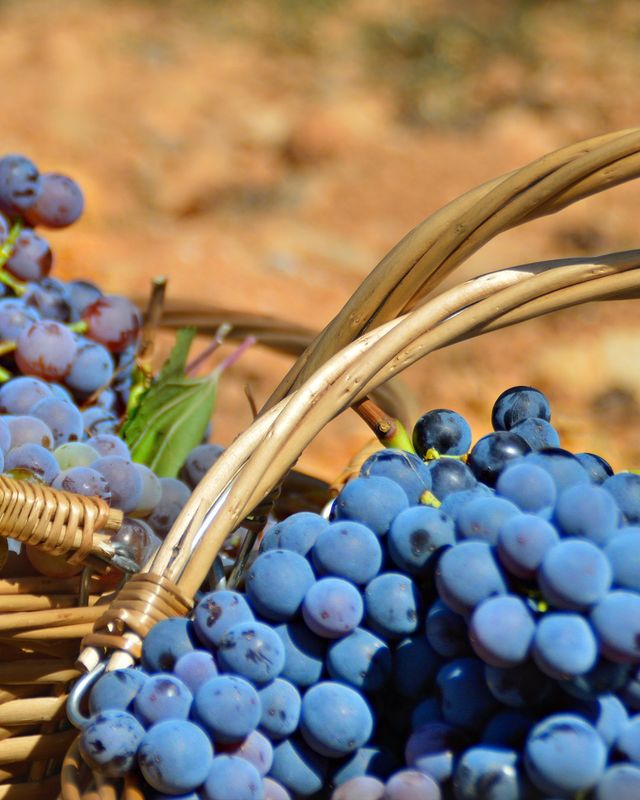
A winery visit is also a good chance to discover what gives Mallorca’s wines their character. Around Binissalem, vineyards share the landscape with almond, fig and carob trees, sheltered by the Tramuntana mountains. At a tasting, pay attention to the grapes and how each wine was made. It helps explain why two bottles from the same area can taste so different.
Mallorcan grape varieties worth trying
One of the local red varieties is Manto Negro, closely associated with Binissalem and often suggestive of ripe fruit. Callet can make lighter-coloured wines with floral notes, while Gorgollassa can bring fresh fruit and a hint of spice. Among the white varieties, Moll, also called Prensal Blanc, can recall apple or quince. Despite its name, Giró Ros is used to make white wines and can have stone-fruit aromas. The island also grows varieties such as Syrah and Chardonnay, sometimes blended with local grapes. See the DO Binissalem guide to grape varieties for more.
To get a feel for the quality and range of Mallorcan wines, try a Manto Negro or Callet red alongside a Moll or Giró Ros white. Ask the winery which flavours come from the grapes and how ageing changes the wine.
How to taste wine in three steps
If it’s your first winery tasting, work through each glass in the same order. It makes it easier to spot what changes from one wine to the next and which one you’d order again.
- Look at the wine. Pour a little into the glass, tilt it against a pale background and notice the shade and depth of colour. It’s a good starting point for comparing two glasses.
- Smell before and after swirling. Take a first sniff, then swirl the glass gently, keeping the base on the table if that’s easier. Smell it again. Does it remind you of fruit, flowers or spices? Notice which aromas come through more clearly after swirling.
- Take a small sip. Let the wine move around your mouth. Notice whether it feels crisp or rounded, whether it makes your gums feel dry and how long the flavour lasts. That drying feeling, common in some reds, is a clue to the wine’s tannins.
Taste the wine before taking a bite of pa amb oli, then try it again afterwards. Sometimes that’s when the difference in how it feels in your mouth is clearest. Sip some water between wines, and feel free to use the spittoon if there is one.
Protected designations, Vi de la Terra and wines without a label
Mallorca has two protected designations of origin. DO Binissalem covers Binissalem, Santa Maria del Camí, Consell, Santa Eugènia and Sencelles. DO Pla i Llevant covers a larger area in the centre and east of the island. Each has its own rules on origin, grape varieties and winemaking.
The label Vi de la Terra Mallorca is a protected geographical indication (PGI) covering the island. You’ll also see Serra Tramuntana – Costa Nord and the Illes Balears PGI, which covers the whole archipelago. PGIs have their own rules too.
A winery in Mallorca can make wines with PDO or PGI status, or without either label. If you’re looking at a bottle without one and want to know if the grapes came from the island, ask the winery. Who made the wine and where the grapes grew are two separate things. A label certifies origin and compliance with a set of rules. The grapes, how the wine was made and what you like drinking also matter when choosing a bottle.
Why are some Mallorcan wines more expensive?
There are figures that help explain that impression. A University of the Balearic Islands study, presented by the Balearic government, analysed sales by distributors to Mallorca’s hospitality sector in 2023. In Table 2 of the report, Mallorcan PDO or PGI wine averaged €9.97 per litre, compared with €7.93 across all the wines studied. These are wholesale prices paid by hotels and restaurants, rather than what you’d pay for a bottle.
Small vineyards are common around Binissalem. When a winery bottles in small batches, costs such as equipment and bottling are spread across fewer bottles. Work in the vineyard, ageing and bringing in supplies such as glass and corks can add to the cost. The Balearic government identifies transport and supplies as costs affected by island geography. How much each factor matters depends on the winery and the wine. If you’re after a bottle for a meal, ask at the winery or a wine shop for a young local wine within your budget.
Grape harvest, fideus des Vermar and Wine Days
In September, the Festa des Vermar brings grape harvest celebrations to Binissalem. If you’re there at the right time, look out for fideus des Vermar, a traditional dish of thick noodles with mutton. In spring, the designation’s governing body runs Wine Days. Events vary from year to year, so check the programme for where each one takes place.
Two more ideas elsewhere in Mallorca
In the Serra de Tramuntana, Estellencs traditionally holds its Wine and Cheese Fair on 1 May. It’s a chance to discover the local Malvasía and try cheeses and other produce. If you’re around Alcúdia, Celler Canyelles i Batle at Son Simó Vell lists tours with wine and olive oil tastings. Either makes a separate outing for another day.
You might also like