

Murcia keeps celebrating long after Easter Sunday. For several days, street bands fill the city centre, the Sardine makes its way through town and children soon learn to spot the groups handing out toys. We’ve been to the festival ourselves and were surprised by how much happens before the big Saturday night. If you’re visiting with children, there’s something for them to look forward to from the first day.
When is the Burial of the Sardine and what happens each day?
The Burial of the Sardine (Entierro de la Sardina) is part of Murcia’s Spring Festivals, alongside the Bando de la Huerta. The main parade takes place on the Saturday after Easter Sunday, so the date changes every year. The Sardine festivities begin several days earlier. If you can spend more than one night in Murcia, it’s worth arriving before Saturday.
| Usual day | What to see |
|---|---|
| Wednesday | The children’s parade (Entierro Infantil), with smaller versions of the floats used by the festival groups. |
| Thursday | The Arrival of the Sardine, with a parade through the centre and a handover at City Hall. |
| Friday | The Children’s Wake, with activities for younger visitors, followed later by the Sardine’s Will parade and Doña Sardina’s reading. |
| Saturday | The morning street parade, the main evening parade and the burning of the Sardine after midnight. |
Timings and routes can change from year to year. For this year’s events and details of any seats you can book, see the official festival programme from the Agrupación Sardinera.
How the festival began
In 1851, a group of students from Murcia decided to recreate the Carnival masquerades they had seen in Madrid. They took to the streets wearing black hoods and carrying axes and a coffin containing a sardine. At the end of the procession, they set fire to the fish. The celebration eventually moved to the week after Easter and is now recognised as a Festival of International Tourist Interest. The groups who organise it, known as sardineros, take their names from gods and figures from mythology. You’ll see many of them depicted on the floats.
Friday and the Sardine’s Will

We watched Friday’s parade near City Hall. It was chilly and looked like rain, but once the first performers appeared in their colourful costumes and the music started, the wait was soon forgotten. Among the people escorting the Sardine are the hachoneros, torchbearers whose flames foreshadow the burning. And once the sardineros arrive with carts full of toys, it’s hard for the children to stay in their seats. Whistles, rattles, dolls… We’d bring a cloth bag to carry whatever they pick up along the way.
Then comes the Sardine’s Will. From the balcony of City Hall, Doña Sardina reads a humorous look back at the year in Murcia. There are a few sharp jokes as well as some touching moments. It’s one of the events that gives the festival its character and a good reason to arrive on Friday if you only have the weekend.
Saturday, from the street bands to the bonfire
By morning the brass bands and festival groups are already out in the city centre. We used the break between the daytime events and the evening parade to eat and put our feet up. If you’re travelling with younger children, it’s a good way to pace the day. The morning procession gives you a taste of the festivities and you can always go back in the evening if everyone still has the energy.

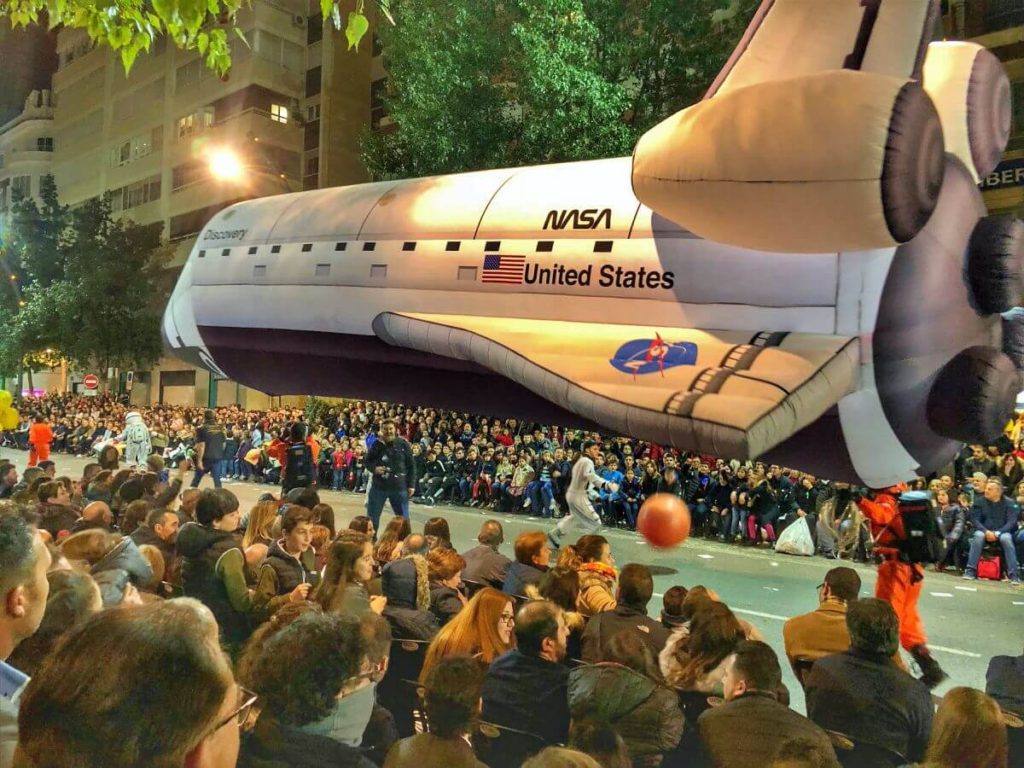
The main parade comes in two parts. First come the costumed groups, giant puppets and street performers. The year we went, there was even a giant Einstein. The sheer size and variety reminded us of the Fourth of July parades in New York. Then come the sardineros’ floats, loaded with balls, soft toys and all sorts of other gifts. We ended up with two bags full. By that point, the grown-ups were watching the floats almost as eagerly as the children.
The final event is the burning of the Sardine after midnight. The giant fish that has been on display during the festival goes up in flames, and fireworks round off the night. If the children tire early, you can get plenty out of Friday’s parade and the daytime processions. We’d stand a little further back from the firecrackers if the noise bothers them. The daytime display we saw was as loud as it was colourful, with clouds of smoke in different colours.

What to see in Murcia between parades

Murcia’s old town is easy to explore on foot. We’d start in Plaza del Cardenal Belluga for the façade of Murcia Cathedral and, if you go inside, the Vélez Chapel. From there, follow Trapería and Platería, stop by the Real Casino de Murcia for its Moorish-style courtyard, which we particularly liked, and carry on to the square in front of the Teatro Romea. With children, it’s an easy walk to break up with a visit to a bakery or a sit-down in one of the squares.
For a change of scene, head down to Glorieta de España and the Puente Viejo. From the bridge, look for the sardine sculpture in the middle of the River Segura. It’s a nod to the festival you can see all year. The Verónicas Market and Malecón promenade are nearby if you fancy a longer walk. For an indoor visit, try the Museum of Science and Water or the University of Murcia Aquarium.
We’d also stop for tapas near Plaza de las Flores. Of the dishes we tried, our favourites were marineras, crisp bread rings topped with potato salad and anchovies, caballitos, prawns in batter, and michirones, a stew made with dried broad beans. For something sweet, try a paparajote. The lemon leaf flavours the fried batter, and you set it aside as you eat.
You might also like


