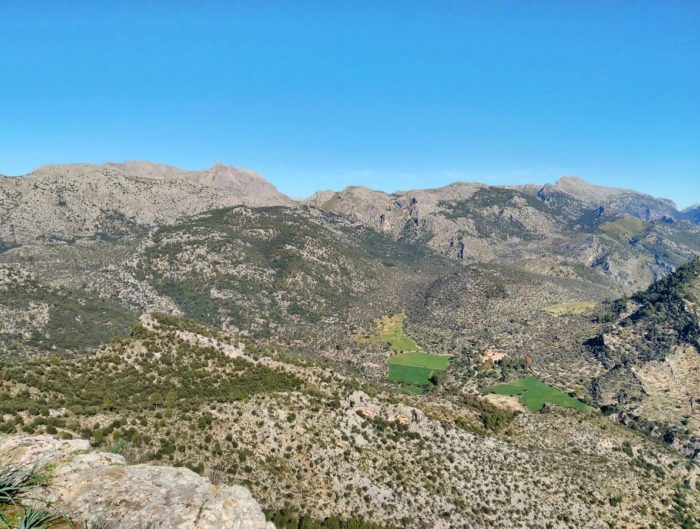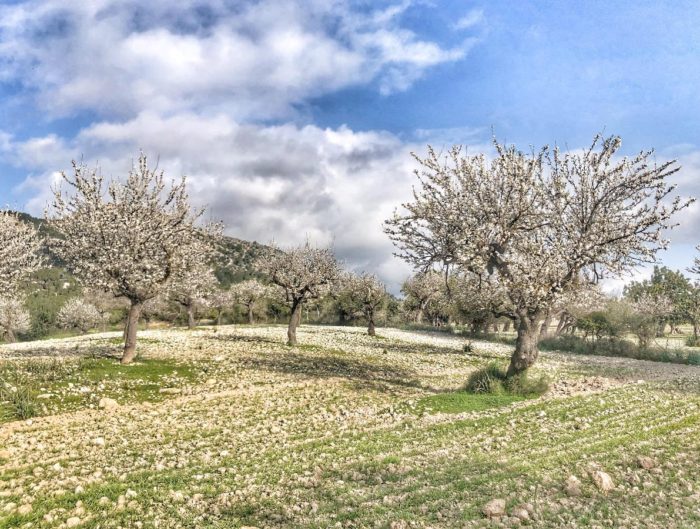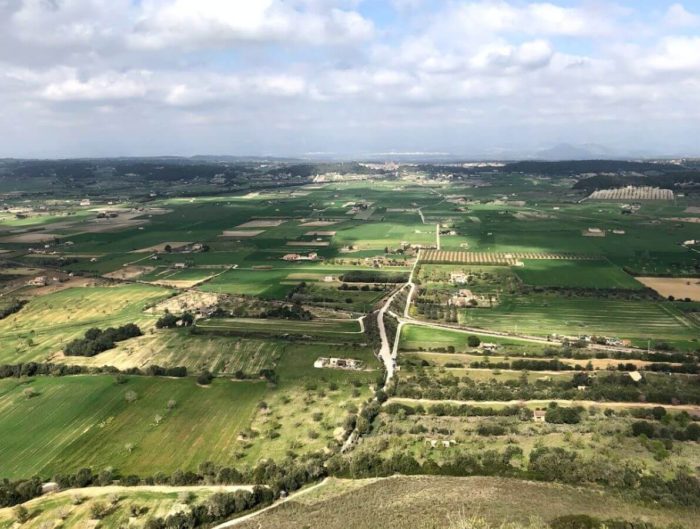
The Camí des Correu is one of Mallorca’s classic walks. This old road through the Serra de Tramuntana links Esporles with Banyalbufar, passing through holm oak woods and along stone-paved paths before reaching terraces overlooking the sea. It is 7.7 km one way and takes about 2½ hours, plus stops. The trail is signposted, but the distance and climbs can be tiring for younger children. Our favourite way to do it as a family uses just one car. Park in Esporles, walk to Banyalbufar and take the 202 bus back to pick up the car.
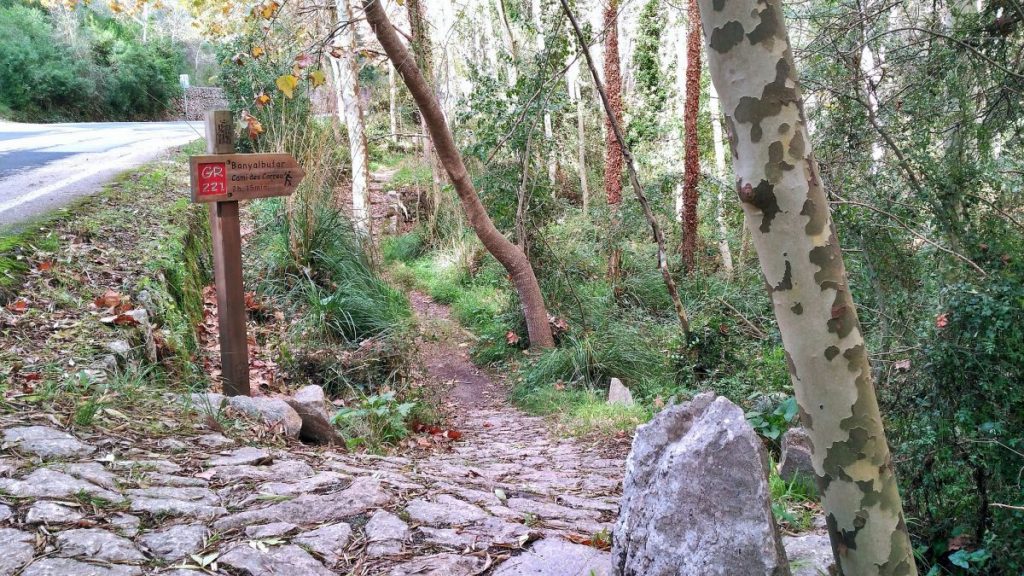
The road is documented as far back as 1401. The Council of Mallorca restored it in 1999 and it now forms part of the GR 221 Dry Stone Route. Look out for the marges, the walls built without mortar that hold up the terraces and make it possible to farm the hillsides. The same technique was used to mark the boundaries of country estates and build paths like this one.
Where to start in Esporles
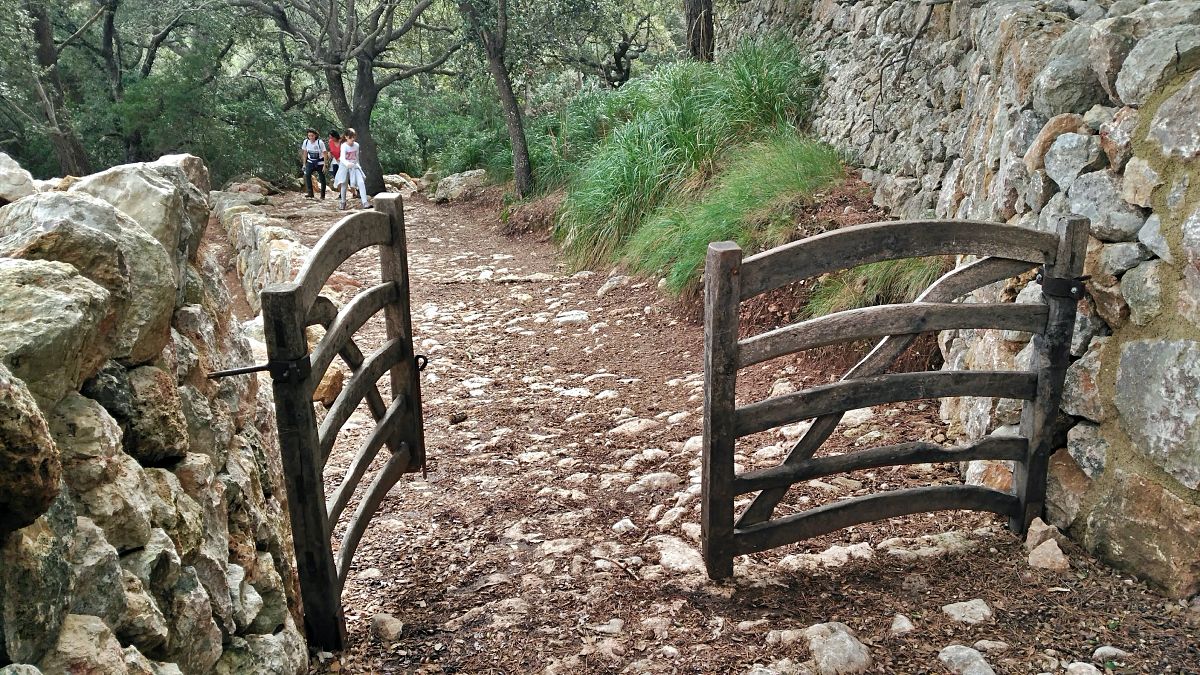
Start at Sant Pere parish church in Esporles. Facing the church, take the stone-paved lane uphill on the left and look for the first GR 221 sign to Banyalbufar. The opening climb is steep, but the path soon levels out.
After the level stretch, descend to the road. Cross carefully near the Pont de sa Turbina and follow the path on the right alongside the Torrent de Sant Pere. Beyond sa Granja, cross the road again to rejoin the signposted path to Banyalbufar. From here, the sign gives a walking time of about two hours.
For a shorter walk, join the trail near sa Granja. With the estate behind you, look for the signposted turn-off on the left side of the road. The TIB 202 bus stops at La Granja, so you can start there.
Holm oak woods and the old stone path
The path climbs through olive groves, pines and holm oaks on the Ses Mosqueres and Son Valentí estates. There are shady stretches and open sections, so with children we prefer to go in autumn, winter or spring. There are clearings with views where you can stop for a snack. Bring enough water for the walk and wear shoes with good grip, especially when the stones are wet.
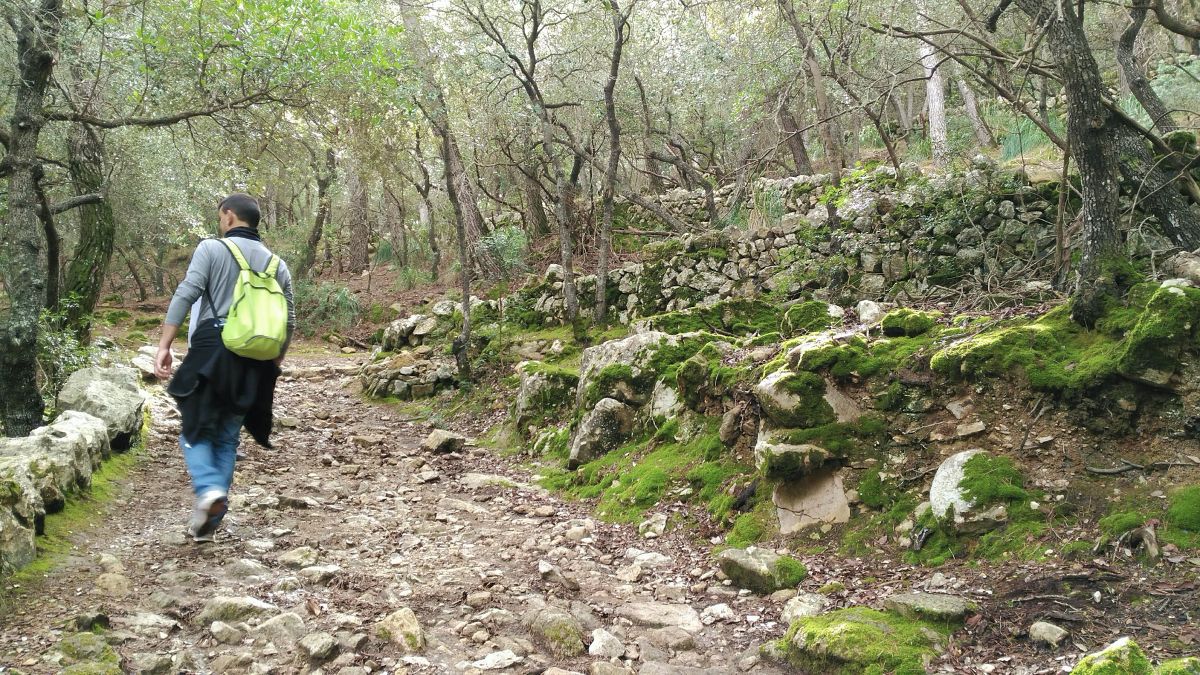
On the climb, look for rows of stones laid diagonally across the path. Known as ratlletes, they channel rainwater to the sides and help protect the old paving. Near Son Valentí, a hollow in the rock is known as sa Potada des Cavall. Local legend says it was left by King Jaume I’s horse. The Balearic Government trail guide (in Spanish) includes a map.
Arriving in Banyalbufar and taking the bus back
As you approach Banyalbufar, the views open up over dry-stone terraces with the sea behind them. Pass the Font de la Vila and follow the paved lane into the village centre.
For a meal, Restaurant Ca’n Paco serves Mallorcan cooking. If you still have some energy, take a sandwich down to the cove. Allow time for the climb back up to the village to catch your bus.
In Banyalbufar, go to the Banyalbufar 1 (7002) stop and take the TIB 202 towards Palma. Get off at Esporles 1 (20020), in the village, and walk back to your car. The bus journey takes about 15 minutes and is direct.
The 202 also runs on Sundays and public holidays. Before you set out, check the current route 202 timetable for the Estellencs to Palma direction and pick a departure from Banyalbufar. Allow time for breaks, lunch or the climb back up from the cove.
Walk details
You might also like