Castell d’Alaró is one of the most rewarding walks in Mallorca’s Serra de Tramuntana, especially for the views from the top. With children, we park by Es Verger restaurant and walk up via the Pla des Pouet. Allow up to about 70 minutes for the climb, depending on your pace. You can also walk all the way from Alaró village, as described below.
Getting to the Es Verger car park
In Alaró, go past the petrol station and follow signs for Orient and the castle. Once out of the village, take the signposted left turn for Castell d’Alaró. From there it is about 3 km to the restaurant along a narrow, winding road with some uneven sections. Drive slowly and expect to meet oncoming vehicles. On our visit we found two spacious parking areas beside the restaurant. We leave the car there and start walking from that point.
From Es Verger to the castle via Pla des Pouet
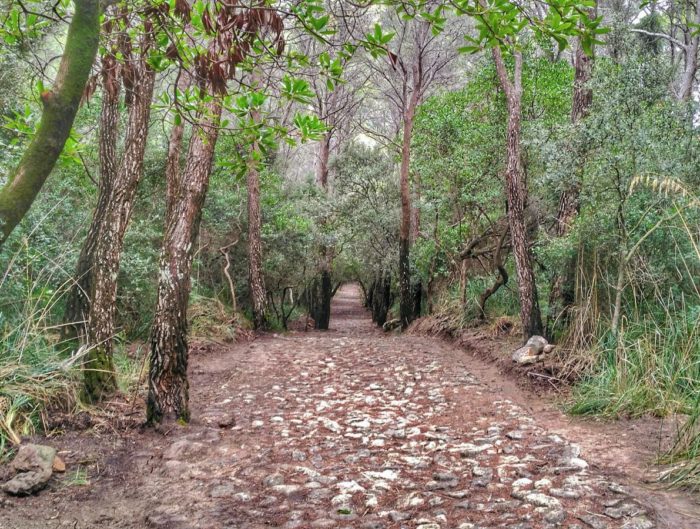
From the car park, follow the track that continues beyond the restaurant. There are signposted shortcuts, or you can stay on the track to Pla des Pouet. Look out for strawberry trees, known locally as arboceres, with their bright red fruit. You will know you have reached Pouet when the track opens into a clearing where several paths meet. Look for the castle sign, which gives a walking time of about 30 minutes at a steady pace.
The last stretch is the hardest, with steep slopes, stone steps and sections of uneven paving. Where the trail joins the path from Alaró, follow the castle signs to the gateway in the wall. To get back to the car, retrace your steps and follow the signs for Pla des Pouet and Es Verger at the junction.
What to see at the top and where to eat
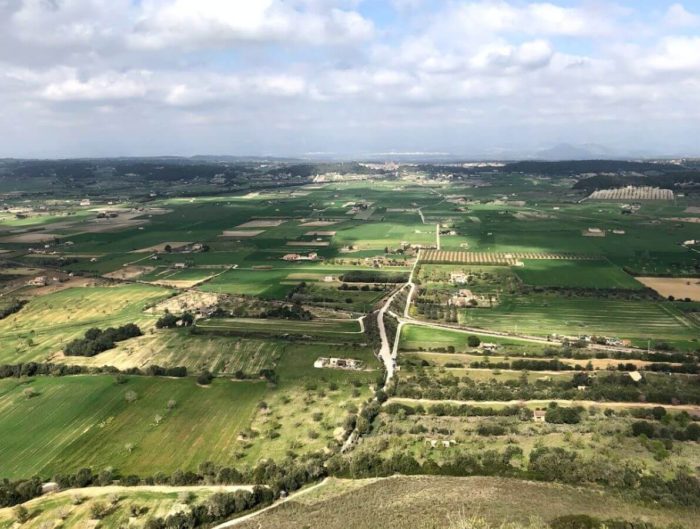
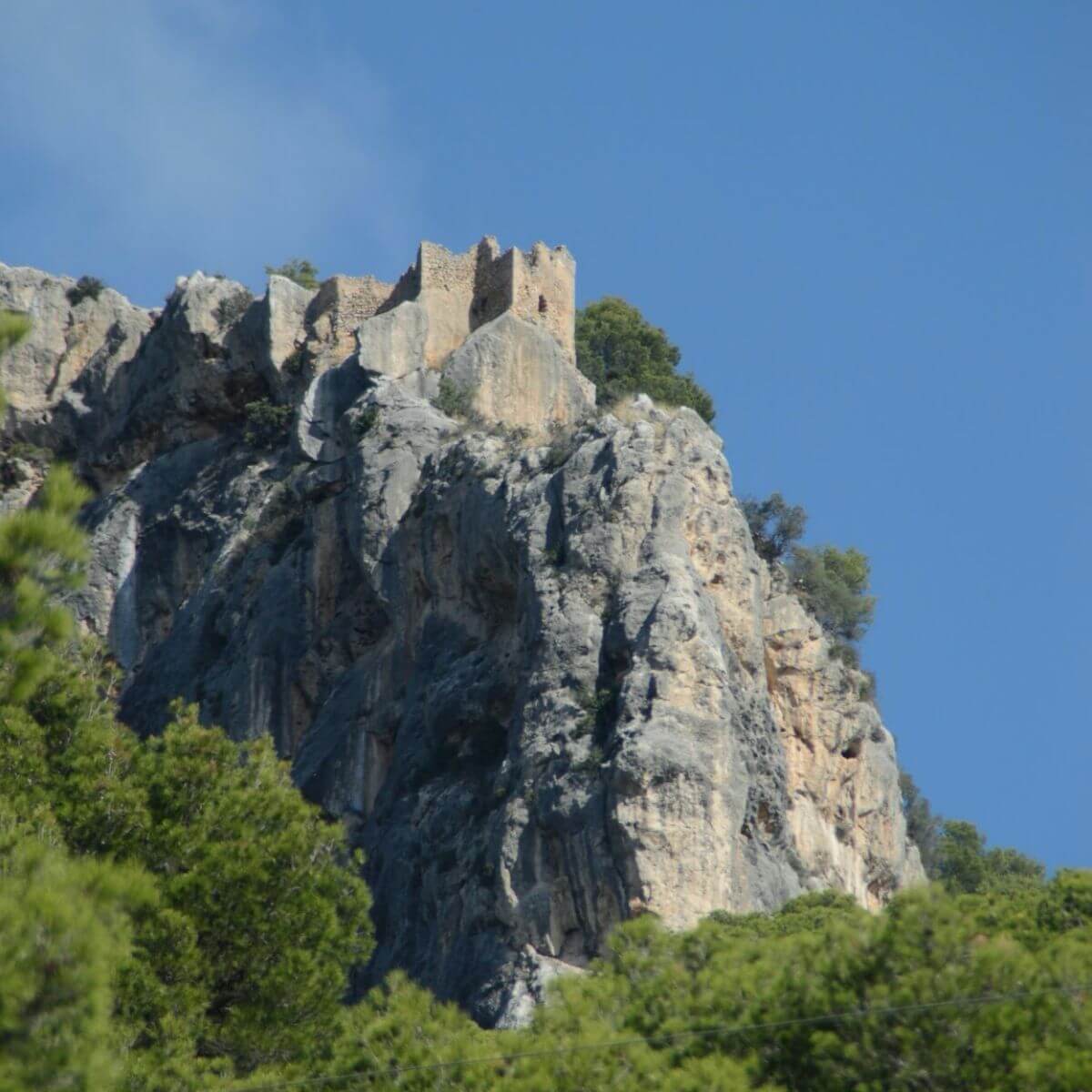
Castell d’Alaró is a castell roquer, a fortress built to use the cliffs as a natural defence. Its walls close off the places where people could reach the summit. On a clear day you can see the Orient valley, Puig Major and the Bay of Palma. Some cliff edges are unprotected, so with children we stick to the open areas well back from the drop.
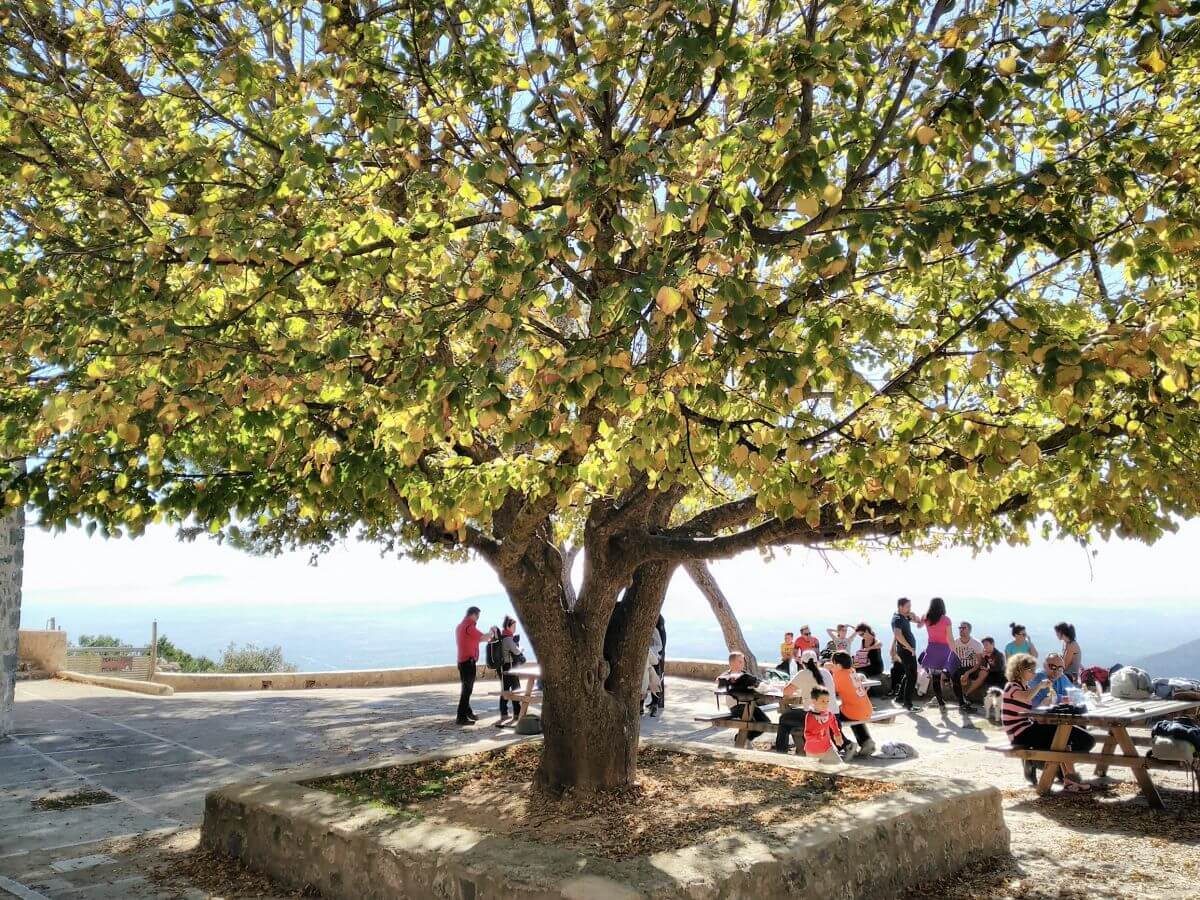
A little higher up from the gate are the Mare de Déu del Refugi chapel and the mountain refuge. There is an open area with tables where you can stop for a snack and children can play well back from the cliff edges. If you want to eat or stay overnight at the refuge, check the contact details in the town council directory and book before you walk up. Bring a bag to take your rubbish back down.
You can also eat at Es Verger restaurant when you get back to the car. We included it in our guide to arròs brut in Mallorca (in Spanish).
The legend of King Jaume I’s horse
Near the outer gateway, by the steps, there is a round mark in the rock that local tradition attributes to King Jaume I’s horse. According to legend, the horse struck the stone so hard that it left a hoofprint. The same story says that the cliffs took on their reddish colour from the blood spilled during the capture of the castle.
Two other rock castles survive in Mallorca. In Pollença, access to Castell del Rei through Ternelles is regulated. Check the Ternelles visitor website. Castell de Santueri (in Spanish), in Felanitx, opens seasonally. Check the official opening times before you go.
Walking all the way from Alaró village
The Council of Mallorca route (in Spanish) starts at Plaça de la Vila. It passes the old washhouses, follows a stretch of the Orient road (Ma-2100) and takes the castle turn-off at sa Sort. The route passes Son Curt and Son Penyaflor and joins the stone-paved path to the castle. The council’s return route goes via Pla des Pouet.
The full route described by the council is 14.2 km, with around 643 m of ascent and nearly five hours of walking. It is a more demanding day in the mountains than the family walk from Es Verger. The Alaró visitor guide (in Spanish) also describes the walk from the village.
Walk details from Es Verger
You might also like