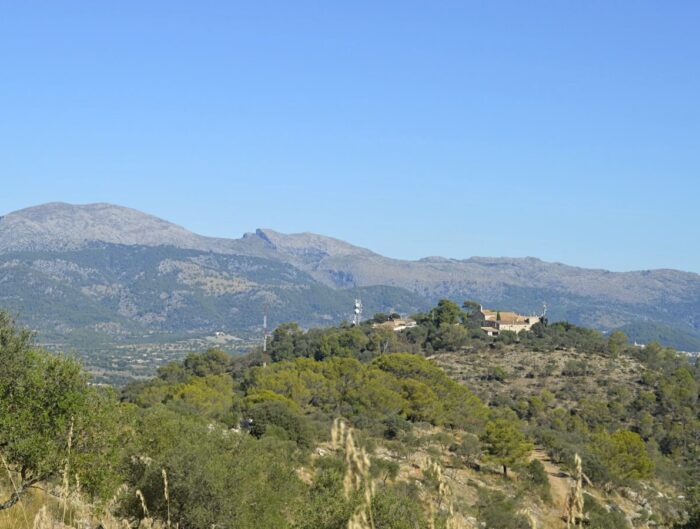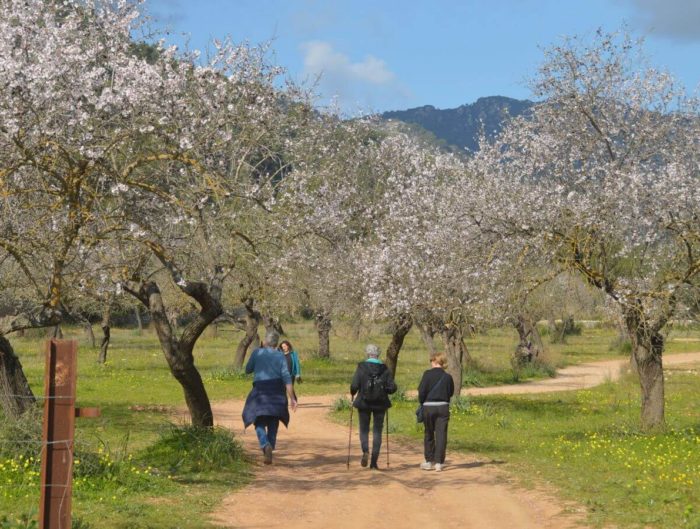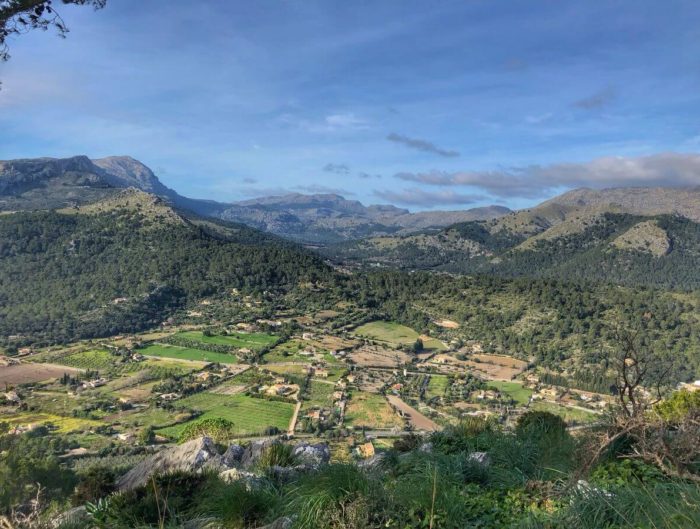
This walk through the Menut and Binifaldó public estates takes us into the heart of our beloved Serra de Tramuntana, in Escorca. It includes a short stretch of the GR 221 dry-stone route, with the option of completing a loop or returning the same way.
One of its attractions is seeing three characteristic Mallorcan landscapes on a single outing: pine woodland, holm oak woodland and olive groves. We start among pines and abundant vegetation, climb through shady holm oaks and finish in Binifaldó’s olive fields. Allow around 100 minutes of walking, plus stops and extra time for children’s pace.
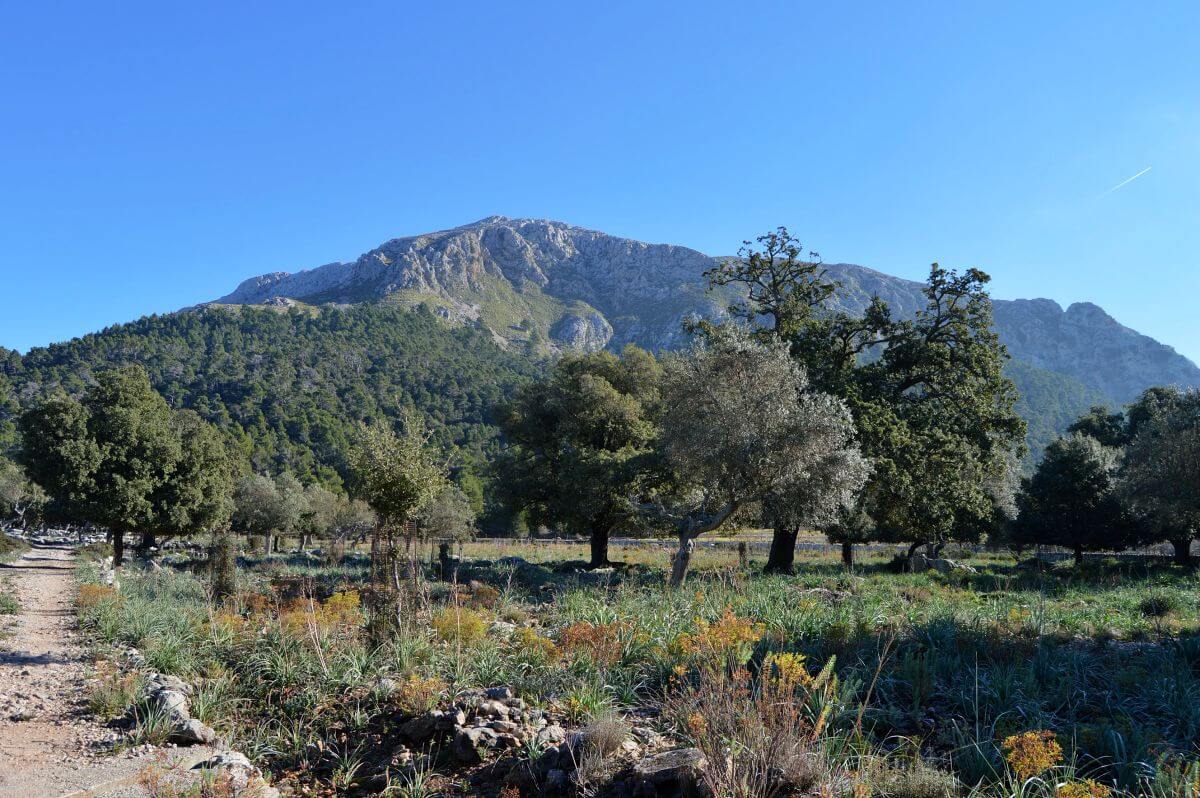
The route from Menut II to Binifaldó
Start at the Menut II recreation area, beside kilometre 16.4 of the Ma-10 between Lluc and Pollença. Travelling from Lluc towards Pollença, it is on the left. Use the designated parking spaces, subject to availability; allow extra time at weekends.
Take care to distinguish Menut I from Menut II. You could park at the first area, but starting at the second makes these directions easier to follow. After parking, face the road and head right to find the bridge.
Go beneath the bridge to reach the other side of the road. Immediately on the left is a broad dirt track and the sign “Finques públiques de Menut i Binifaldó”, marking the start. Use this underpass rather than crossing the Ma-10 carriageway.
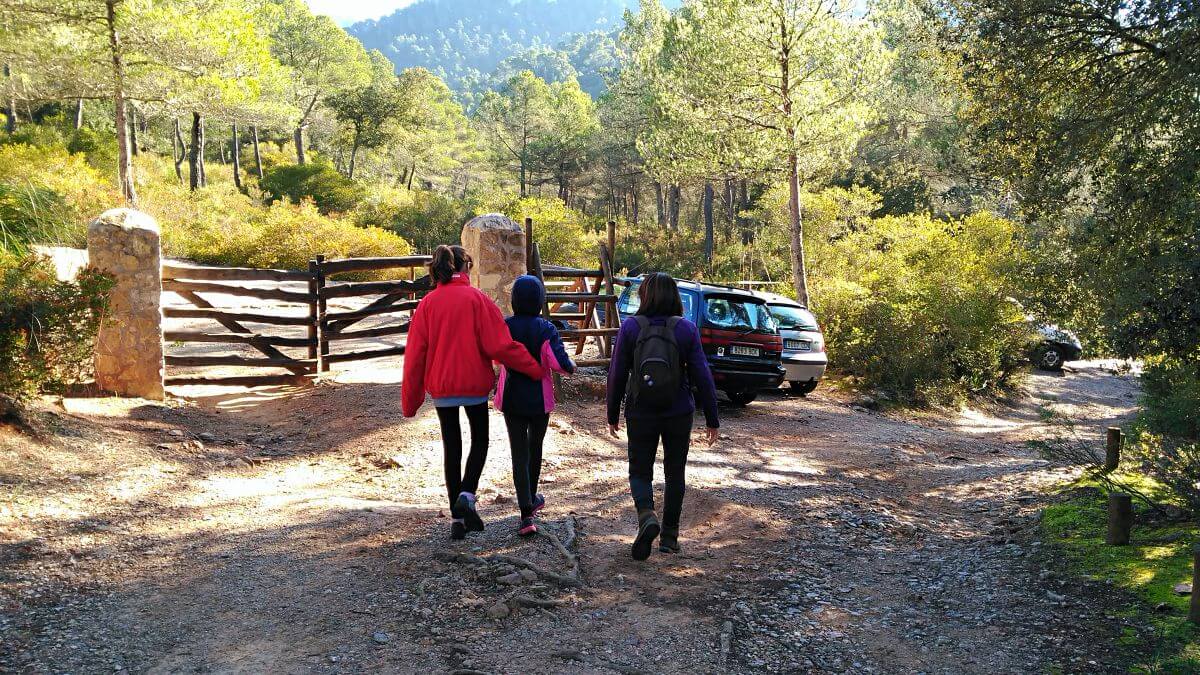
Go through the entrance gate, the only one we encountered on our visit, and follow the dirt track among pines, shrubs and flowers. Watch how the vegetation changes while staying on the path.
Font de sa Coma and the Coma de Binifaldó refuge
At a fork, you can visit Font de sa Coma and the small Coma de Binifaldó refuge. The spring collects water through an underground gallery, a system known as a qanat, with origins in the Middle East. Bring your own drinking water and do not rely on the spring as a potable supply.
After seeing the spring, return to the small refuge and take the uphill track beside it, entering beautiful holm oak woodland. Look for sitges, the platforms of former charcoal kilns. They are traces of the traditional use of the forest by charcoal makers, already established in the late 19th century.
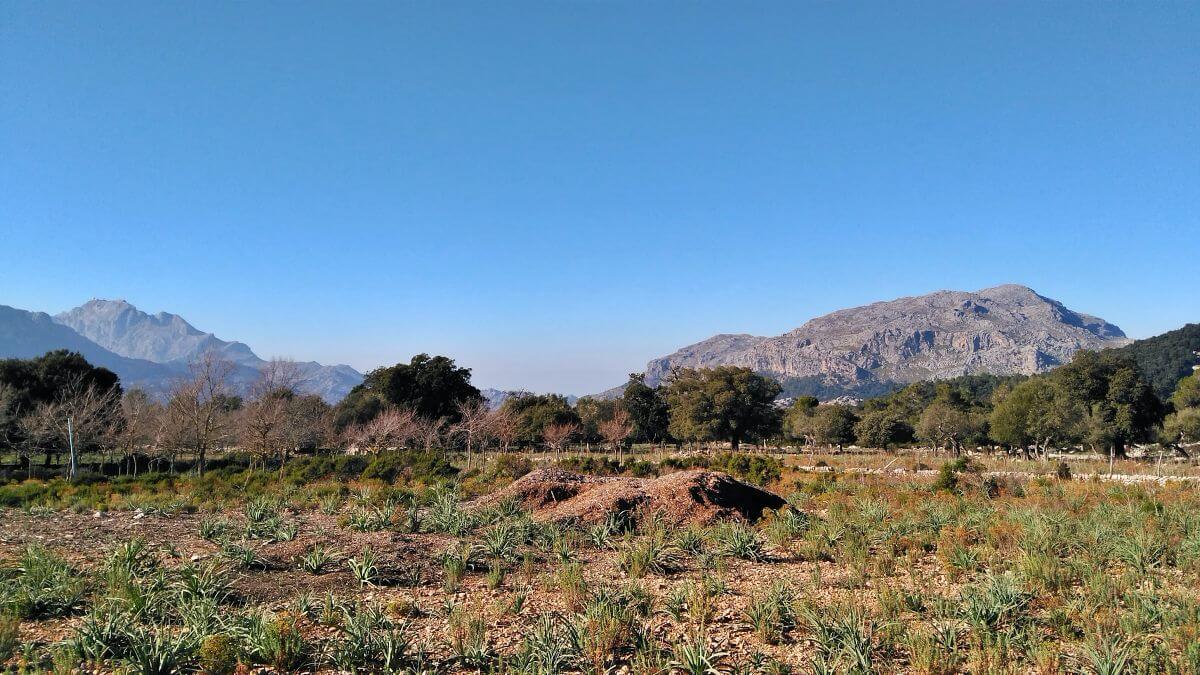
As you climb, the woodland opens into old olive fields known as the Sivellins de Binifaldó, named after the olive variety. The estate lies between Puig Tomir and Moleta de Binifaldó. Join the Camí Vell de Lluc a Pollença, part of the GR 221.
The GR 221 is a long-distance walking route through the Serra de Tramuntana’s dry-stone landscapes. Dry-stone construction fits stones together without cement or mortar. You can recognise it in walls, terraces and paved sections of old paths.
At the junction with the old road, turn right towards the Binifaldó houses. Notice the eroded limestone: its grooves and shapes are characteristic of the karst landscape found around Lluc.
Alzina d’en Pere holm oak
Before reaching the houses, look on the right for Alzina d’en Pere. This holm oak has been a protected landmark tree since 11 June 1993. The official Species Protection record (in Catalan) estimates its age at around five centuries, with a height of about 20 metres and a crown diameter of 19 metres. Its broad crown has offered shade to workers and walkers for generations. Enjoy the tree without climbing it or trampling the surrounding ground.
Continue past the oak into an open field, with the Cases de Binifaldó ahead and Puig Tomir behind them. Approach along permitted paths to see the exterior, respecting activity areas and fenced fields.
Cases de Binifaldó
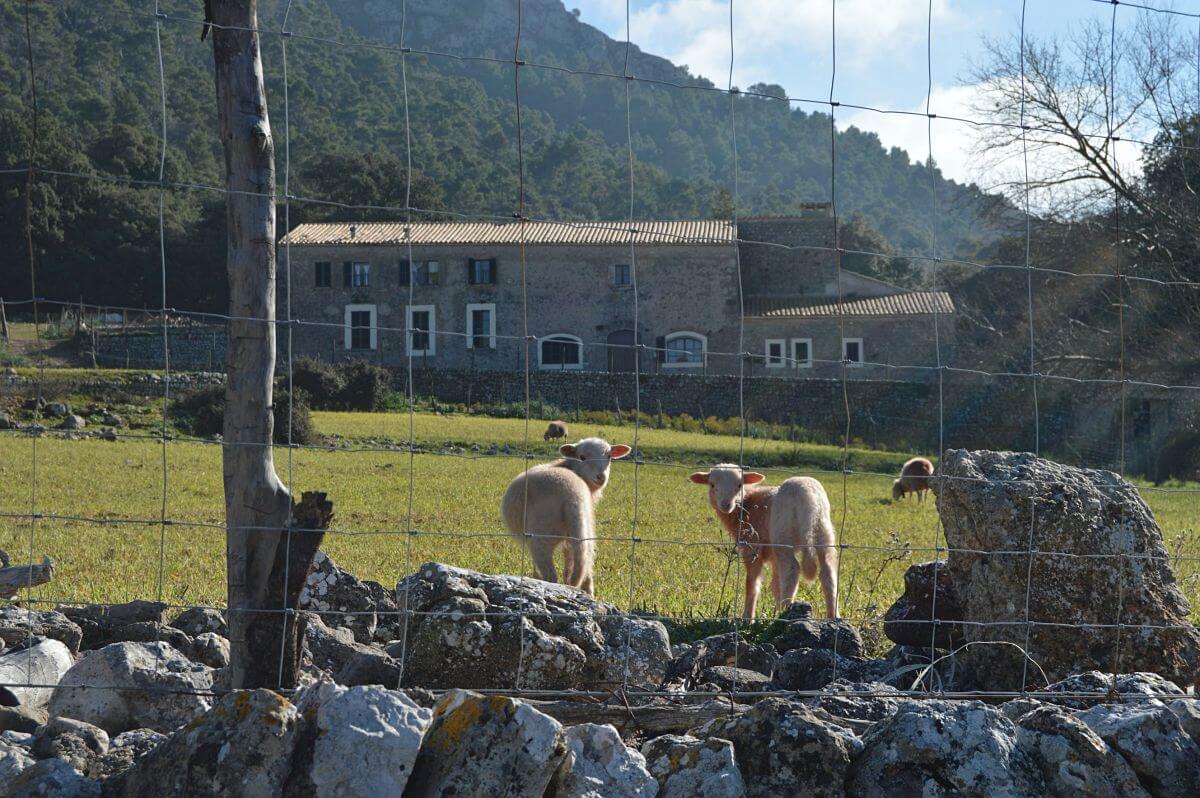
This is a traditional Mallorcan possessió, or rural estate, whose name recalls its origins as a Muslim-era farmstead. According to IBANAT’s Cases de Binifaldó information (in Catalan), the houses have served as an environmental education centre since 1985 and also as a mountain refuge. Seeing the exterior on a walk does not provide unrestricted access inside. Menut and Binifaldó were the first forests declared of public utility in the Balearic Islands.
Returning to Menut: the loop or the outward route
There are two options for returning. Retrace the outward route if you prefer to avoid the loop’s stretch of the Ma-10. To complete the circuit, find the three-arrow signpost in front of the houses: one points towards the Son Amer refuge walk, a separate and longer outing; another towards Pollença; and the one we need towards Menut. On our visit, it indicated around 15 minutes: treat this as a guide to the signposted stretch, rather than a guaranteed time all the way to your car. Follow the paved track downhill towards Menut.
The descent reaches the Ma-10 Lluc–Pollença road. The loop described here includes a stretch along this road to Menut I. There is traffic, so this is not a protected footpath. Keep children close. If you prefer to avoid the road, choose the return along the outward route while still at the houses. From Menut I, follow the paths within the recreation areas back towards Menut II and use the underpass beneath the bridge to complete the walk and return to the car.
For a longer family day out, see our guide to Mallorca picnic areas. Before using a barbecue, check the official Alerta Foc map (in Spanish) and current restrictions. Barbecue facilities do not guarantee that fires are permitted. Check any estate access notices before setting off, too.
Menut and Binifaldó walk facts
Frequently asked questions about Menut and Binifaldó
Is this a circular walk, or can you return the same way?
You can complete a loop by following the paved track downhill from the houses towards Menut, but the return includes a stretch along the Ma-10 to Menut I. Alternatively, retrace the outward route from Binifaldó to avoid that road section. These are two different return options.
Is the route suitable for children and pushchairs?
Our suggested age is around 5 and upwards, depending on walking experience. There are uphill stretches and uneven ground, so we do not recommend a pushchair for this route. A baby carrier is an option for an adult accustomed to using one. The circular option needs particular care on the road section.
Can you drink water from Font de sa Coma?
Do not rely on the spring as a drinking-water supply. Bring enough water for the whole walk, even if the spring is flowing.
You might also like