This walk in the surroundings of Raixeta is an easy, pleasant outing starting at the car park of the Raixa estate in Bunyola. The path takes us past almond and olive trees in the Serra de Tramuntana. Our route is out and back along the same path, turning around before the private houses of Raixeta.
A little history and an important note on private property
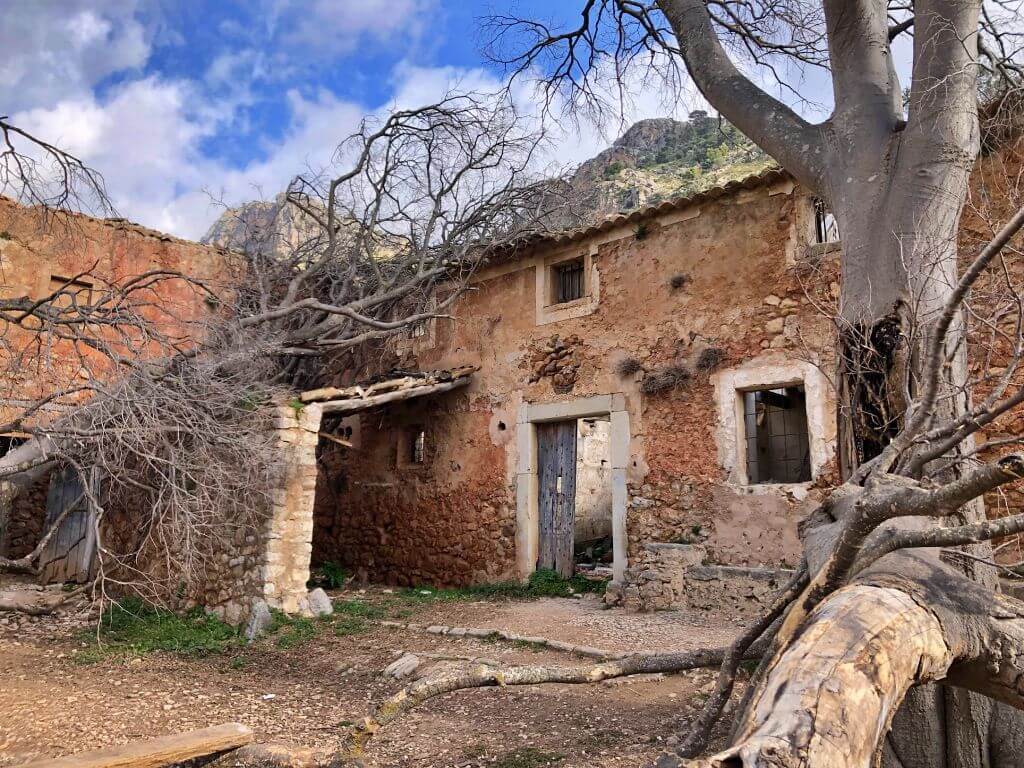
The Raixeta estate was built in 1750, according to the information we gathered for this walk. In 1770 it belonged to Ramon Despuig i Cotoner, the third Count of Montenegro (1692–1772), who also owned Raixa. The Despuig family played a significant part in shaping both properties.
The two estates were bought from the Despuig family in 1910 by Mallorcan businessman Antoni Jaume i Nadal (1847–1919), after his return from the Americas. The public purchase of Raixa by the Fundación Parques Nacionales and the Consell de Mallorca was formalised on 17 January 2002. That purchase did not make Raixeta a public estate.
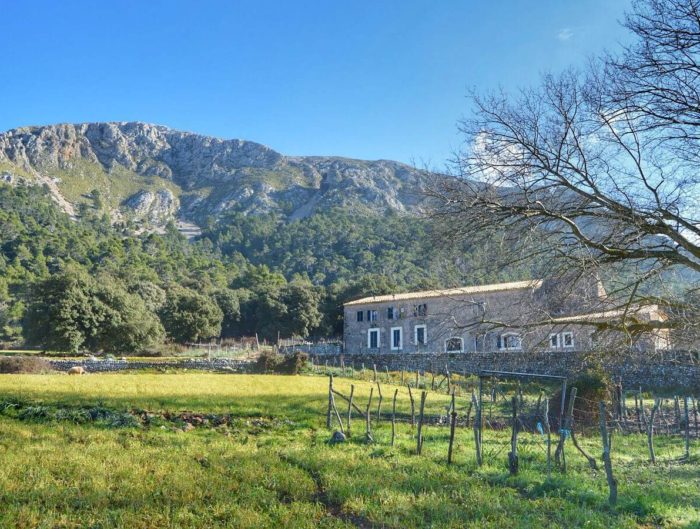
Raixeta belongs to the Jaume family and its houses are not open to visitors. The owner personally explained the situation and the limits of access to us. We follow his instructions here, even if other walking descriptions suggest entering the property. The buildings are also in ruins and can be dangerous. We have kept our photograph of the houses to help identify the place; it is not an invitation to enter them.
Preparing for the short walk around Raixeta
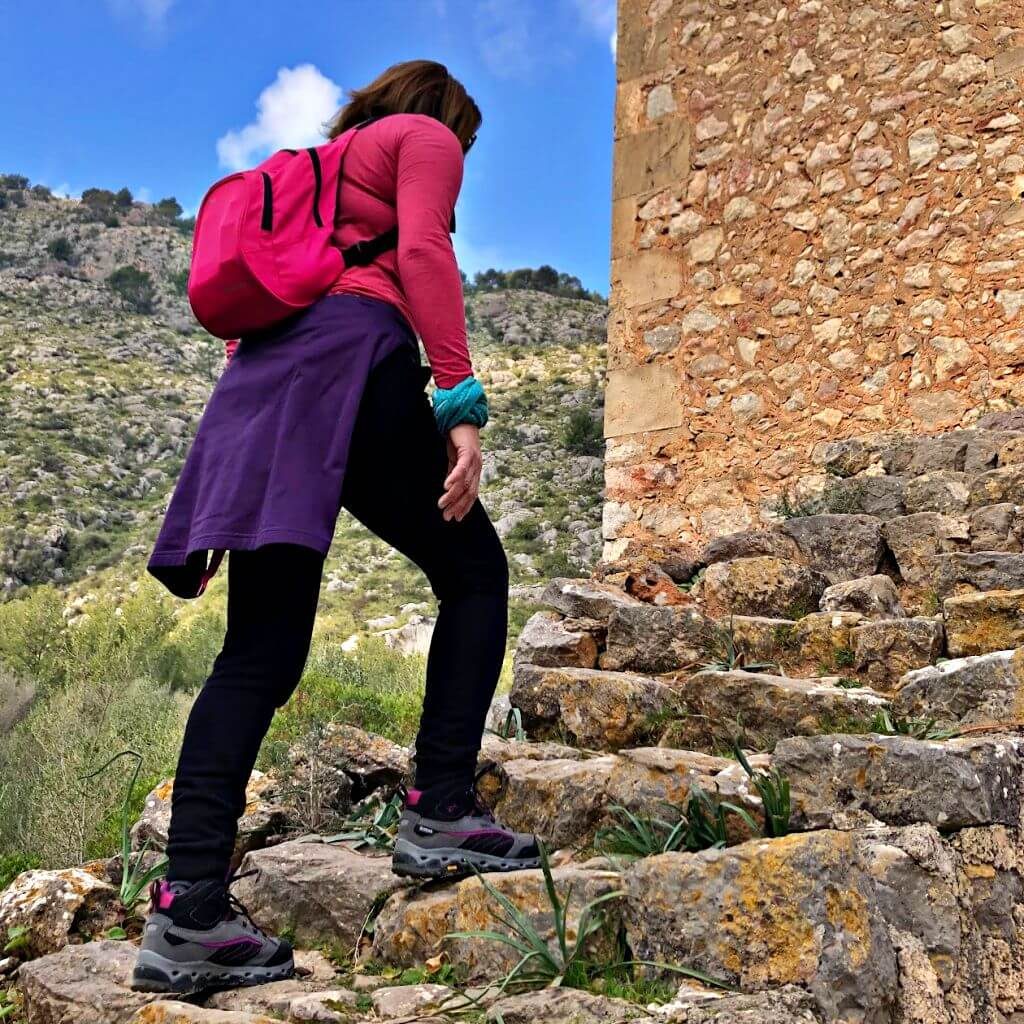
Our walk follows the approach from Raixa and the short stretch across private land that the owner told us could be used. Permission to pass along that stretch does not allow entry into the houses, exploration of the ruins or leaving the described route. Respect the owner’s instructions and any signs in place.
This outing shares part of the historic path between Bunyola and Valldemossa, but we do not cover the full crossing here. We explain that longer possibility separately below for walkers who want to plan it.
We recommend walking boots or hiking shoes: much of the path is stony and uncomfortable in flat-soled shoes. It is unsuitable for pushchairs. Bring water and avoid the hottest part of the day.
Starting the walk from Raixa
Leave the car at the Raixa car park, subject to availability and access conditions. To get there, take the signed turn-off at the roundabout on the Ma-11 Palma–Sóller road, around kilometre 12.2. We allowed roughly five minutes by car from this turn-off to the parking area.
The walk starts on the left, just before entering Raixa’s car park. An old olive tree and several signs help identify the path. One sign reminds walkers that dogs must be kept on a lead.
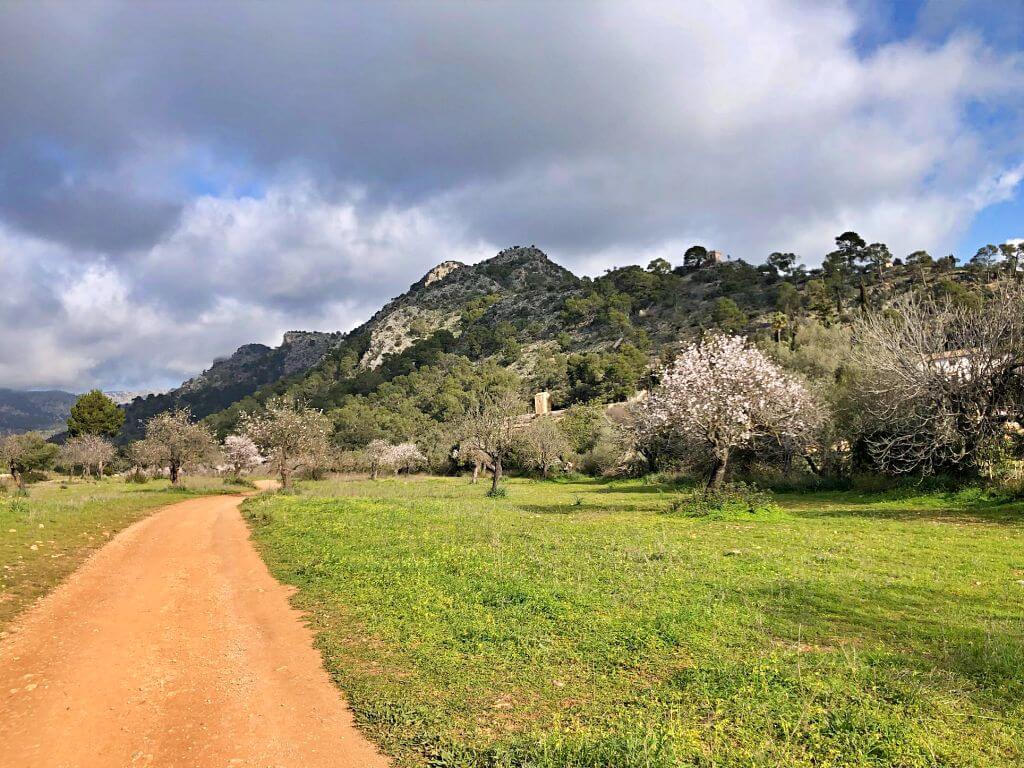
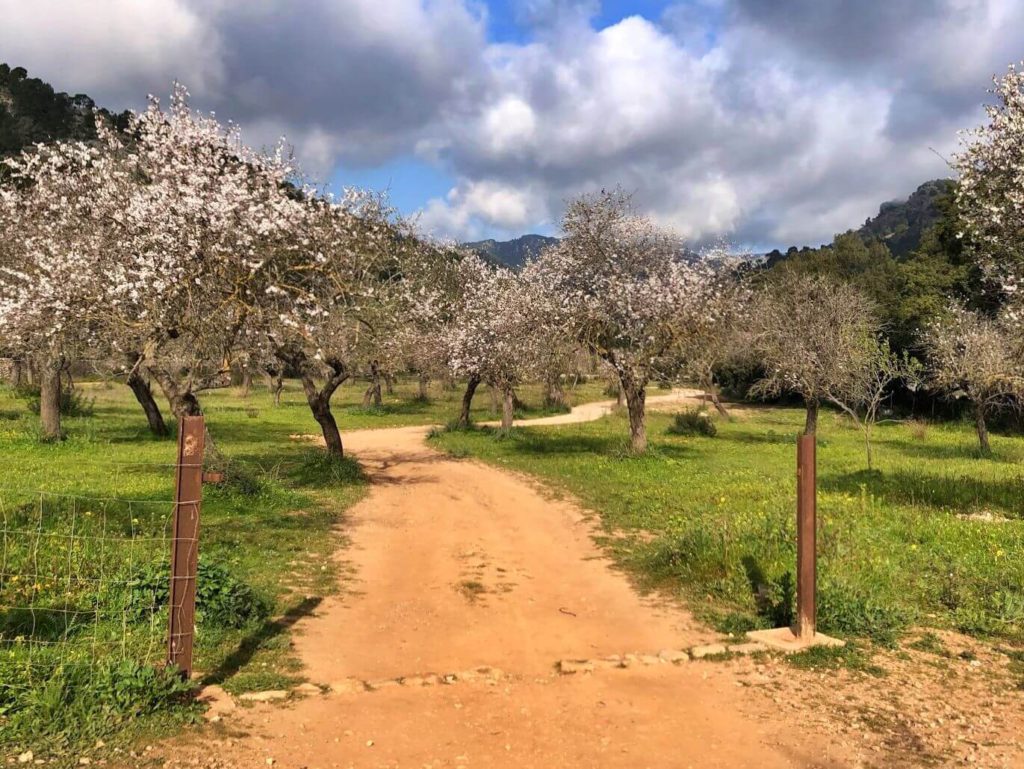
The first section is a pleasant walk among almond trees. It is particularly attractive during the winter blossom, whose timing varies with the weather. Walk parallel to the Torrent de Raixa, with the estate on your right.
From the ford to the uphill path
At the first fork, shown in the photograph above, turn right and cross the stream ford. After the ford, turn right again. When almost at the foot of the estate’s reservoir, turn left and pass through a wooden gate onto the uphill path. Do not cross the ford if flowing water or rain makes it unsafe.
The permitted passage and the return walk
The path was built in 1910 by Antoni Jaume i Nadal, according to the information we gathered about the estate.
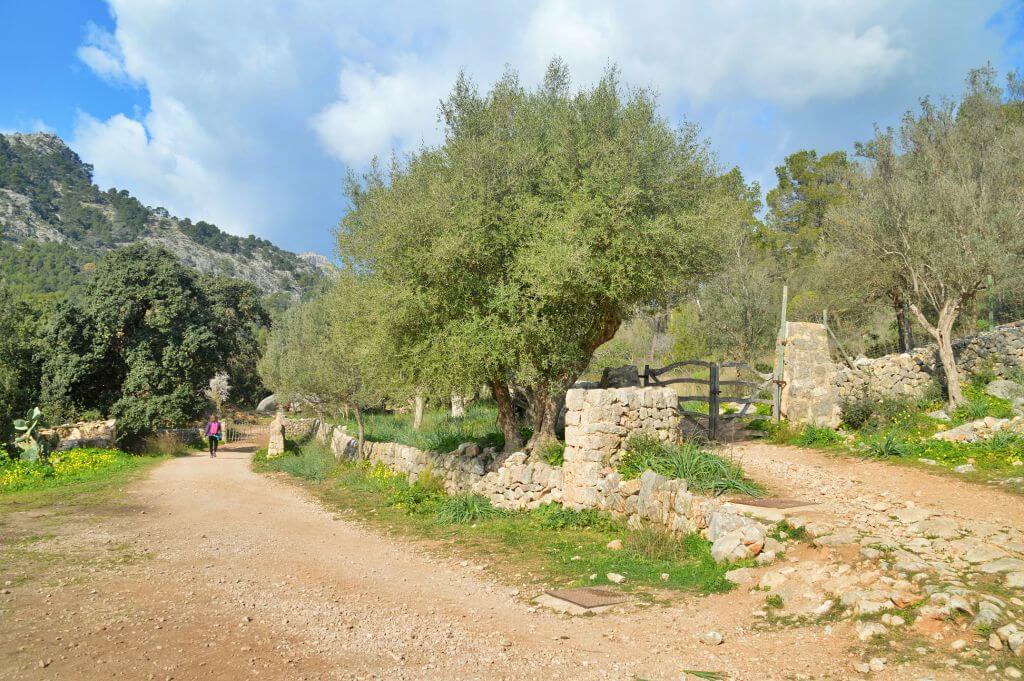
After a few minutes, reach another fork. From here the ground is private, but the owner told us we could use the short stretch of passage described here. Continue straight ahead at this fork.
A few minutes later comes another fork: take the left-hand branch, where stones along the edge help guide the way.
We are now close. On our visit, we reckoned the houses were no more than ten minutes from this point, but we do not enter Raixeta or its ruins. Before reaching that private enclosure, a turning on the left relates to the continuation towards Pastoritx and Valldemossa. This is where we finish our short approach walk and return to the car park along the same path.
The longer alternative: towards Pastoritx and Valldemossa
For a longer day out, there is a historic path from Bunyola to Valldemossa via Raixa, Raixeta and Pastoritx. Path records identify it as Camí de Valldemossa, number 33 in Bunyola, and Camí de Bunyola, de Pastoritx or de Raixa, number 15 in Valldemossa. These are catalogue numbers, not a guarantee of a fully waymarked family walking route.
The continuation heads towards the surroundings of Pastoritx and its spring before linking with the approaches to Valldemossa. Its interest lies in the landscape of old estates, terraces and water-management systems. In fact, purchasing water from the Pastoritx spring in 1807 helped make the development of Raixa’s gardens possible.
We have not personally walked this crossing. It is a separate outing lasting several hours, requiring advance checks of the permitted alignment and current path conditions. We do not provide turn-by-turn directions or apply the short walk’s time and difficulty to this alternative. If finishing in Valldemossa, arrange how to get back to your starting point; walking back means adding the return distance and time. Continuing towards Valldemossa does not grant permission to cross the private houses or enclosures of Raixeta or Pastoritx.
Combining the walk with a visit to Raixa
To combine the outing with the house and gardens at Raixa, plan around their opening days and hours. Dog rules also differ: keeping a dog on a lead on the walking path does not allow it into Raixa’s house or historic gardens.
Raixeta walk fact sheet
Frequently asked questions about the Raixeta walk
Can you enter the houses of Raixeta?
No. The houses are private and in ruins. The owner’s instructions about passage apply only to the short section of path described here, not to entry into the buildings or their enclosure.
Is the Raixa to Raixeta walk circular?
The walk described here is out and back along the same path. We turn around near Raixeta without entering the houses. The continuation to Valldemossa is a separate crossing that we have not walked.
Is this walk suitable for a pushchair?
We do not recommend it: the ground is very stony. Our fact sheet allows for a baby carrier, provided the adult carrying it is used to walking on this kind of path.
You might also like