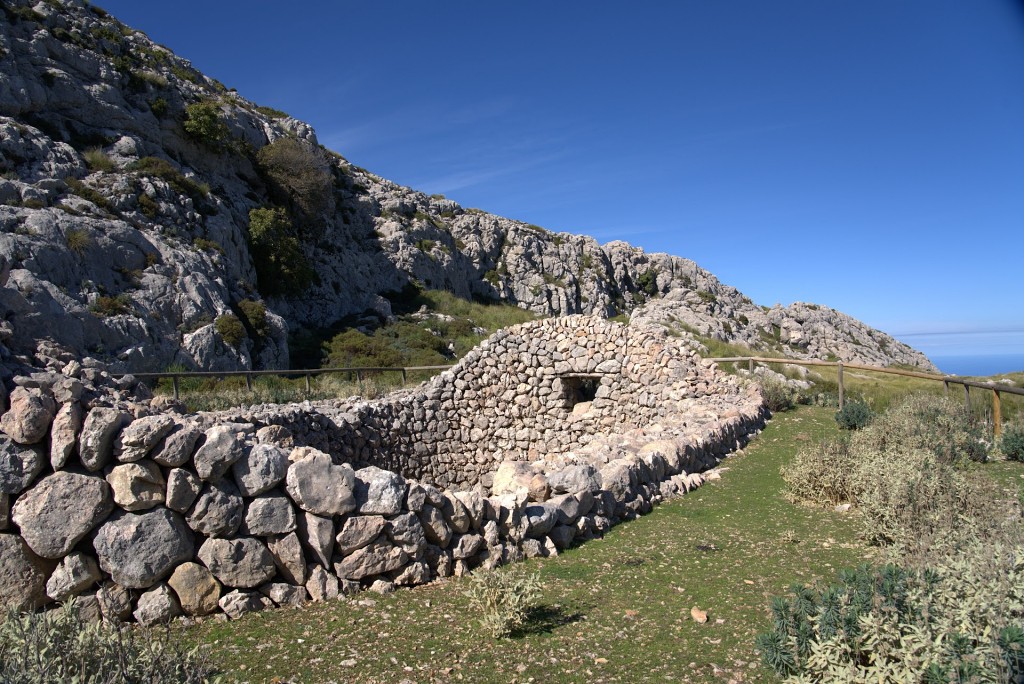
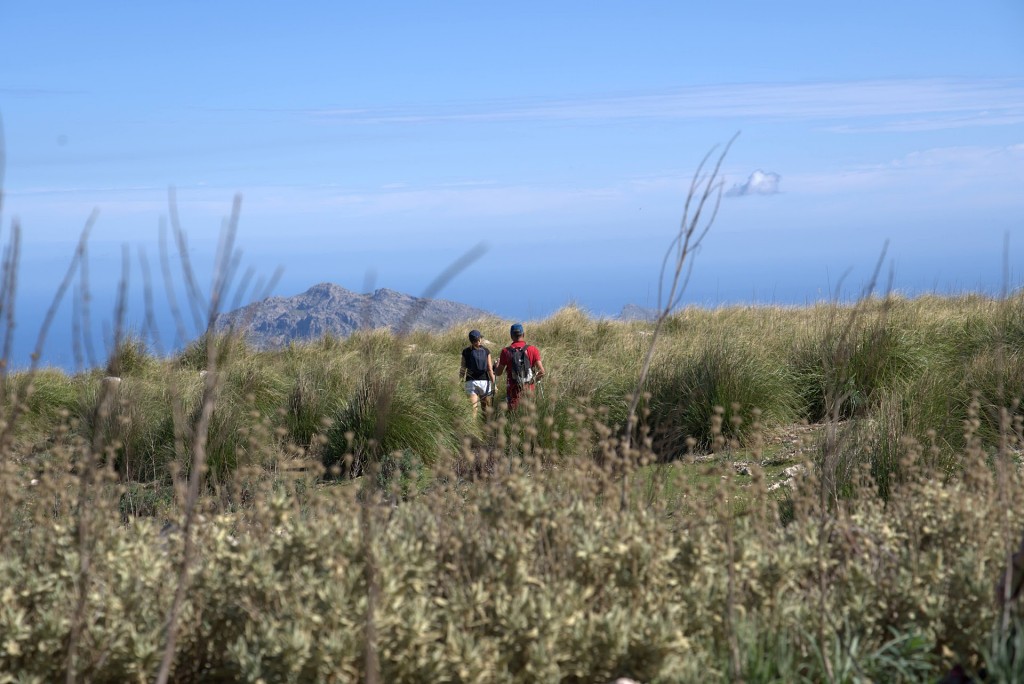
We’re stepping things up this time with a walk along ses Voltes d’en Galileu in Escorca.
If you’re looking for a family walk in Mallorca that combines history, nature and a bit of adventure, this is one for children who are already used to walking in the mountains. Along the way we’ll enjoy the views and climb the famous Voltes d’en Galileu, a series of stone-paved bends that zigzag up the hillside to the Galileu snow house, one of the most beautiful on the island.
Our walk starts at Son Macip, passes its snow house first and ends at the second one, the Casa de Neu d’en Galileu. Allow around 6 km and 2 hours 30 minutes in total, returning the same way. We reckon the summit is roughly another half hour uphill from the area around the second snow house.
What footwear should you wear?
We like to suggest what kind of shoes or boots to wear for each walk. For short, easy routes it’s simpler to choose, but it’s worth giving footwear some thought when the walk is longer or the ground gets rougher.
We wear Bestard footwear. It’s a Mallorcan company that specialises in hiking boots and shoes. At their outlet in Lloseta you’ll find new models as well as discounted footwear.
We wore high-cut hiking boots for this walk. The bends are steep and stony, so a sole with good grip is especially handy on the way down. Bring water and a warm layer for the upper part, which is more exposed to wind. If the paving is wet or icy, save the steep bends for another day. Our guide to walking in Mallorca with kids has more tips for planning your outing.
Snow houses in the Serra de Tramuntana
As this walk takes us to two snow houses, it’s worth understanding how they worked and why they were built in such out-of-the-way places.
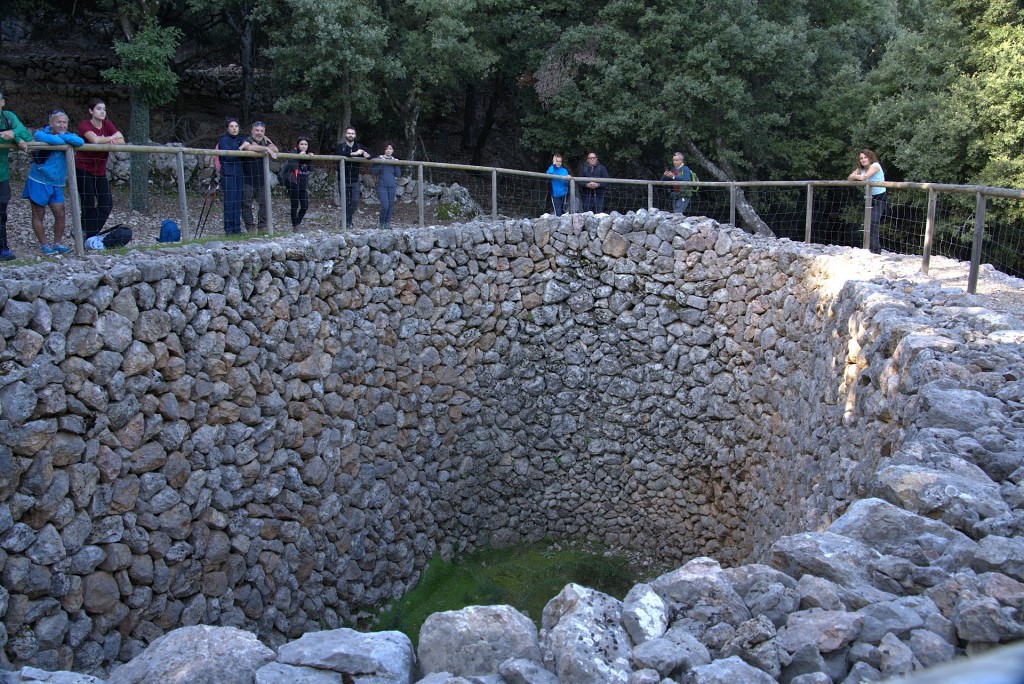
The cases de neu tell the story of the old snow trade in the Serra de Tramuntana. The trade was already regulated in the 17th century and lasted into the early 20th century, when industrial ice production took over. The Consell de Mallorca records eleven snow pits in the Massanella massif.
In winter, workers collected snow and packed it tightly inside the pits. They covered it with insulating vegetation such as diss grass to keep it until the warmer months.
In summer, muleteers cut large blocks called pans de neu and carried them down at night, using pack animals or carts to get them to market before too much melted. The blocks were sold as ice in Palma and other towns.
The ice was used to preserve food, cool drinks and for medicinal purposes. According to the story of Can Joan de s’Aigo, its founder organised snow collecting and mixed the meltwater from the blocks with fruit juice. The café is one of the stops on our guide to hot chocolate in Mallorca.
This work gave rise to the trade of the nevaters, the workers who gathered and stored the snow. In summer, the trade continued as muleteers brought ice down from the mountains at night.
On this walk we’ll visit two of the Serra’s best-known snow houses.
Casa de Neu de Son Macip. The first snow house is on the public Son Macip estate and stands just before the hairpins. Snow storage on the estate is documented as early as 1619.
Casa de Neu d’en Galileu. We reach it after climbing ses Voltes, close to the summit trail. According to the Balearic Government’s route guide, the path is named after Antoni Català, known as Galileu, who undertook to rebuild snow houses on the mountain of sa Mola in 1692.
Starting the walk at Son Macip
The walk starts by the Son Macip residential development near Lluc Sanctuary, in the municipality of Escorca.
When you reach the Lluc petrol station, carry straight on along the Ma-10 towards Sóller instead of turning off towards the monastery. After about 1.5 km, the development is on your left. We parked in the small unpaved area just before the entrance, outside the private development. Space is limited. If you can’t park there in line with the signs, you can take the signposted route from Font Coberta beside Lluc car park, which makes the walk longer. If you’re coming by bus, check the Lluc TIB bus stop.
Once parked, walk uphill through the development. Almost as soon as you leave the parking area there’s a fork. Keep heading uphill.
Follow the bend and climb a little farther to another fork. Keep going uphill around the house. A few metres on, look to your left for the path up the mountainside.
There’s a large sign reading La Mola – Son Massip and a wooden arrow for Voltes d’en Galileu and Font des Prat. Official documents spell the estate name Son Macip. You may see Son Massip on the sign.
Casa de Neu de Son Macip
The climb starts on an easy forest track. After a few minutes you come to a metal gate with a wooden stile to help you cross it.
Keep going for another 10 minutes until you reach a fork. An arrow tells you to take the right-hand path and gives 1 hour 1 minute to the Casa de Neu d’en Galileu, where our walk ends.
Along the way, look out for the remains of charcoal burners’ huts and the sitges, rings of stones on the ground where charcoal was made.
After just over a kilometre from the start, we reach the Casa de Neu de Son Macip. It’s easy to spot on your right, and a wooden arrow shows you where it is.
This is a traditional building that has been partially restored. Snow collected in winter was stored here and packed down to make ice. It was kept until summer for cooling food and drinks and for medicinal uses.
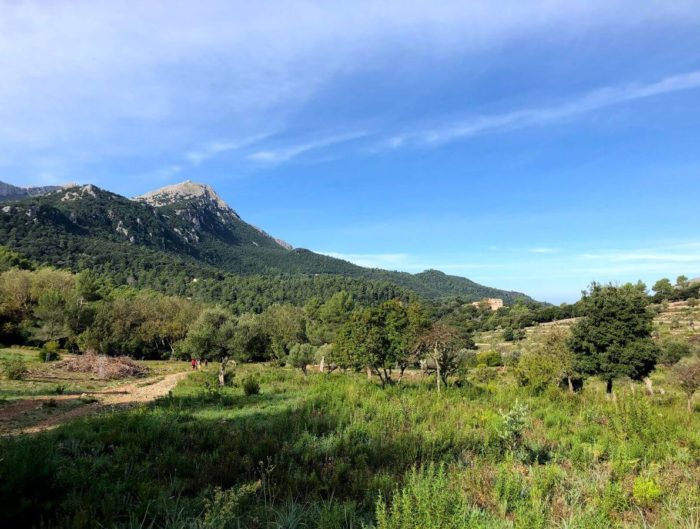
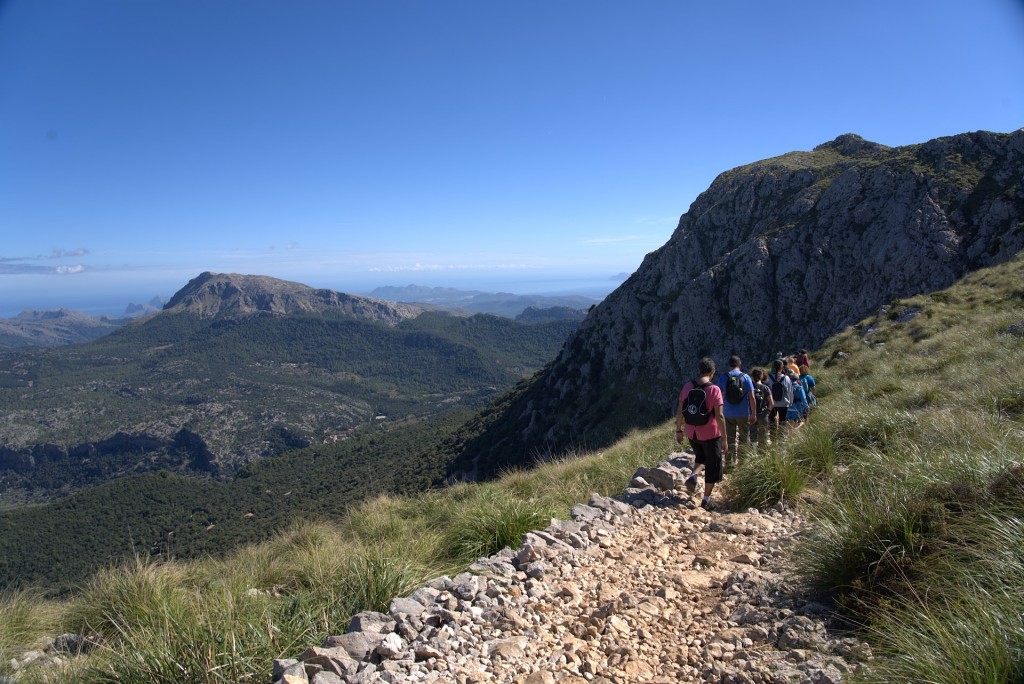
After our first stop we get back onto the path, which now gets steeper. This is the hardest part of the walk, but the opening views make the climb worthwhile.
Ses Voltes and the Casa de Neu d’en Galileu
For just under a kilometre that feels rather longer, we climb a zigzagging stone-paved path built to make the ascent easier. We estimated a climb of about 200 metres on this stretch. The Balearic Government’s guide gives around 250 metres for the switchbacks. Those tight bends across the hillside give ses Voltes d’en Galileu its name.
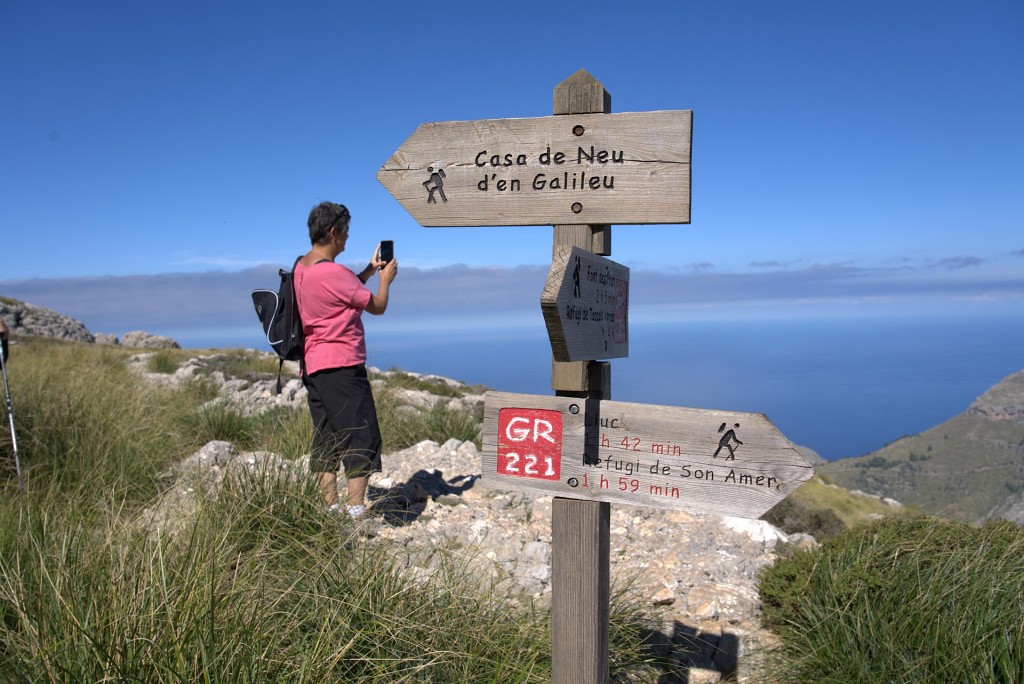
Once you finish climbing, the path levels out for around 350 metres across open ground. Soon you reach a signposted junction, where a sign shows that the Casa de Neu d’en Galileu is close by.
Take the turning on the right. The path on the left continues towards the summit. After about 100 metres you reach this wonderful stone structure, a reminder of the work of the nevaters.
One detail to look for is the dry-stone walls outside. They were positioned so that snow blown across the mountainside collected on the sheltered side. That made it easier to gather the snow and carry it to the pit.
Beside the snow pit stands the Casa dels Nevaters, a larger building that sheltered the workers who gathered and stored the snow.
They spent whole days up in the mountains in winter and needed somewhere to rest, cook and get out of the cold. The rectangular house with dry-stone walls is part of the restored site. Look for the pit and surrounding terraces too, which help you picture how the work was organised.
We return the same way. Go back to the signposted junction, walk across the flat stretch, descend the paved bends and pass the Son Macip snow house again before returning to the residential development.
You can also combine the walk with a visit to Lluc or plan a night in the area with our guide to mountain huts in Mallorca.
Walk facts
Frequently asked questions about ses Voltes d’en Galileu
Can you do this walk with children?
We suggest it from age seven for children already used to walking up and down mountain paths. You can turn back at the Son Macip snow house for a shorter walk through the woods and skip the steepest bends.
Where does the walk end?
At the Casa de Neu d’en Galileu, the second snow house. The walk facts are for the return trip from Son Macip to that point. Allow extra time if you start from Lluc or continue to the summit.
When is the best time to go?
Spring and autumn usually offer good walking conditions when the path is dry. In summer, pick a cool morning. In winter, check the forecast and skip the climb if there is snow or ice.
You might also like