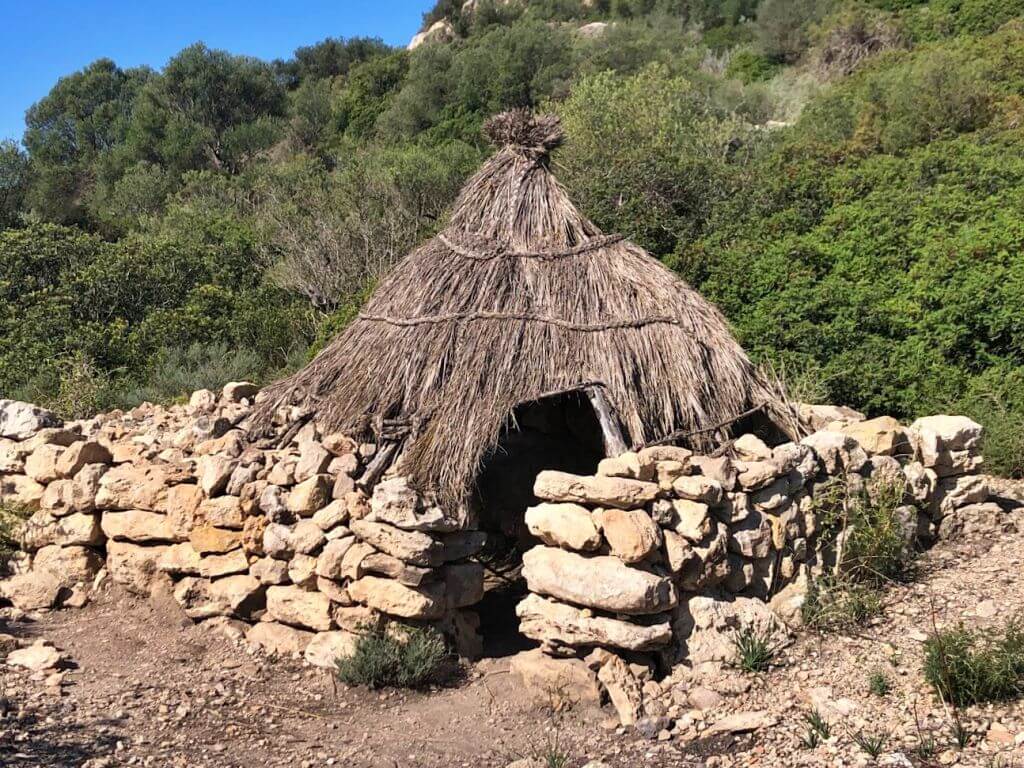
The Puig de sa Morisca Archaeological Park is in Santa Ponça, in Calvià. There are several paths to explore with kids. Our favourite takes in the remains of the Talayotic settlement, the restored charcoal burners’ huts and three viewpoints, all in about 90 minutes.
According to Calvià Town Council, the park covers about 45 hectares and has around 8 km of paths. The open-air park is free to visit all year round.
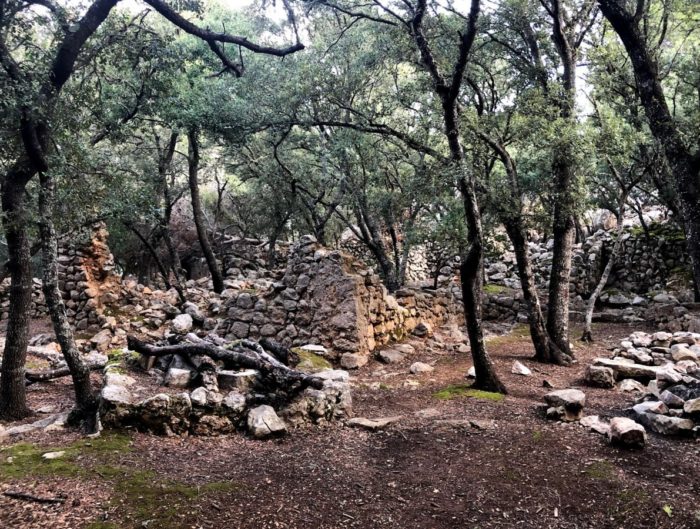
The park offers several routes past archaeological sites. In the Iron Age, the Talayotic communities lived here, and a walk up to the settlement gives you an idea of how they used the hill to watch over and defend their territory. There are also remains from the later Almohad period.
There is more to see on the way:
- Nature. The paths take us through one of the most characteristic landscapes of the Balearic Islands.
- Traditional ways of life. Charcoal burners, shepherds and roters, some of the poorest farmers, once worked on this hill and left traces of the structures they used. Some of these structures have been restored and can be visited.
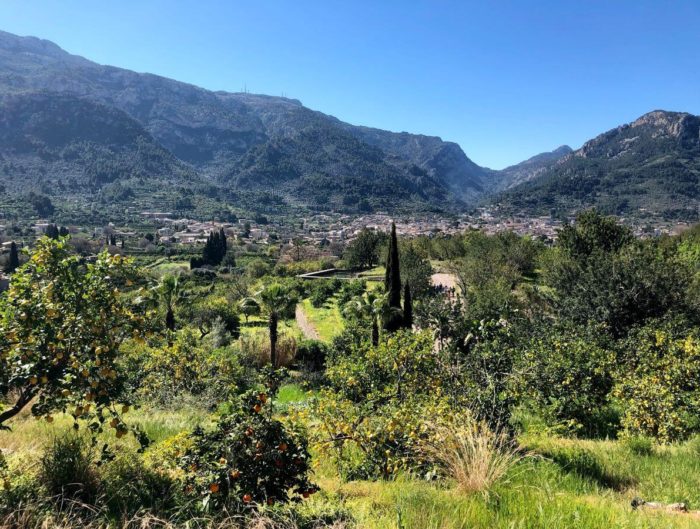
- Landscape. The viewpoints give you some of the best views in Calvià. Inland, Puig de Galatzó dominates the mountains. On the other side lies the built-up resort coast, possibly the saddest and most striking part of the visit.
Puig de sa Morisca: the walk step by step
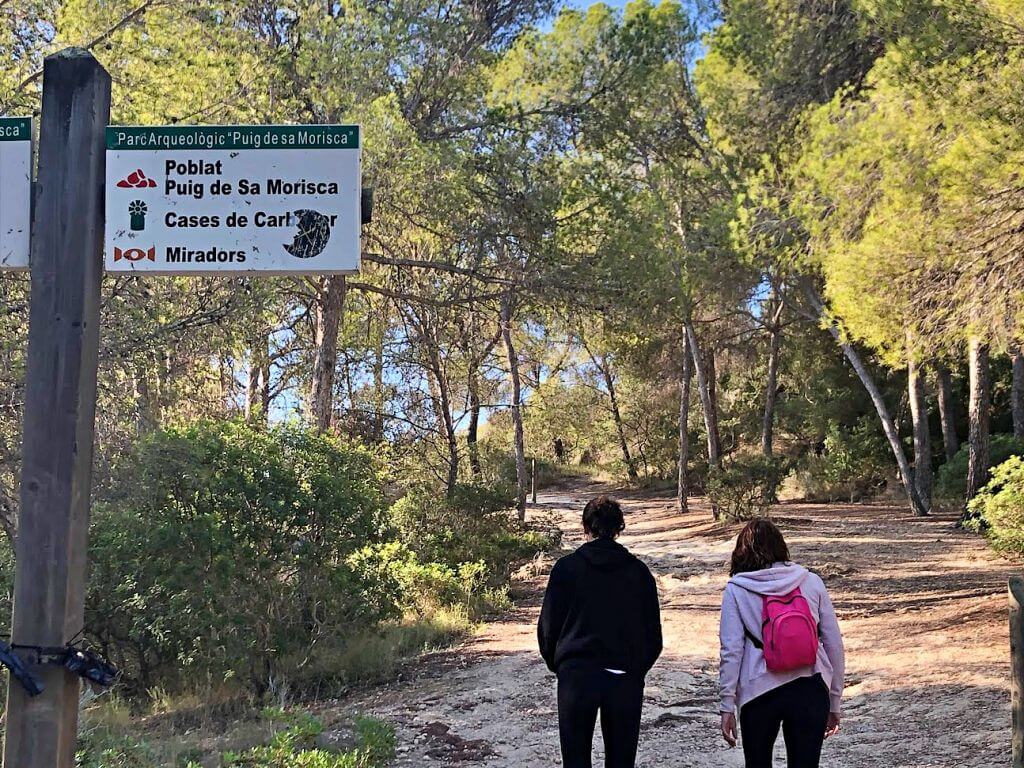
- We start on Carrer del Puig de na Morisca in Santa Ponça. Look for the large car park and the big gate into the park.
- A little way uphill, we pass the archaeological park building on our left, where the future museum is being developed.
- Keep going uphill until you reach a fork with two signs. Follow the sign on the right (see photo) for the viewpoints and the restored charcoal burners’ huts.
- The dirt track soon gets a little trickier as it climbs. In our original walk, we came to a set of wooden steps. Our first goal is the first viewpoint and the settlement. The council has since repaved sections of the paths to the summit and Tower III and added dry-stone steps. Follow the signs even if the path surface looks different.
- We come to another fork with two signs. We’ll use both paths, but start on the right, following the sign for “Torres del poblat del Puig de Na Morisca” and the viewpoints.
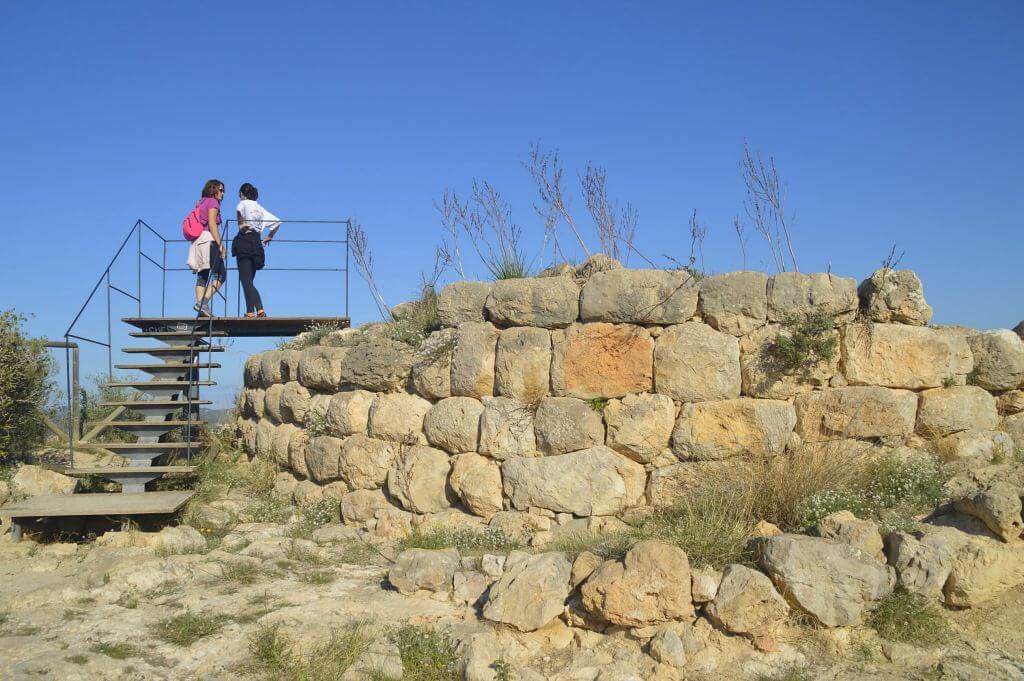
- After climbing a little farther, we reach our first stop. A sign and a fence mark the Poblado del Puig de Na Morisca ahead of us, where much of the local population probably lived in the Iron Age.
- Facing the remains of the settlement, there is a gentler climb on the right and a higher one on the left. The first viewpoint is on the right. A little path leads to the top, where the view of Santa Ponça’s coast is spectacular and the impact of speculative development is plain to see.
- Head back down, then climb up the other side to find the two remaining viewpoints.
- The climb takes no more than ten minutes. We come first to a large red cross, then the two remaining viewpoints, with a 360-degree view of Calvià.
- The summit also has the remains of a Talayotic tower. Three rooms were built there later, during the Islamic Almohad period, around 1200. You can still see their remains.
- Once we’ve taken in the views, we go back down the same way to the previous fork. This time take the left-hand path to the Cases de Carboners, the charcoal burners’ huts.
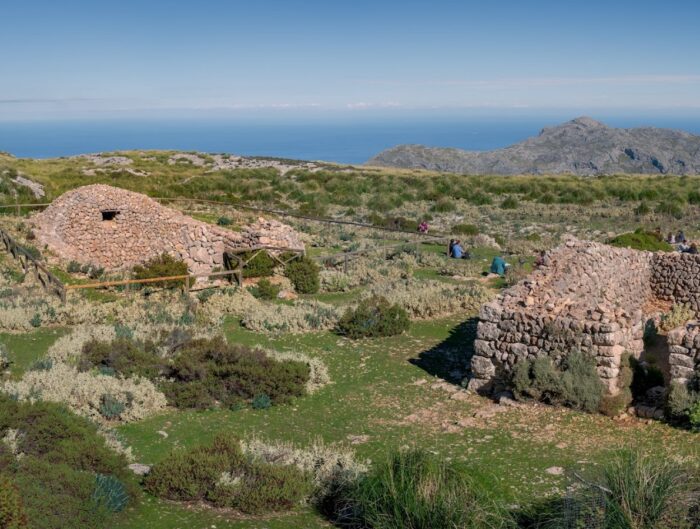
- We get there almost immediately. Look for the sitja, the hearth where they made charcoal, and two restored huts. The burners often had to spend several nights there keeping an eye on the process.
- Now go back the same way to the car park.
If you feel like it, you can try another route in the park. We only wanted a walk for part of the morning, and this was just right. We agreed to come back because we liked the setting and all the history that goes with it.
Walk facts
Is the Puig de sa Morisca museum open?
The building by the entrance already exists and has hosted exhibitions. Visit Calvià lists a panel exhibition about the park and a small display on a 13th-century Islamic house. The permanent exhibition, Humans in Contact, is still being developed according to Calvià Town Council. For opening times and access to the building, check with the park at morisca@calvia.com or on +34 971 13 92 18.
Do you have to pay to visit the park?
The paths, viewpoints and open-air archaeological sites are free to visit.
Can you do this walk with a pushchair?
We would use a baby carrier on this route. To reach the viewpoints, you need to climb steps and walk over uneven ground.
For another outing in Calvià, try the Galatzó Public Estate. We also have a family hiking guide to Mallorca.
You might also like