Two stops make this walk worthwhile for us: Valldemossa’s La Trinitat hermitage and the Mirador dels Tudons, with its broad stone staircase in the middle of the Miramar woods. In between are the Bufador dels Ermitans, the ruins of Ses Ermites Velles, charcoal-burning platforms and a lime kiln. There’s a little of everything in a short walk, and plenty to show children about how people once lived and worked in the Serra de Tramuntana.
Allow around two hours from Can Costa for a family walk. The climb to the hermitage follows a paved lane. The woodland loop has uneven ground and several forks. If the woodland path is closed, you can still do the walk to the hermitage and back by the same lane.
1. From Can Costa to La Trinitat hermitage
Start on the Ma-10 between Valldemossa and Deià, opposite Can Costa restaurant, where the lane climbs to the hermitage. Coming from Valldemossa, there’s a small open area on the left past the petrol station, before the bend by Can Costa. Spaces are limited. Park where signs permit and cross where you have a clear view of traffic. From the other side you can follow the path alongside the Ma-10 to Camí de l’Ermita.
If you’re coming by bus, check the timetable and the Ermita de la Trinitat stop on TIB route 203. From the start of the lane, it took us about 20 minutes to walk up. The municipal route notes (in Catalan) give the length as 866 m one way to the hermitage. Vehicles also use this lane. Look out for the stone gateway and cross on your left.
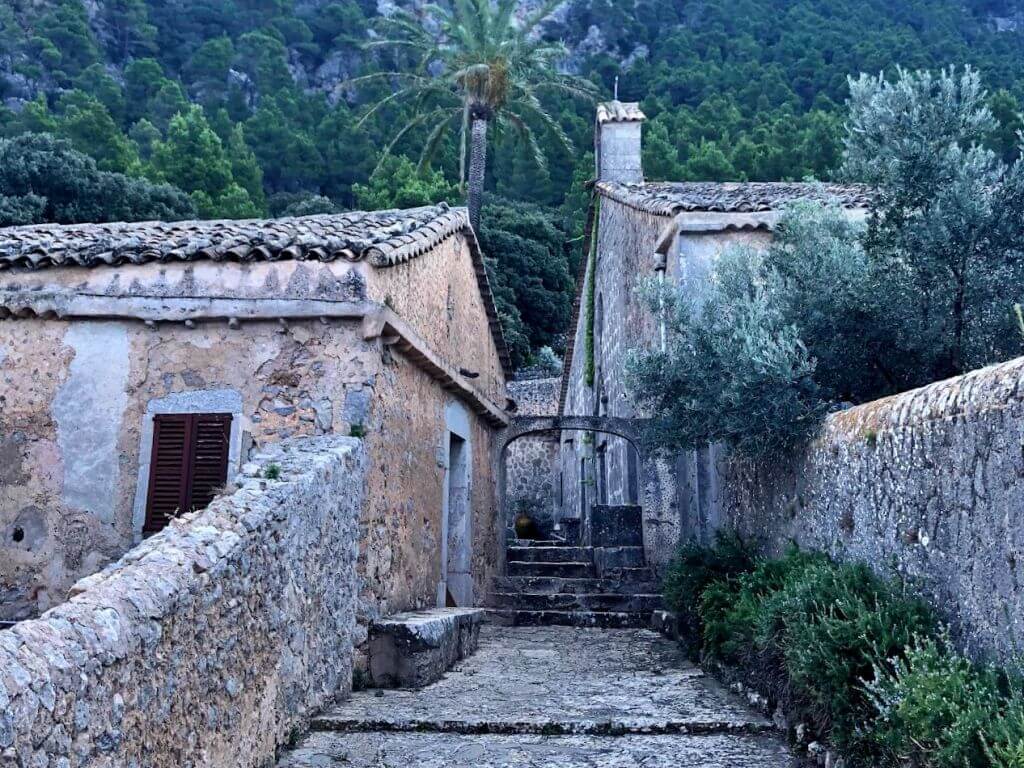
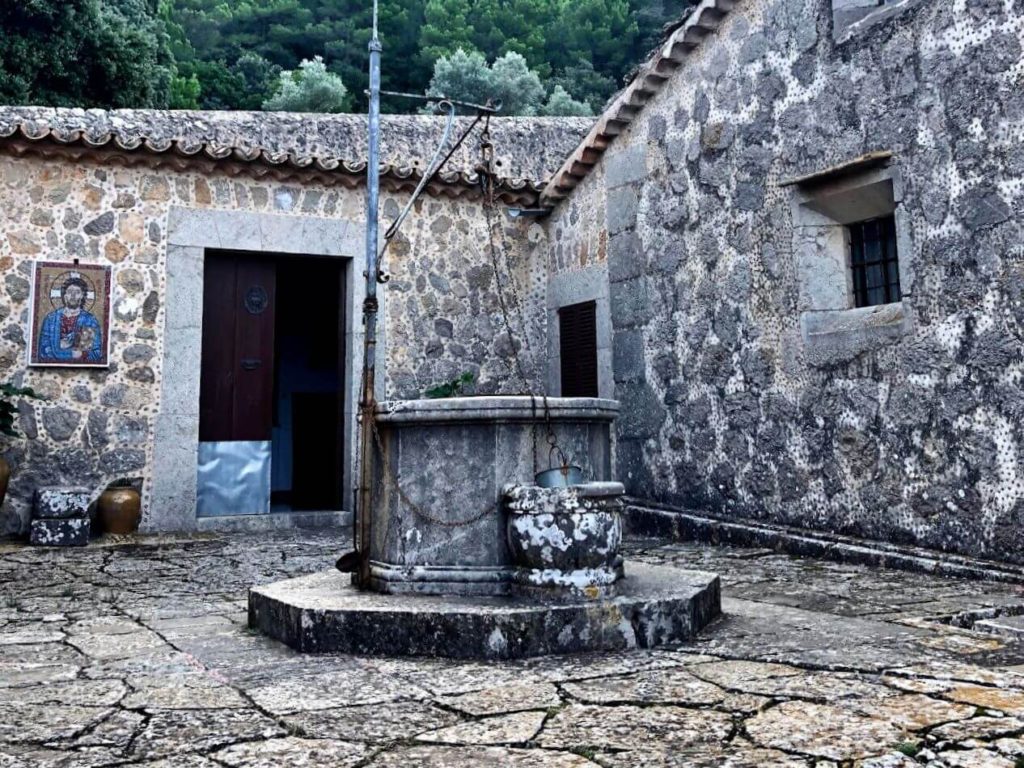
Joan de la Concepció Mir founded the hermitage in 1648. The present chapel dates from 1703 and a community of hermits still lives here. If the visitor area is open, take a look at the courtyard and viewpoint. Keep voices low and respect the private areas. We found stone tables in the open area outside, and there were toilets at the hermitage on our visit. Bring water.
2. The Bufador dels Ermitans and Ses Ermites Velles
From the stone tables, look for the woodland trail by the gate at the far end of the open area. Only continue if the path is open and signs allow access. At the first fork, go right. The left branch is where we’ll come out at the end of the loop.
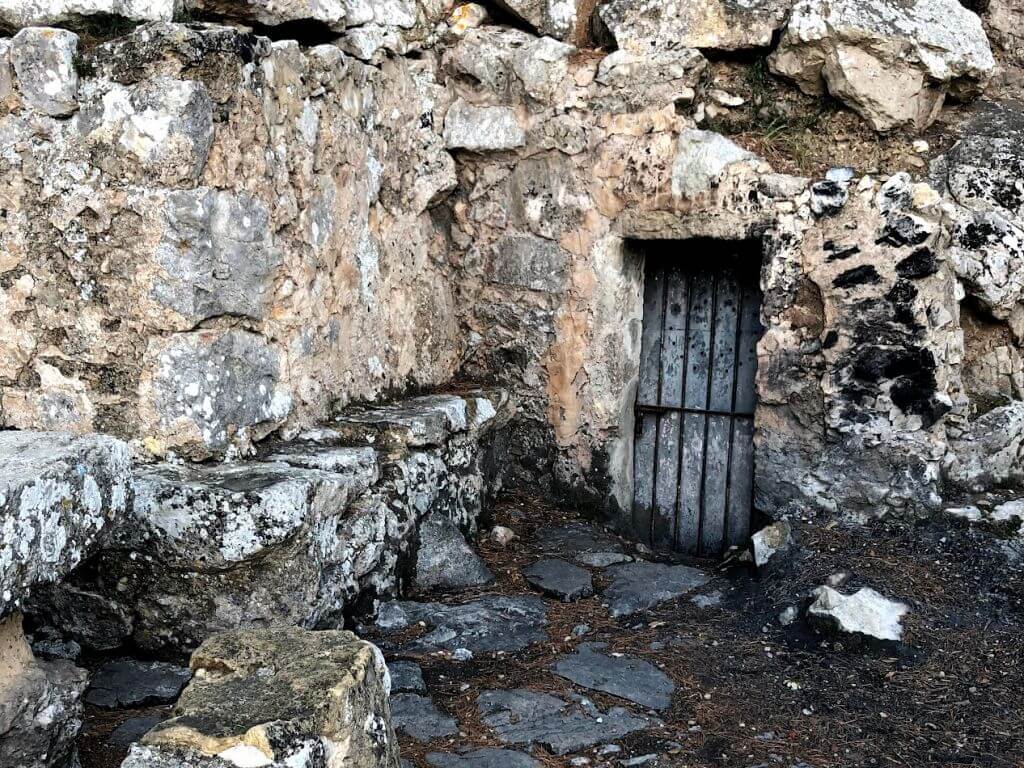
Just past a small stone picnic area, look out for the Bufador dels Ermitans. Local tradition has it that the hermits used the cool air from this cavity to keep food fresh. It’s a good spot to tell children how people managed without fridges.
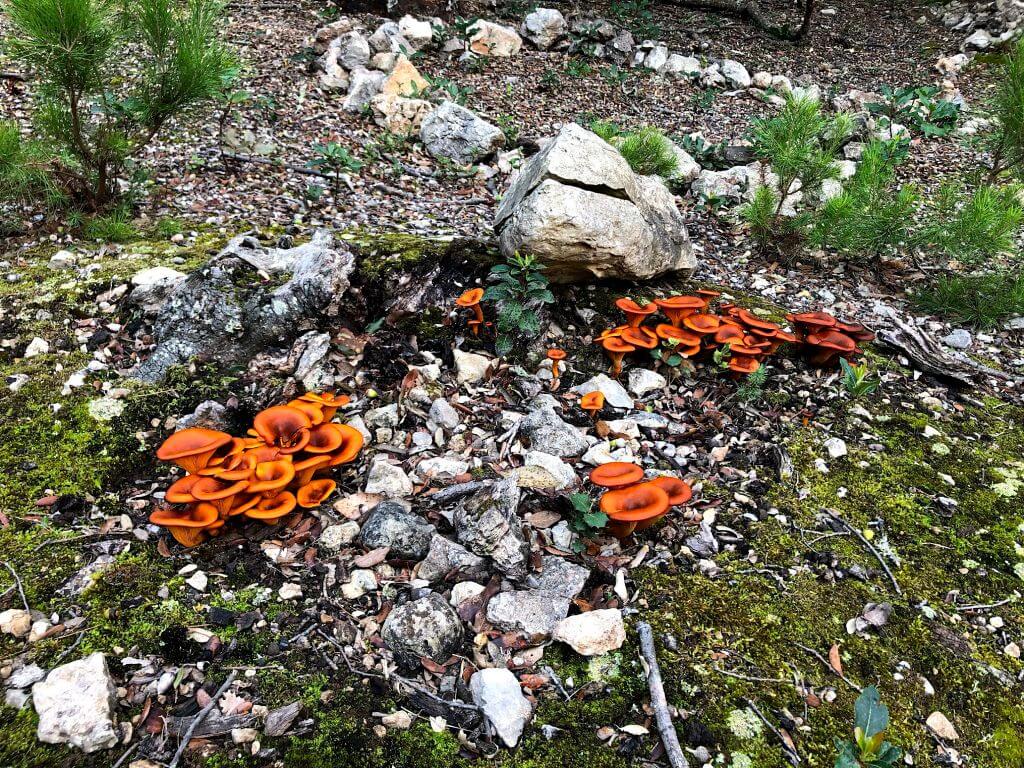
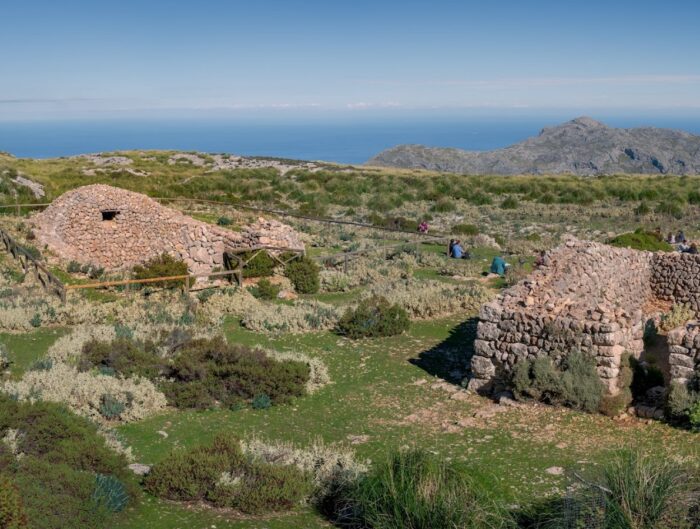
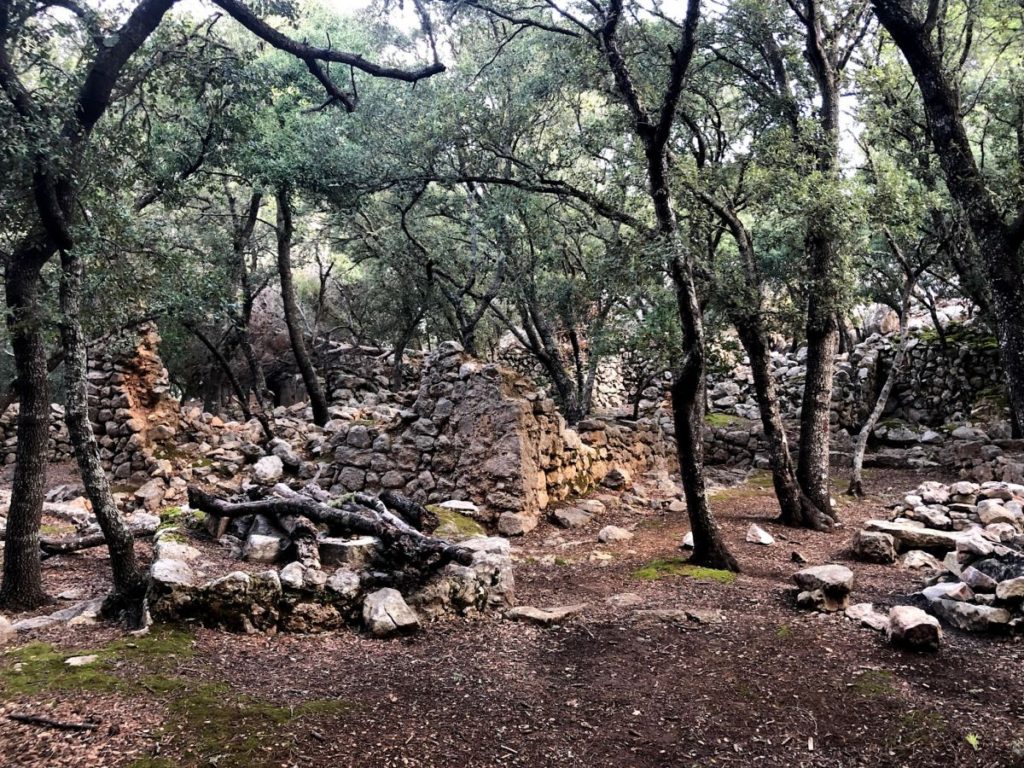
We were surprised by how many shapes, sizes and colours of mushrooms we found and stopped to take a few photos. From the Bufador, keep climbing. After about 15 minutes you reach Ses Ermites Velles. Among the holm oaks you can see stone walls and the remains of buildings used by the hermits until the 17th century.
3. The lime kiln and the people who worked in the woods
From the ruins, the path slopes gently down to a clearing. Look for the large lime kiln in the photo. The calciners fired limestone with wood to make lime, which was used for jobs such as whitewashing walls. Among the holm oaks, look for low rings of stone. These are rotlos de sitja, where charcoal burners stacked and covered wood, then kept it burning slowly to make charcoal. The traginers carried these goods to villages with pack animals. Elsewhere in the mountains, nevaters gathered snow and stored it in stone snow houses to sell later. These were hard trades, often learned within the family. If you’re walking with children, see who can spot both shapes along the trail: the low charcoal ring and the deep hollow of the kiln.
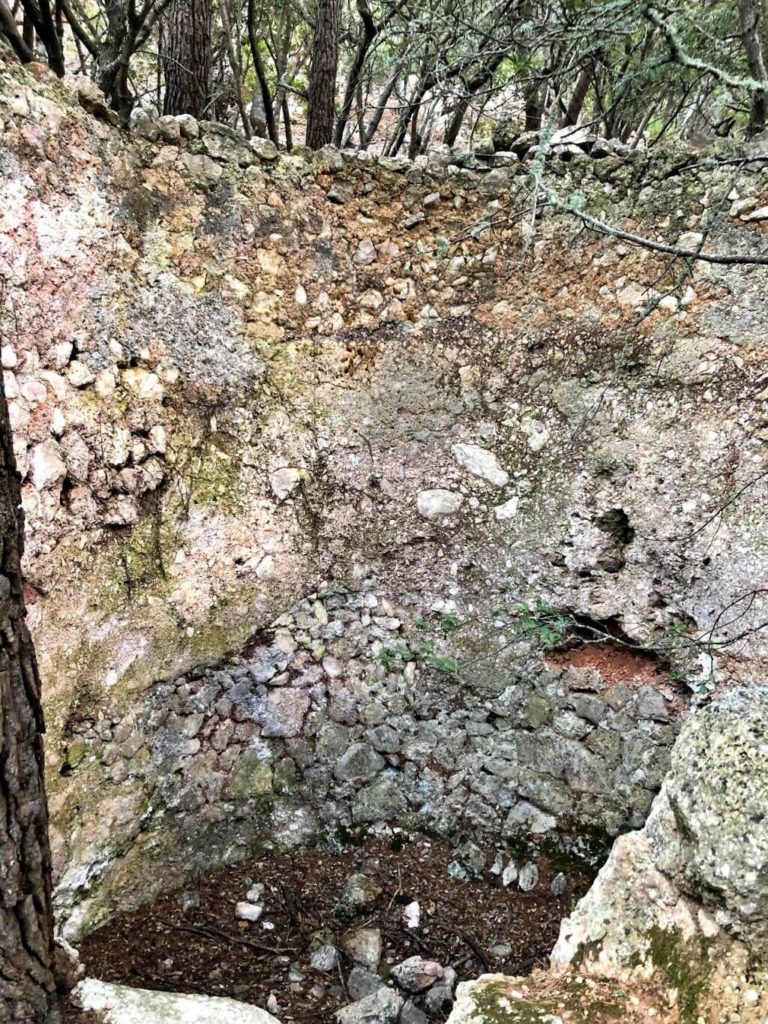
Stand in front of the kiln, then turn so it’s behind you. From there, take the path to the left, which looks like a channel for rainwater. The viewpoint is a few minutes away.
4. Mirador dels Tudons and the walk back
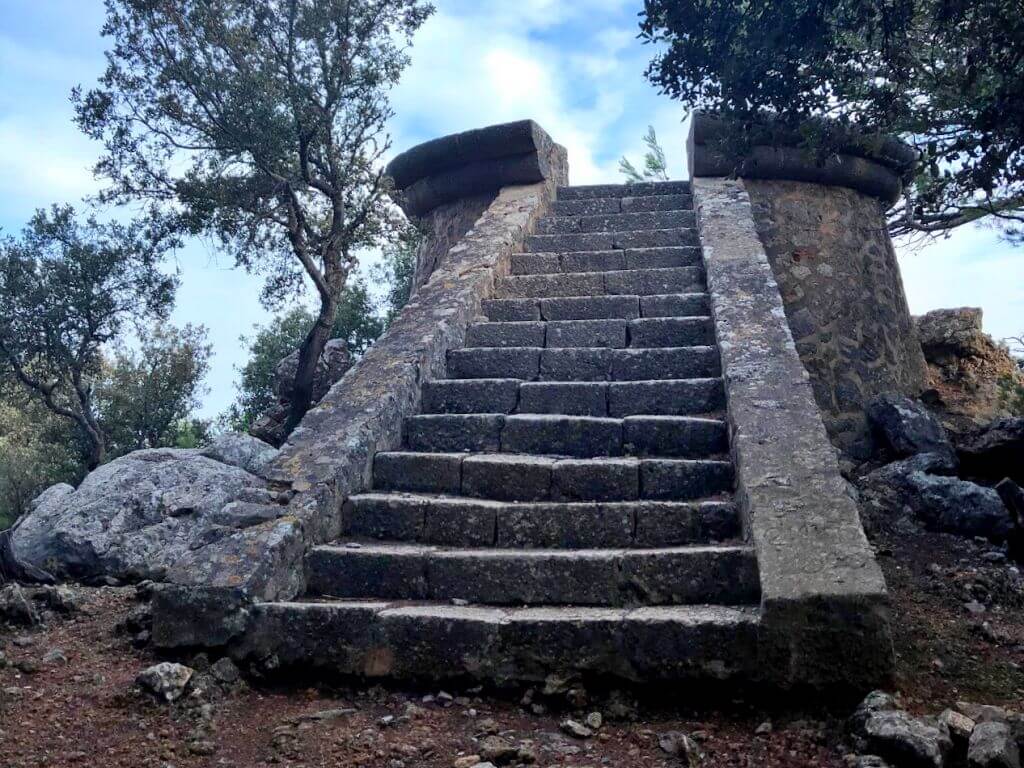
In the clearing, look right for the Mirador dels Tudons among the holm oaks. It was one of the viewpoints commissioned by Archduke Ludwig Salvator and was already standing in 1884. From below, the broad stone staircase tapers as it rises, making the whole structure look a little like a small pyramid. At the top is a circular platform edged by a stone seat. The Valldemossa heritage catalogue (in Catalan) singles out its unusual shape and the fine stonework of the stairs and cornice.
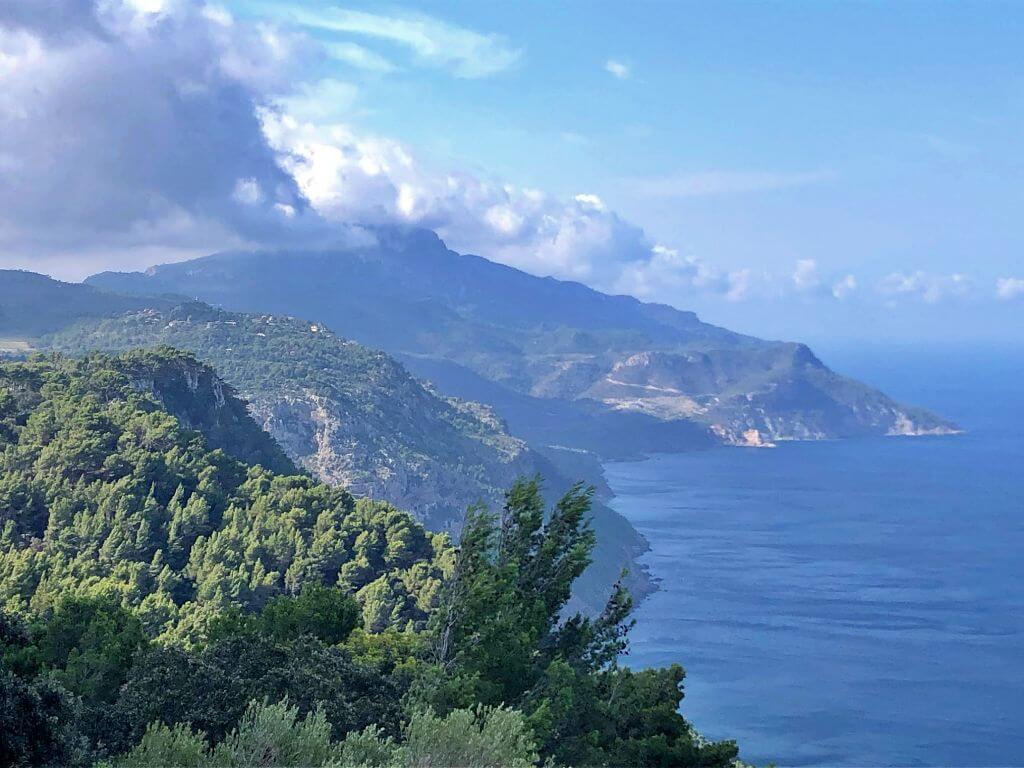
From the top, you can pick out Miramar Monastery and Sa Foradada through the trees. Along with the hermitage, it’s one of our favourite stops on the walk. Keep children close on the steps.
Rejoin the path and continue downhill. At one point you can see the road to Deià on your right. At the next fork, go left, uphill. Keep left at the following forks too. On our visit there were stones on the right-hand branch. After a few minutes you’re back in the open area by the hermitage. From there, retrace your steps down to Can Costa.
Valldemossa hermitage circular walk at a glance
If you’d like to come back for another walk with sea views, the Camí de s’Escolta starts in the same area near Can Costa. You can also spend some time exploring Valldemossa village.
You might also like