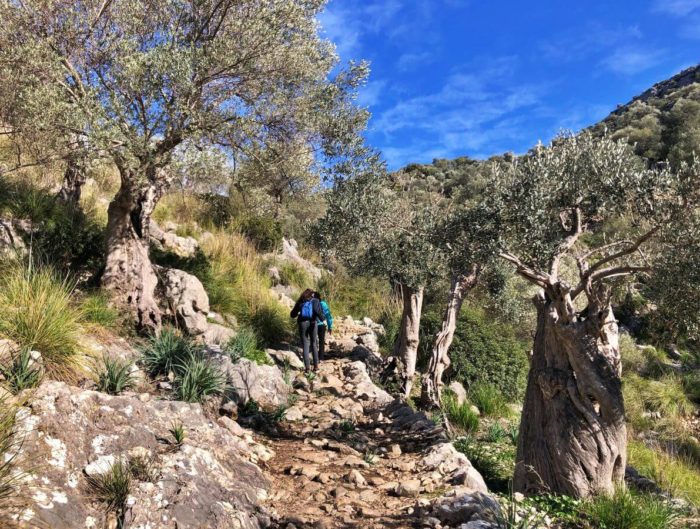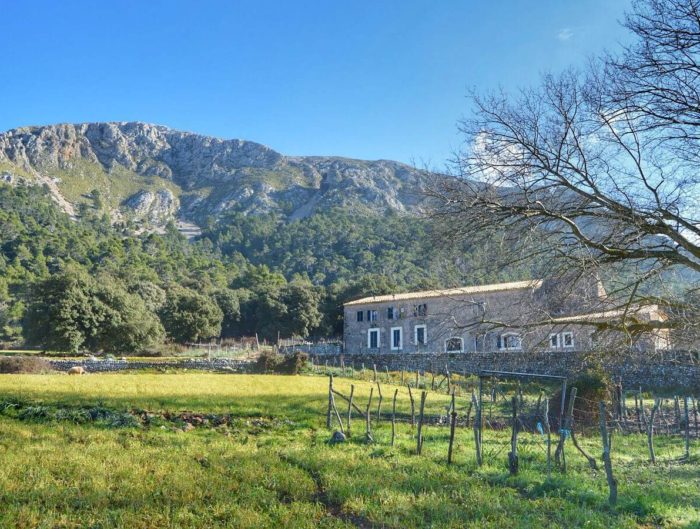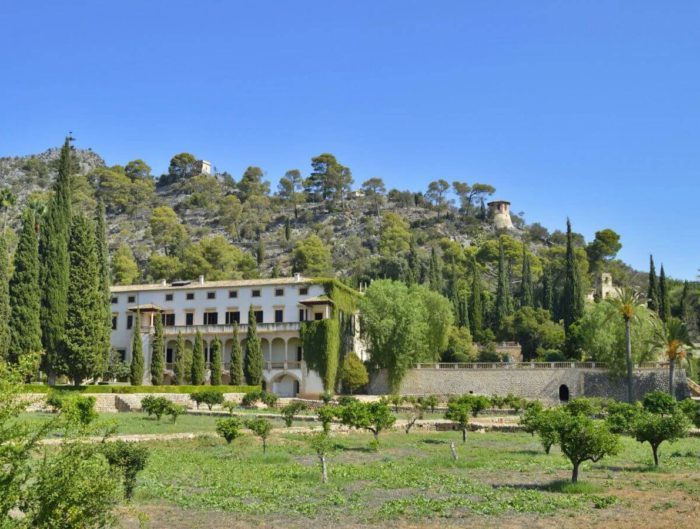
Some train journeys stay with you long after the trip is over. The Sóller train is one of them: wood, tunnels, mountains and a gentle rattle that makes the journey between Palma and Sóller an experience in its own right. For those of us who live in Mallorca, it is also a chance to see the Serra de Tramuntana afresh without travelling far.
On our travels, we sometimes find an activity so closely tied to a place that it becomes the highlight of the day. That happened in the French Pyrenees with Le Petit Train d’Artouste: while looking for family outings, we discovered a little mountain railway that we still remember fondly.
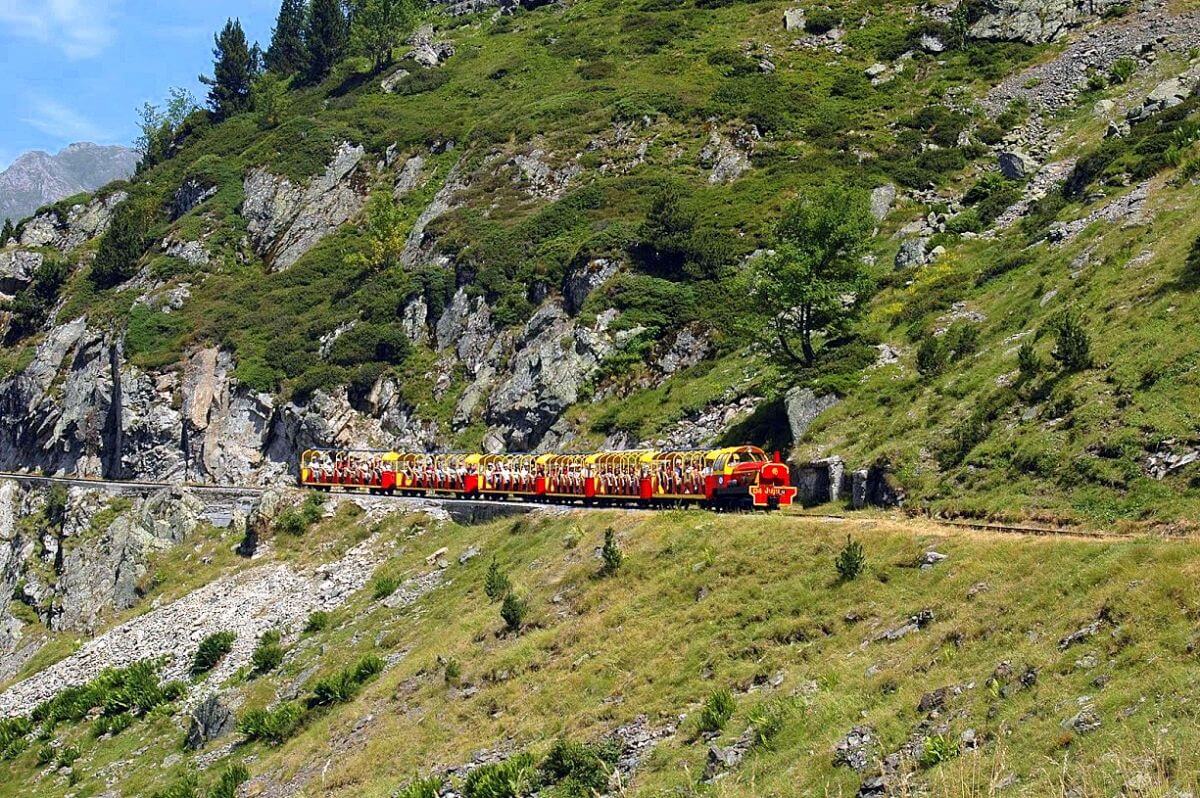
From Fabrèges, near the Spanish border, a gondola takes you up to the departure station. There, a little red train follows a mountainside at around 2,000 metres above sea level. The ride covers roughly 10 kilometres in 55 minutes, followed by a mountain path of around 20 minutes to reach Lake Artouste. Find out more on the official Artouste train website (in French). Years have passed, but that journey remains a vivid memory.
In Mallorca we are fortunate to have another railway with a character all its own. The Sóller train has its landscapes, its history and the chance to add a century-old tram, a walk through town and time beside the sea.
The Sóller train route: a journey into the past
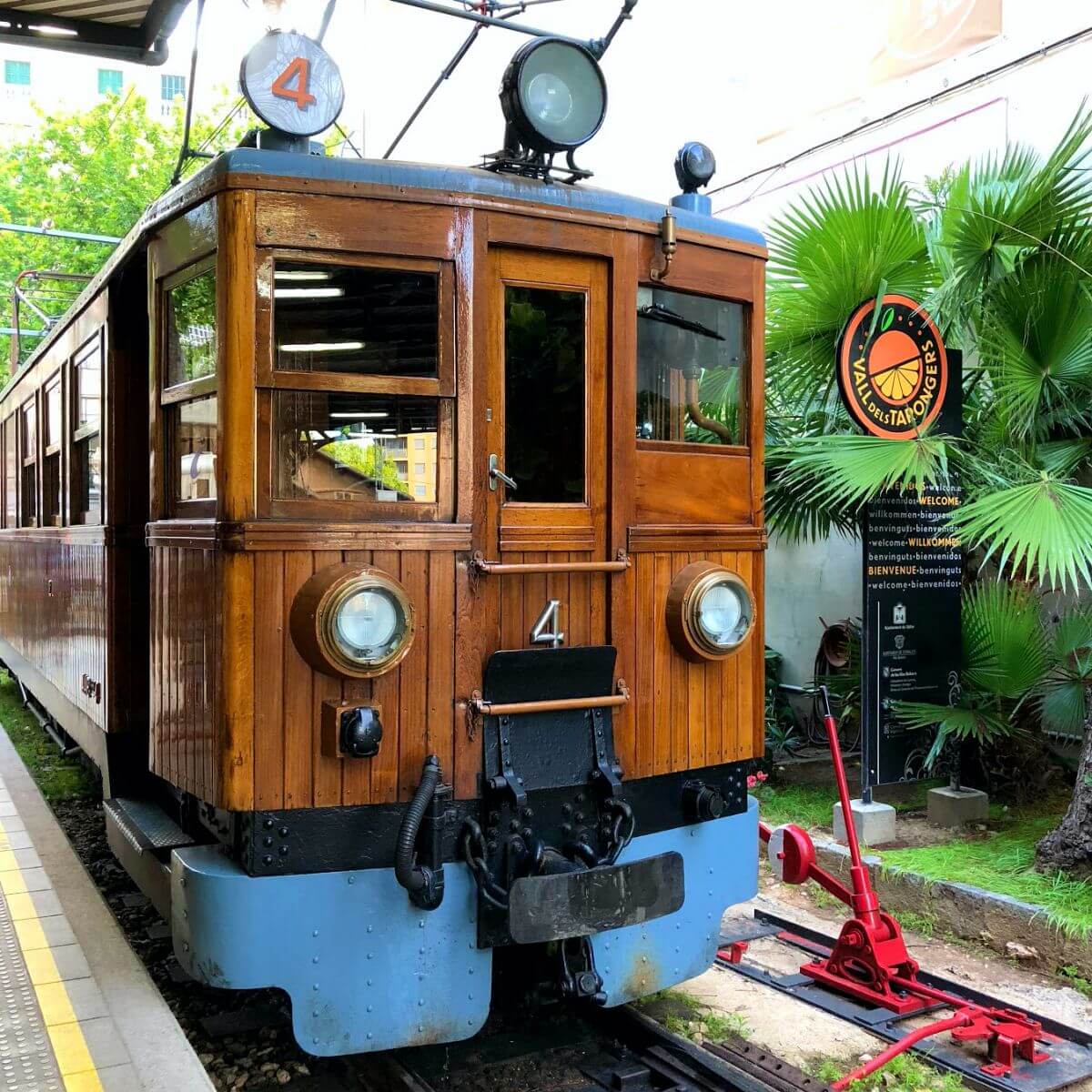
The railway opened on 16 April 1912 to improve connections between Sóller and Palma and make it easier to move people and goods. The valley, surrounded by mountains and with a thriving agricultural and commercial life, needed a route that avoided the difficulties of the old road. This is part of local life and history as well as a visitor attraction.
One common misconception is worth clearing up: the railway opened in 1912, but electrification came in 1929. Not every vehicle seen today entered service on opening day. Careful maintenance and craftsmanship have preserved its distinctive period character.
This narrow-gauge railway has a track gauge of 914 mm and runs for around 27.3 kilometres between Palma and Sóller, passing Son Sardina and Bunyola. The actual stops depend on the service: check before travelling if you plan to join or leave the train at an intermediate station.
From Palma to Bunyola and through the mountain tunnels
We leave Palma’s railway station beside Plaça d’Espanya and gradually move out of the city into the countryside. After Bunyola comes one of the most scenic stretches, with olive groves, dry-stone terraces and the mountains of the Serra de Tramuntana.
The route passes through 13 tunnels. The longest, the main tunnel through the Serra d’Alfàbia, measures 2,856 metres: almost three kilometres inside the mountain. Counting the tunnels and spotting how the landscape changes at each exit can be part of the fun for children. The full journey usually takes around an hour.
The stop at the Pujol d’en Banya viewpoint
Before reaching Sóller, some services stop at the Pujol d’en Banya viewpoint, overlooking the valley. The railway describes this as a roughly ten-minute stop made by a special train and recommends asking at Palma’s ticket office.
Not every train makes this stop. The 11:00 train stopped on one of our visits, but that experience should not be treated as a year-round timetable rule. If you want to get off to enjoy the view and take photographs, ask which departure includes it before buying. The official Sóller train route description also explains the stop.
Reversible seats and the first-class carriage
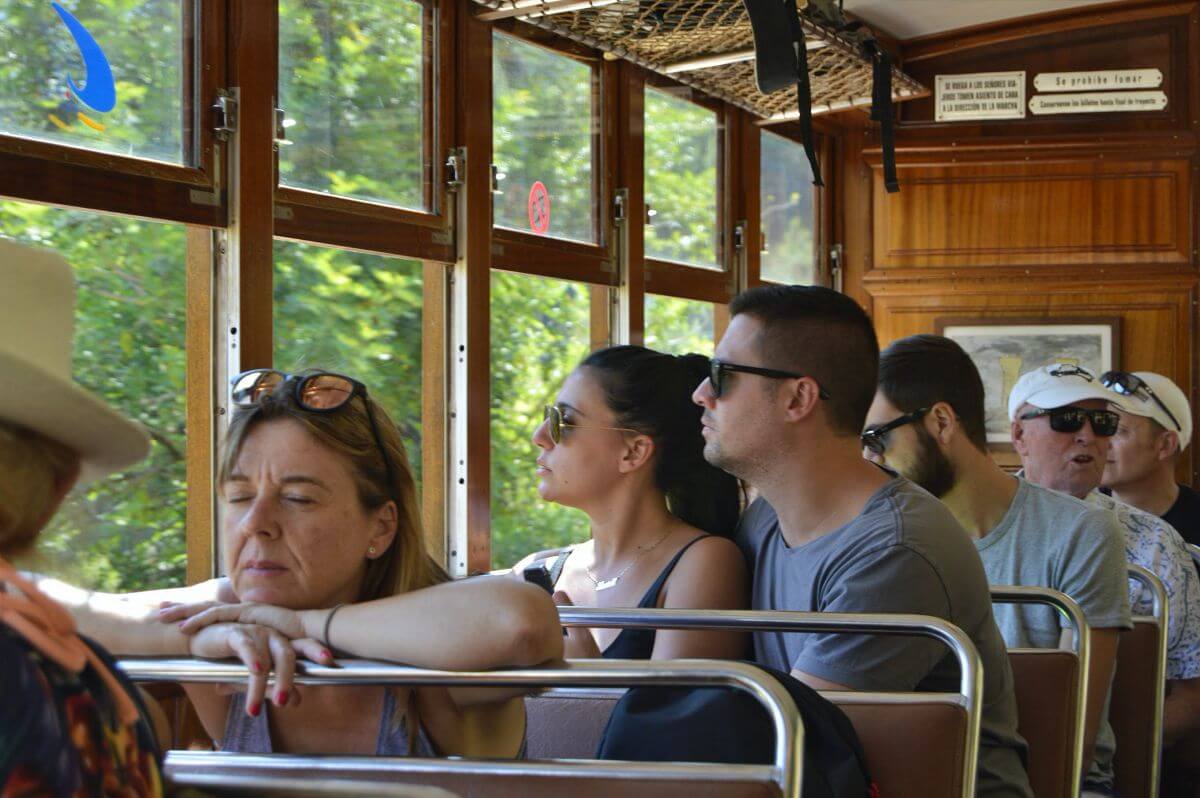
Inside are varnished wooden panels, metal fittings and the atmosphere of an old passenger carriage. We particularly like the fact that the seats can change position, allowing a group of four to sit in two facing pairs rather than all looking in the same direction.
Another detail worth knowing: there is a first-class carriage with sofas instead of the usual seats, as described by the railway itself. If you would like to travel in it, ask which carriages are attached to your departure and what access conditions apply. Do not assume it can be selected on every service.
The sound of the wheels, the windows and the carriage platforms are all part of the experience. With children, stay in the designated areas and follow staff instructions, particularly when boarding, getting off or approaching the doors. This railway recalls a way of travelling in which the journey mattered as much as the destination.
The Sóller tram: from town to harbour since 1913
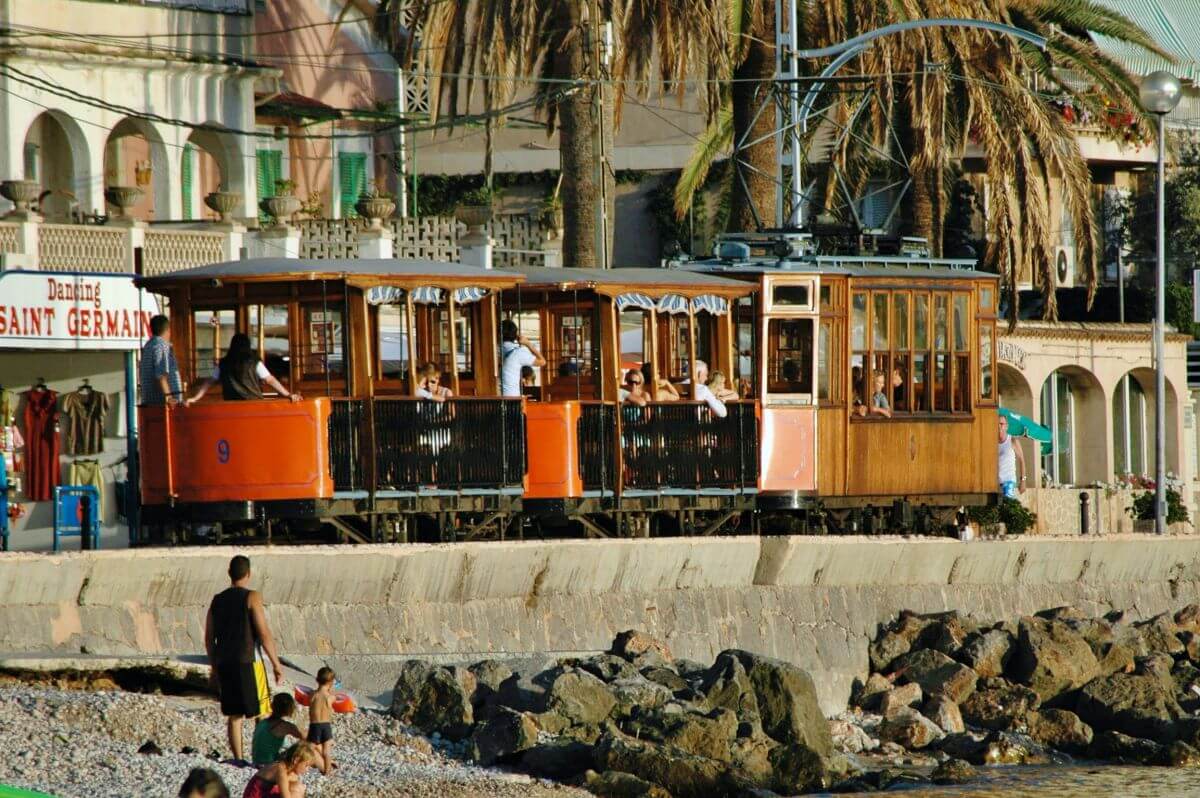
Continue the outing on the Sóller tram, inaugurated on 4 October 1913 as Mallorca’s first electric tramway. It links the town centre with Port de Sóller over around 4.9 kilometres, usually taking 25–30 minutes.
Where to catch the Sóller tram
The first stop is in Plaça d’Espanya, outside Sóller railway station. You can also board on Avinguda de Cristòfol Colom, near the municipal market. If you arrive in town by road, you can take just the tram ride to the harbour; you do not need to travel on the train first.
The distinction matters: the train reaches the town; the tram continues to the harbour. A combined train-and-tram ticket is available, alongside other journey options. If you are only taking the tram, you can buy the ticket on board. Check what your purchase includes and compare the complete itinerary if you intend to make a return trip.
The tram crosses Plaça de la Constitució, passes Sant Bartomeu Church and runs between houses, gardens and orange and lemon groves. On its final stretch it follows the harbour seafront. This is much more than a connection: it is an enjoyable part of the outing in its own right.
If you are heading to Platja d’en Repic beach, the Sa Torre stop lets you get off before the end of the route. You can combine this stretch with a walk around the bay, adapting the plan to the weather and how far your children feel like walking.
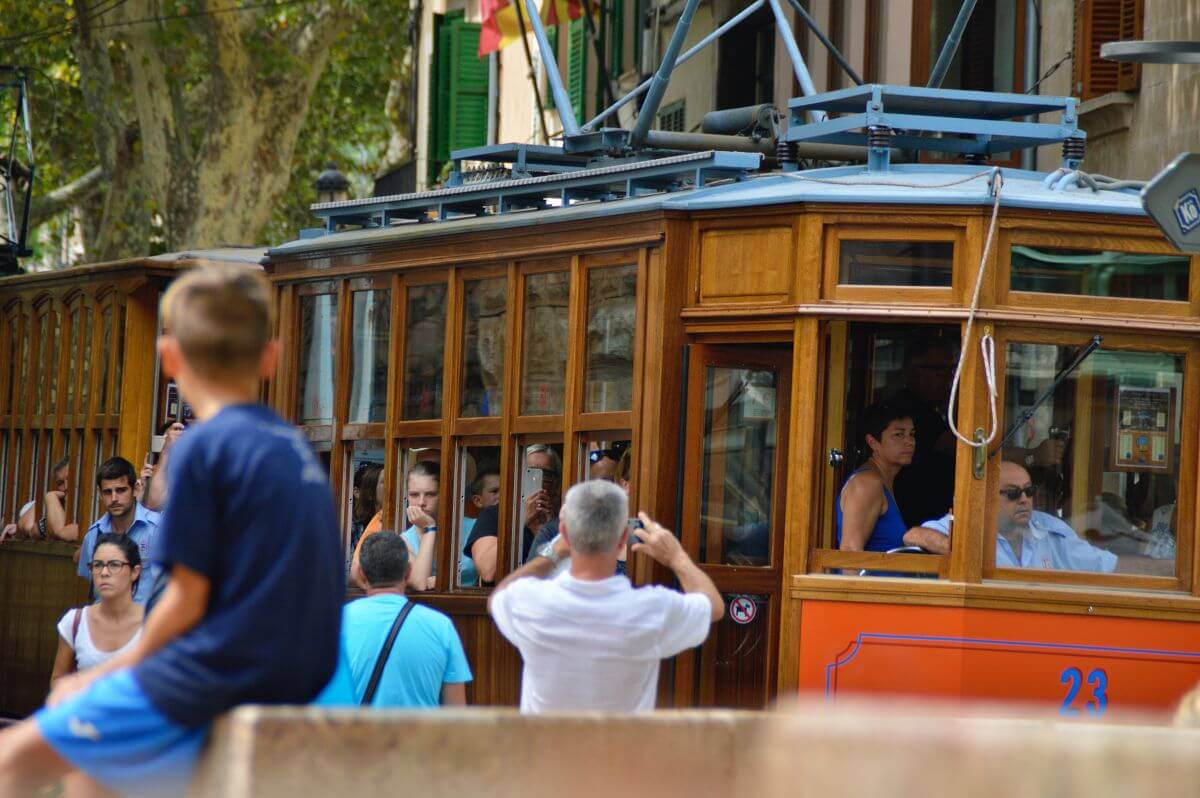
In warmer weather, open-sided trailers known as jardineras may be used. The tram has also had a practical role in valley life: as well as passengers, it carried goods, including fish from the harbour. It is a useful reminder for children that these tracks were not built just for sightseeing.
Tram timetables and winter services
The tram operates during part of the winter, but it also has temporary maintenance closures. Its shutdown is usually shorter than that of the Palma–Sóller train and follows its own calendar. The tram may therefore be running between Sóller and the harbour while the train remains closed. Dates change between seasons, and the closure does not necessarily fall in the same month each year.
To plan your visit, check the official Sóller train and tram timetables (in Spanish), select the tram and look at both directions of travel, as well as the operator’s closure notices (in Spanish). Frequencies and first and last departures vary with the season. Allow time to connect with the train and check the last tram back before staying at the harbour. During maintenance work, the operator’s notice explains whether a replacement bus is provided and its arrangements.
What to visit in Sóller after the train ride
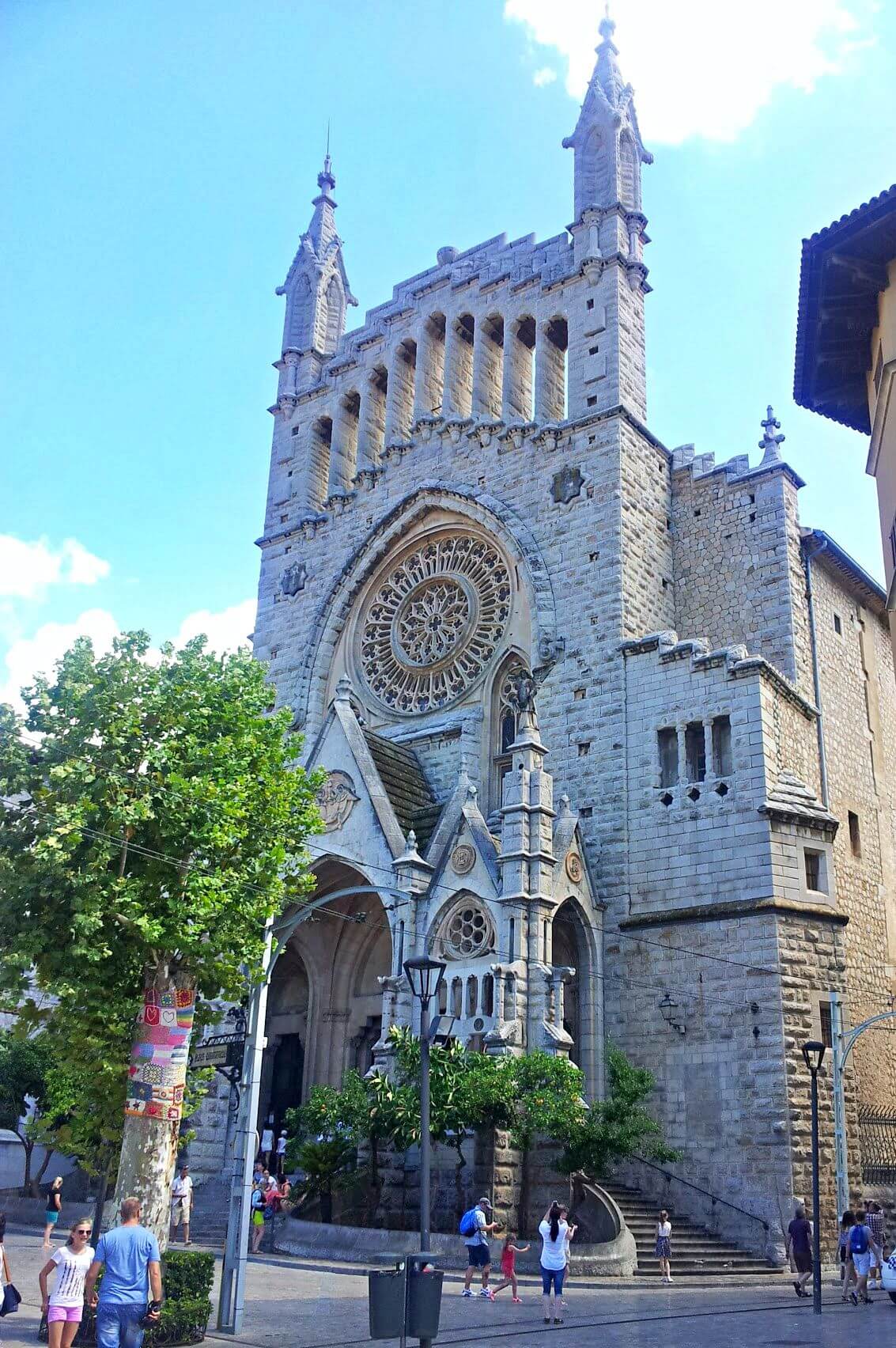
The station is close to the centre. Take time to walk, have lunch or visit a museum before continuing to the harbour. There is no need to fit everything in: with children, one or two visits and time to enjoy the square usually work better.
Miró and Picasso at the railway station
The station building, the historic house of Can Maiol, contains the Miró and Picasso exhibition rooms, which the railway advertises as free to visit. It is an opportunity to encounter art as soon as you arrive. Check the rooms’ opening times: the station being open or trains running does not mean the exhibitions are accessible at every hour.
The main square and Sant Bartomeu Church
Plaça de la Constitució is a focus of town life, with café terraces, shops and the passing tram. Sant Bartomeu Church stands out for its large rose window and Modernista façade by Joan Rubió i Bellver. The church combines several periods of construction; not all of it is Art Nouveau. The neighbouring Banco de Sóller completes one of the town’s most recognisable groups of buildings.
Carrer de sa Lluna and Can Prunera
Carrer de sa Lluna is one of Sóller’s best-known shopping streets and an easy stroll from the square. At number 86 is Can Prunera, a Modernista house whose interior is worth exploring in its own right: furniture, stained glass, patterned tiles and staircases reward a closer look.
On an earlier visit, a collection of antique dolls also caught our attention. The museum’s advertised offer now includes the Serra Collection, a sculpture garden and Campo de Juego, an immersive sensory space with particular appeal for families. Check the activities and included spaces on Can Prunera’s official visitor page, as exhibitions can change.
MUCBO: the botanical garden and natural sciences museum
A little outside the centre, at kilometre 30.5 on the Palma–Port de Sóller road, is MUCBO. It brings together the Sóller Botanical Garden and the Balearic Museum of Natural Sciences, with plants, rocks, minerals, fossils and displays about island biodiversity. This is a visit in its own right; allow time for it rather than squeezing it between transport connections.
Read more in our guide to the natural sciences museum and Sóller Botanical Garden (in Spanish). Check opening information on MUCBO’s official website (in Spanish) before visiting.
A Sóller orange ice cream
The simplest break can be one of the most memorable. There are several ice cream shops in town, and we still recommend trying Sóller orange ice cream. Find more ideas in our selection of Mallorca’s ice cream shops (in Spanish).
At Port de Sóller: the seafront, beach and Museu de la Mar
At the harbour, walk beside the sea, spend time on the beach or stop for lunch. For another cultural visit, the Museu de la Mar, housed in the former Santa Catalina chapel, explores the valley’s connections with fishing, boatbuilding, trade and emigration.
Ship models and maritime objects offer another way to discover Sóller’s past. The museum is in the upper part of the Santa Catalina neighbourhood, so consider the approach and walking time when planning your return tram. Check the official Port de Sóller Museu de la Mar page for visitor information.
Sa Volta a Mallorca: train, tram and boat to Sa Calobra
The Sóller railway is also part of the classic Vuelta Isla, or Sa Volta a Mallorca. Depending on the package, it combines train, tram, boat and sometimes a coach, with Port de Sóller and Sa Calobra among the main stops.
Despite its name, it is not a literal circuit of Mallorca’s entire coastline. It is a more extensive outing than the usual train-and-tram ticket and needs separate planning: the boat depends on sea conditions, while visits and transport sections vary by organiser. Read about our Vuelta Isla experience in Sóller and Sa Calobra (in Spanish).
Tickets, timetables and a drawback for local residents
Find current departures and fares on the official Sóller train timetable and ticket page (in Spanish). The railway recommends being at the station 30 minutes before departure. Alongside the combined ticket sold online, other journeys are handled at the ticket office; check the conditions of your chosen product.
One drawback for families living on the island is that there is no general discount simply for being a Mallorca or Balearic Islands resident. A user card is available to registered residents of Palma, Bunyola, Sóller and Fornalutx. Our FAQs explain its background and how to apply in person in Sóller.
The Sóller railway has its own fares and is outside the TIB integrated fare system. If you prefer taking the train in one direction only, consider returning on TIB bus route 204 between Palma, Sóller and Port de Sóller, paying or validating each service under its own conditions. Check the location of the bus stop and allow time to reach it.
The Sóller train has an annual winter closure for maintenance, refurbishment and improvement work. It usually stops running in late November and resumes in early February. The tram has its own closure calendar and may restart earlier. Check the dates for the relevant season before planning your visit.
Planning a family day without rushing
- Start in Palma: arrive with time to enjoy the station and board your chosen train. Confirm the viewpoint stop beforehand if it matters to you.
- Explore Sóller: visit the square and Carrer de sa Lluna, and choose a cultural stop. Can Prunera or MUCBO deserves its own time.
- Continue to the harbour: take the tram and leave time for lunch, a seafront walk or the beach.
- Plan the return: allow time to get back to Sóller for your train, or plan the bus alternative. Adding Sa Calobra creates a different, longer day.
Sóller train outing facts
Official information: Sóller railway · stations and contact details (in Spanish). Palma telephone numbers: +34 971 752 051 and +34 971 752 028.
Frequently asked questions about the Sóller train
What is the difference between the Sóller train and the tram?
The train links Palma and Sóller in around an hour. The tram runs between Sóller and Port de Sóller in about 25–30 minutes. They are separate journeys, so check which ones your chosen ticket includes.
Does every train stop at the Pujol d’en Banya viewpoint?
No. The railway describes the photo stop as part of a special service and recommends checking at the ticket office. The 11:00 train stopped on one of our visits, but that time does not guarantee a stop on other dates.
Does the Sóller train have a first-class carriage?
Yes. The railway describes a first-class carriage with sofas rather than the usual seats. Ask at the ticket office whether it forms part of your departure’s train and what conditions apply to using it.
How much time should we allow for the outing?
The train takes around an hour each way and the tram about 25–30 minutes per journey. With a walk around Sóller, lunch and time at the harbour, we recommend allowing a full day. A train ride and a short town walk can be planned as a half-day outing.
Can we do the trip with young children and a pushchair?
It is an enjoyable family outing, but the historic vehicles have steps and narrow spaces. A folding pushchair is more practical; check boarding and storage arrangements in advance. Do not assume the train or tram provides level boarding from the platform.
Is there a special fare for Mallorca residents?
There is no general discount simply for being a Mallorca or Balearic Islands resident. The previous discount was withdrawn in 2017 following a German citizen’s complaint to the European Commission about the different treatment of residents and non-residents.
There is a user card for registered residents of Palma, Bunyola, Sóller and Fornalutx. Its creation is recorded in the resolution published in the Balearic Official Gazette on 13 July 2017 (in Spanish). A resolution published in the Balearic Official Gazette on 10 June 2023 (in Spanish) expressly retained the fares and passes for these four municipalities.
Living in another Mallorca municipality does not make you eligible for this card. The Sóller railway has its own fare system, separate from TIB.
How do you apply for the Sóller train user card?
According to information provided directly to Turisme Petit by the operator, the card is still issued and applications are handled only in person at the Sóller offices, Monday to Friday on working days, from 08:00 to 14:00. The offices are at Plaça d’Espanya, 6, Sóller, beside the railway station.
The Sóller railway’s Customer Service (page in Spanish) telephone number is +34 900 908 761, during the same hours. Before travelling there, confirm which documents you need to prove your identity and registered address, the card’s issue fee, applicable fares and renewal conditions.
The original authorisation provided for a two-year validity period. We have not been able to confirm the amounts currently charged for this card with the operator, so we do not present them as current prices.
Does the Sóller train close in winter?
Yes. The Sóller train has an annual winter break for maintenance, refurbishment and improvement work on the tracks, rolling stock and facilities. It usually closes in late November and resumes in early February. Exact dates are announced each season. The tram has its own calendar and may restart before the train; check the official notice before booking.
Does the Sóller tram close in winter?
Yes, the tram also has temporary maintenance closures in winter. Its calendar is independent of the Palma–Sóller train, and the shutdown is usually shorter, so the tram can operate during part of the winter while the train remains closed. Dates change each season.
Before planning a visit, check the official closure notices (in Spanish) and the tram timetable in both directions (in Spanish) for your chosen date. A replacement bus may operate during maintenance work; check its stops and times in the relevant notice.
Does the combined train and tram ticket include Sa Calobra?
Do not confuse the train-and-tram ticket with an excursion to Sa Calobra. To add the boat, choose a product that explicitly includes it or book the crossing separately. For a Vuelta Isla tour, also check whether a coach is included and which section the train covers.
Can we take the train out and return to Palma by bus?
Yes. You can combine a one-way train trip with TIB bus route 204, which links Palma, Sóller and the port. They have separate operators and tickets. Check your bus stop and return timetable before buying the different journeys.
Advertisement
You might also like