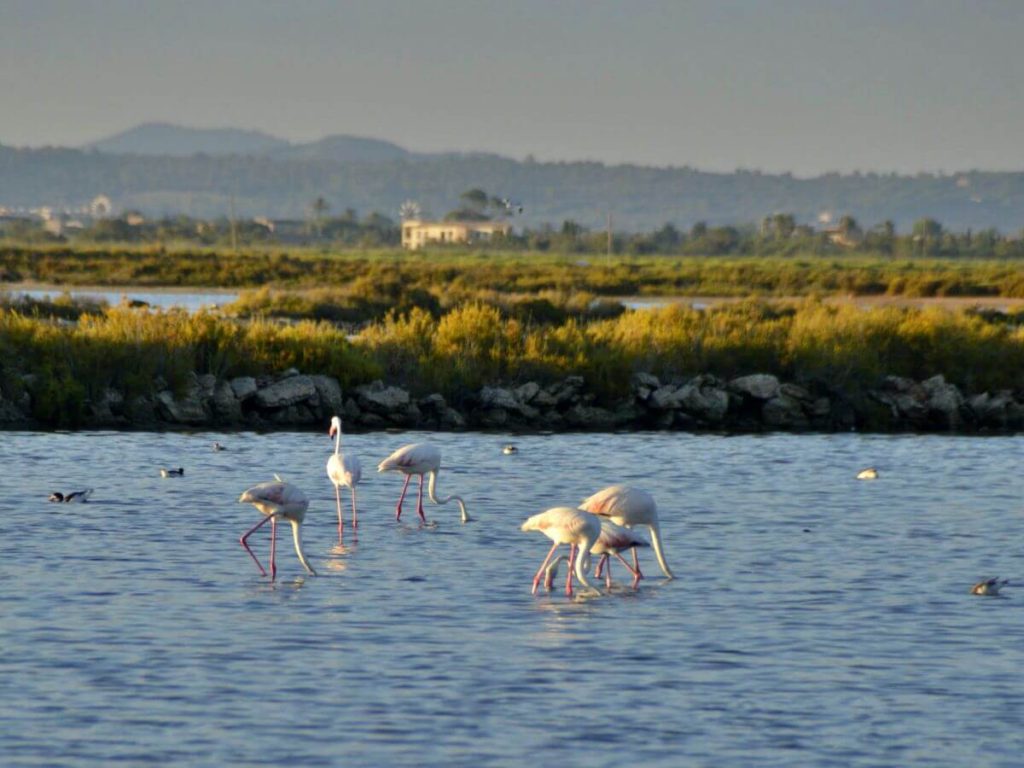
If you’d like to see flamingos in Mallorca, here are two places where we’ve spotted them ourselves. The first is on the way to Es Trenc beach (guide in Spanish), by the Salobrar de Campos salt pans. The second is s’Albufera Natural Park (guide in Spanish), where you can sit in a bird hide and watch the wetland at your own pace.
Flamingos at the Es Trenc salt pans and Salobrar de Campos
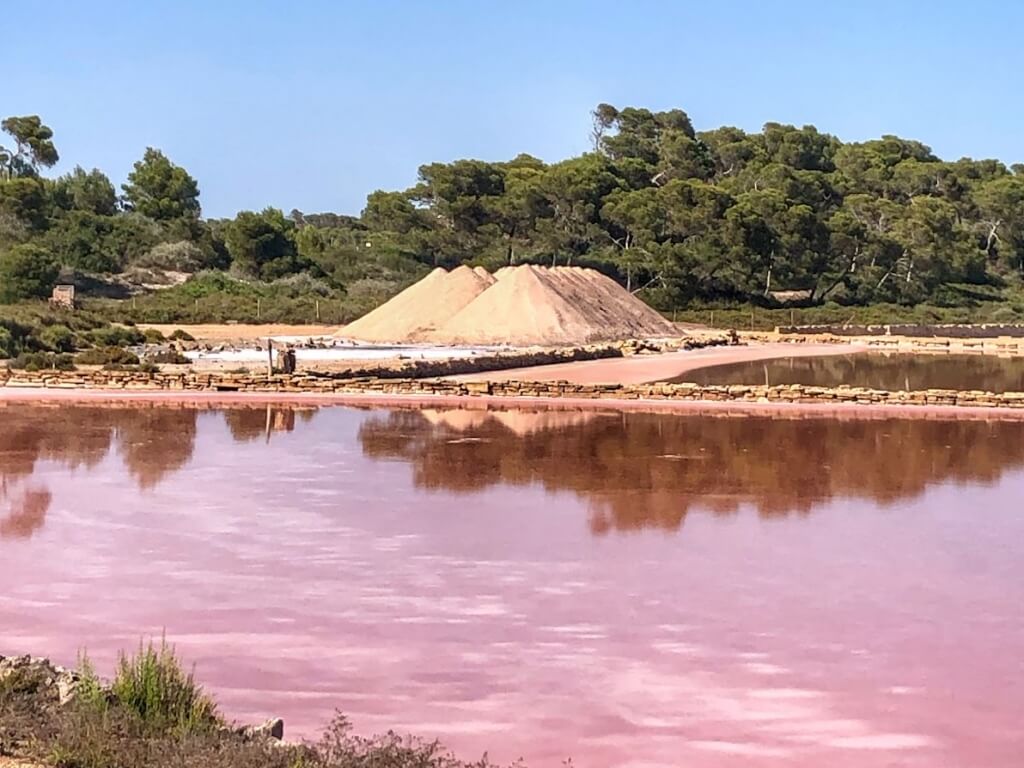
From the entrance to the saltworks, follow the road towards Es Trenc and you’ll pass one of the ponds where flamingos feed. We like to go late on a summer afternoon, when the sun is low and the light over the salt pans is particularly lovely. If you’re driving, use a designated parking area and watch from permitted access points. Keep the road clear and stay outside the working salt pans.
Why the salt ponds and flamingos are pink
Seawater is channelled in from Es Trenc beach. It then flows through a series of shallow ponds, where the sun and wind help the water evaporate and the salt becomes more concentrated. In the saltiest ponds, fine flakes of Flor de Sal d’Es Trenc form on the surface. It’s a salt you’ll find in kitchens all over the island. The saltworks website shows how the water makes its way from the beach to the harvest.
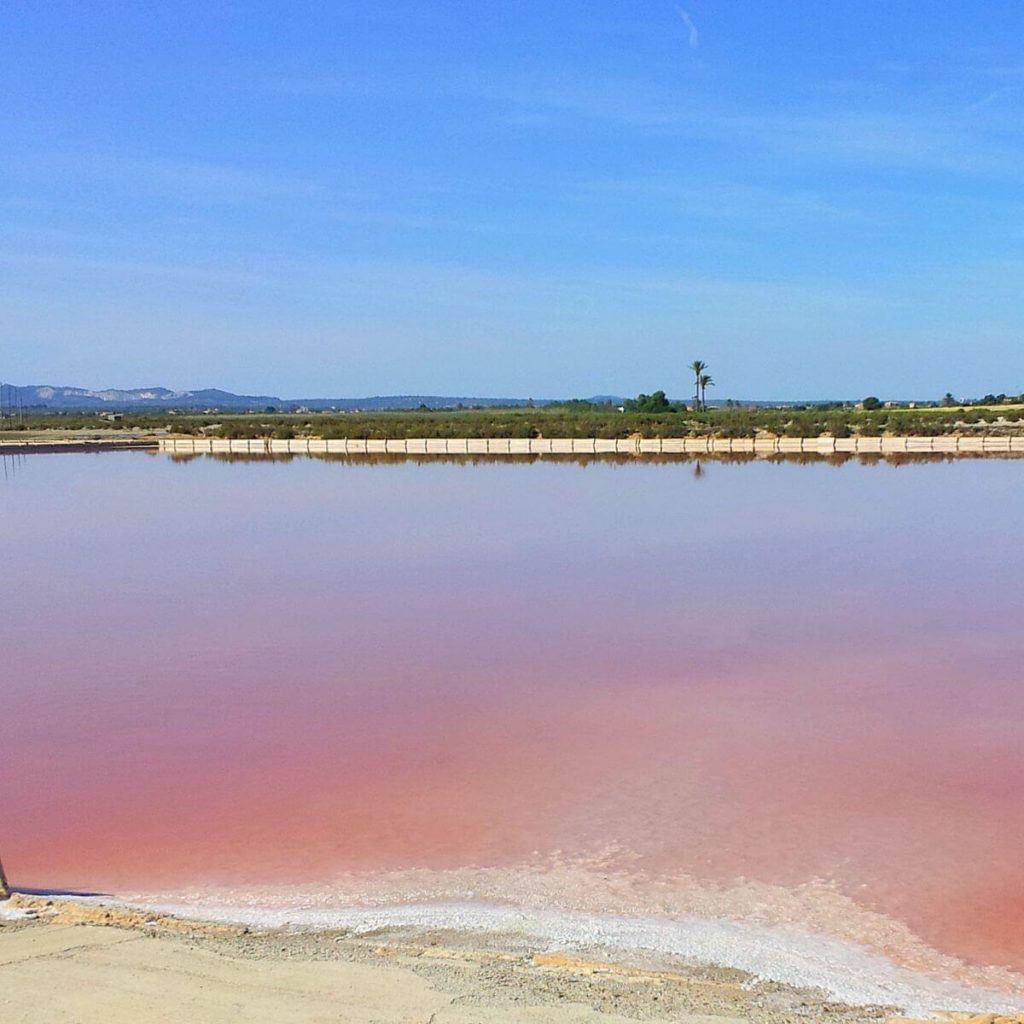
The pink tint in some ponds comes from salt-tolerant microorganisms, including microalgae such as Dunaliella salina. These waters are also home to brine shrimp, which greater flamingos feed on. The birds get their pink colour from pigments called carotenoids in their food. If you spot some greyer birds in the flock, take a closer look. Young flamingos take time to develop the adults’ pink plumage.
A stroll around Colònia de Sant Jordi
While we’re down this way, we like to take a stroll along the Colònia de Sant Jordi seafront (guide in Spanish). It’s a lovely walk, with plenty of places to eat and a few of our favourite ice cream shops (guide in Spanish) to round off the afternoon.
Near Els Estanys beach, also known as Platja des Marquès, there’s another pond with piles of salt alongside it. The water can turn pink in summer and it’s worth bringing your camera if you’re there in the late afternoon light.
Flamingos at s’Albufera Natural Park
There are several places to watch birds in s’Albufera. If we’re with children or just fancy a short walk, we like the two hides at Es Cibollar. The trail is flat and the Es Cibollar section is 900 metres long. Allow for another kilometre or so from the Pont dels Anglesos entrance in Platja de Muro to the sa Roca information centre.
Entry is free. Pick up your visitor permit and map at sa Roca. The official park page has opening times and access notices, and the Es Cibollar trail page has route details.
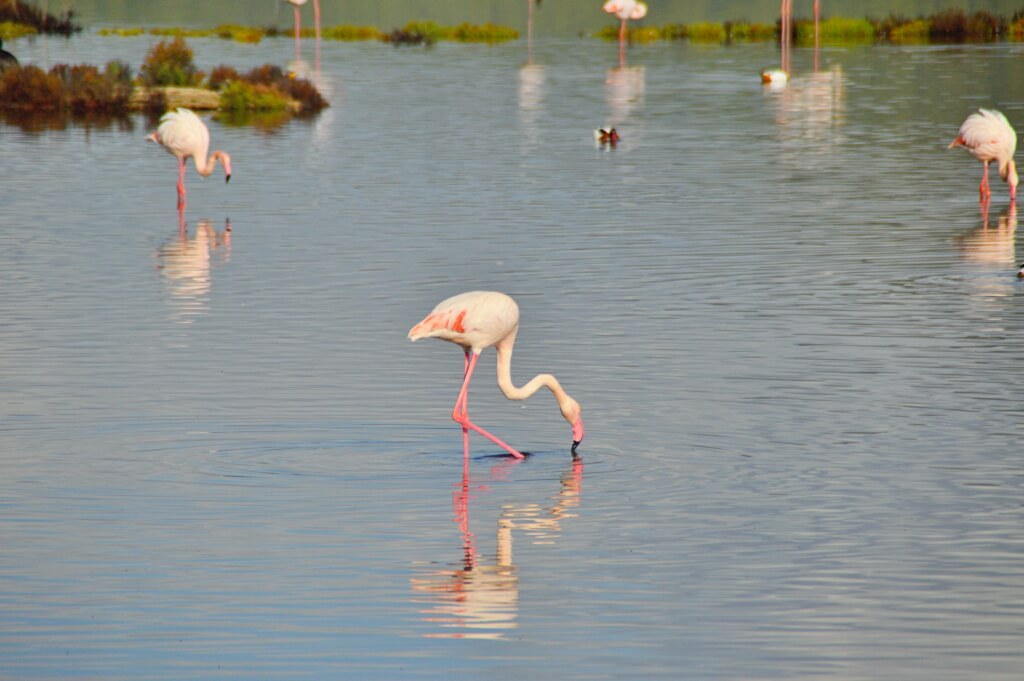
On our visits, we’ve seen the most flamingos from the first hide. The second is only a short walk away and gives you a different view of the lagoon. You can see the birds without binoculars, but with a pair you’ll get a much better look at how they dip their bills into the water to filter out food.
When can you see flamingos in Mallorca?
When we asked at the information centre, they told us flamingos were usually seen from May to February. Something has changed since then. In 2022, two chicks hatched at s’Albufera, the first confirmed breeding record in the Balearic Islands, and the birds bred again the following year. You can see them at different times of year, although flock sizes and the ponds they gather in vary. At Es Trenc we like the late afternoon light. At s’Albufera we like to arrive with time to spend a while in each hide.
Ospreys and other birds at Es Cibollar
On one visit we saw a man-made nesting platform in the lagoon. You might also see an osprey passing over Es Cibollar. It’s a fish-eating bird of prey known locally as the àguila peixatera.
Depending on the season, you might see black-winged stilts, great cormorants, common shelducks or northern lapwings from the hides. There are illustrated panels inside to help you identify them. If you’re with children, try picking a bird from the panel and seeing if they can spot it through the window.
You might also like