

London with kids brings together remarkable museums, parks for a breather, lively markets and landmarks everyone recognises before they arrive. What worked best for our family was mixing the big sights with simpler moments: a picnic, watching squirrels, an ice cream or a walk beside the Thames.
This guide brings together places we explored on our trip, grouped by area and type of visit. It is a useful starting point for four or five days in London, or longer if you prefer a gentler pace. There is no need to tick everything off: the city has plenty for different ages and interests, including visitors travelling without children.
Before our trip we used VisitBritain, the official British tourism website. For individual visits, check the museum, attraction or market’s own website too: that is where you will find booking arrangements, opening hours and notices affecting your chosen day.
Planning a first trip to London
Grouping nearby places saves travelling time and makes it easier to adapt if it rains or everyone needs a rest. Use this table to organise the suggestions below, rather than as a checklist to complete in a single day.
London parks for a family walk
Hyde Park
Hyde Park was our first stop, and it did not disappoint. One of London’s great parks, it has broad lawns, shady trees and plenty of space for a picnic. It also hosts major events, so the atmosphere in individual areas can change with the season.
The squirrels were a particular hit: the kind of small encounter children remember long afterwards. Enjoy watching them without offering food. The Royal Parks asks visitors not to feed wildlife to protect the animals and their surroundings.
Around the Serpentine, the park’s lake, you can watch waterbirds and find somewhere for a drink or a bite to eat. Deckchairs are also available to hire seasonally. There are several Tube stations around the park, so choose the entrance that suits your walk. Nearby we spotted our first red telephone boxes and took the obligatory photos.

Buckingham Palace, Changing the Guard and St James’s Park
From Hyde Park we walked towards Buckingham Palace. Changing the Guard was one of the experiences we most wanted to see, and we caught it towards the end of our stay. The main ceremony is commonly listed for 11am on scheduled dates, but it does not take place every day and may be changed or cancelled. Check the official Household Division calendar.
Our walking-tour guide shared a useful tip: the ceremony involves more than one location. While much of the crowd gathers outside Buckingham Palace, you can also watch troop movements at St James’s Palace, beside Marlborough Road. That is where we took the photograph below. Check the sequence and timing beforehand, as some movements begin before the main ceremony.

We then continued towards St James’s Park in Westminster, the oldest of London’s Royal Parks. It is a lovely place to pause and take photographs from the Blue Bridge, with beautiful views in both directions. We found more squirrels here, along with a wide variety of birds.
The park’s famous pelicans are part of a tradition dating back to 1664, when the Russian ambassador presented a pair to Charles II. Staff usually feed them around 2.30pm; check the park’s pelican information for details. We enjoyed a memorable picnic with takeaway food bought nearby, just as many local office workers do during their lunch break.
London museums to visit with kids
One thing we loved was finding major museums with free general admission. That does not make every exhibition or activity free, or mean you can always walk straight in without booking. The National Gallery’s collection is free too, although we did not manage to visit it on this trip.
British Museum: the Rosetta Stone and ancient Egypt
The British Museum impresses from the outside with its neoclassical frontage. Inside, the Queen Elizabeth II Great Court, opened in 2000, is a spectacular place to pause before exploring the galleries.
The collections cover history, archaeology and art from many cultures. We were especially excited to see the Rosetta Stone, which helped scholars decipher Egyptian hieroglyphs. The mummies and sarcophagi caught our attention too, including the Gebelein man, more than five thousand years old, who still has some of his hair.
With children, we suggest picking a few objects or galleries before you arrive. Leaving with a reason to return is much more rewarding than trying to see everything because you feel you should.
Practical information: Great Russell Street. The permanent collection is free; special exhibitions may have an admission charge. Check museum bookings, opening hours and gallery availability before visiting.
Science Museum: space, discoveries and interactive experiences
The Science Museum is in South Kensington, near the Natural History Museum and the Victoria and Albert Museum. That makes planning easier, although you do not need to squeeze all three into one day.
We particularly enjoyed the displays about space travel, with spacecraft and reconstructions. The collections also explore computing, communication, mathematics, medicine and other developments that have changed everyday life. Galleries evolve, so use the current museum map and look for Space to find what interests you most.
Alongside its free galleries, the museum offers separately ticketed experiences such as Wonderlab, Power Up and IMAX screenings. The range of experiences and simulators can change: check the current programme, age guidance and booking conditions.
Practical information: Exhibition Road, South Kensington. General admission is free and requires a booking. Usual hours are 10am–6pm, with last entry at 5.15pm, and closure on 24–26 December. Check the Science Museum’s official bookings and exceptions.
Natural History Museum: Hope the whale and dinosaurs

We thought the Natural History Museum was wonderful inside and out. Suspended above Hintze Hall is Hope, the 25.2-metre skeleton of a blue whale acquired by the museum in 1891. Seeing it overhead is an impressive moment at any age.
With animals, plants, rocks, fossils and minerals, the collections offer an enormous range of things to explore. The Dinosaurs Gallery is a family favourite and features the famous animatronic Tyrannosaurus rex, alongside fossils and skeletons. A short list of things to look for can help keep younger visitors engaged.
General admission is free and donations are voluntary. We chose to contribute after our visit, as a way of supporting a museum that had given us so much enjoyment.
Practical information: Cromwell Road, South Kensington. Usual hours are 10am–5.50pm, with last entry at 5.30pm, and closure on 24–26 December. Booking a free ticket on the official website helps guarantee entry on busy days. Special exhibitions and activities may have a separate charge.
London markets we enjoyed on our trip
Camden Market
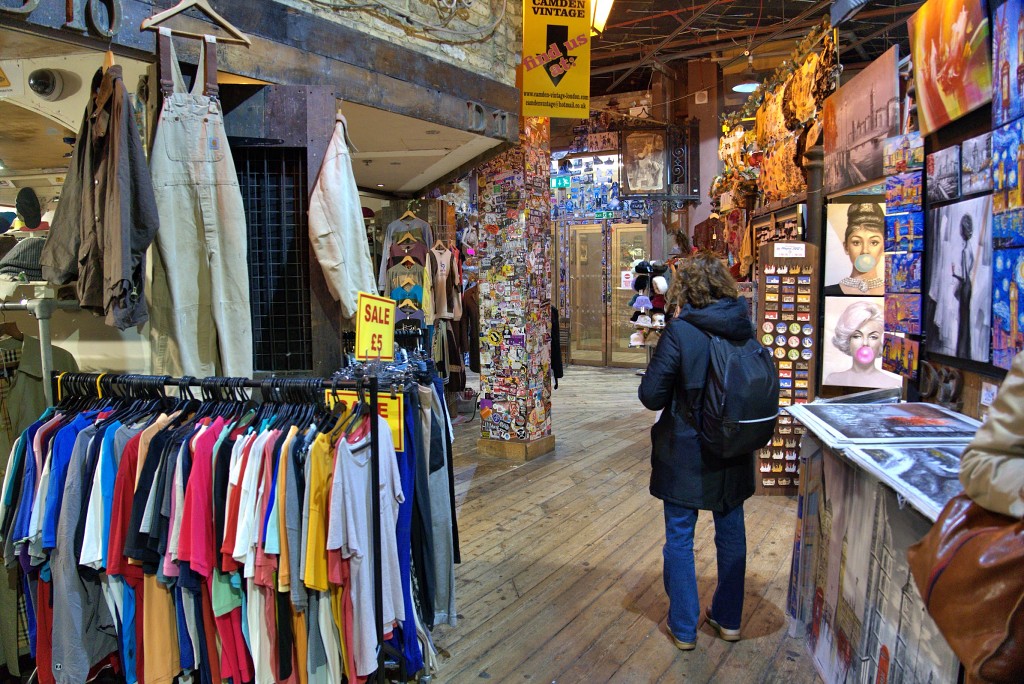
Camden Town has an unmistakable character: extravagant shopfronts, unusual shops and a network of markets beside Regent’s Canal. We were enjoying the high-street displays before we even reached the market stalls.
We arrived early to avoid the biggest crowds. Some shops were still closed, but we spent several hours exploring and watched the neighbourhood come to life. It is worth finding a balance: allow plenty of time, without expecting every trader to be open first thing.
From Camden Town Tube station we followed the main street towards the canal, where the first market shops and food stalls appeared. After passing beneath the bridge, we found one of the market entrances a little further along on the left. Think of several connected areas, including Camden Lock, Stables and Hawley Wharf, rather than a single entrance.
There is clothing, crafts, souvenirs and food from many countries. We found choices for different tastes and budgets, while the canal provides another reason to linger.
Practical information: the market advertises daily opening, but hours vary between areas and individual traders. Check Camden Market’s official map and opening times when planning your visit.
Leadenhall Market and a Harry Potter filming location
Leadenhall Market is a beautiful covered market in the City of London, where Victorian ironwork contrasts with the surrounding skyscrapers. It is within walking distance of Liverpool Street and fits well into a City sightseeing walk.

Its Harry Potter connection was one of our reasons for visiting. In Bull’s Head Passage you can find the frontage used for the entrance to the Leaky Cauldron in Harry Potter and the Philosopher’s Stone. Film-making turns an everyday corner into a gateway to the wizarding world.
The market is worth seeing even if you are not a fan. We ate at one of its restaurants and enjoyed the atmosphere. You can explore the passages outside business hours, but shops and restaurants keep their own schedules, and quite a few may be closed at weekends. Check Leadenhall Market’s visitor information.
For more filming locations, see our Harry Potter in London guide (in Spanish).
Covent Garden: market stalls, shops and street performers
Covent Garden was one of the surprises of our trip. We loved the mix of market stalls, shops, outdoor tables and street entertainers. A magic show was a particular highlight. You can leave a voluntary contribution afterwards, and our performer certainly earned it.
This central neighbourhood is ideal for browsing, strolling and stopping for something sweet. We found Venchi, with its chocolates and ice cream, as well as toy shops that kept us entertained for a while. Nearby are the London Transport Museum and the Royal Opera House, home to The Royal Ballet and Opera.
At Christmas, the decorations and festive atmosphere add another reason to visit. The piazza and market building are public spaces, while stalls, shops and restaurants have different opening hours. Check the Covent Garden website before setting out.
Portobello Road and Notting Hill
Portobello Road is famous for antiques, but there is also fruit and veg, clothing, household goods, food and second-hand finds. Shops and stalls occupy different stretches of Portobello Road and Golborne Road, so the atmosphere changes as you walk.
Saturday is the fullest day for the antiques market and arcades; Friday also has plenty going on. The offer on other days is different, so a single opening time for the entire market can be misleading. Check which areas and stalls trade on your chosen day.
The walk is also a chance to explore Notting Hill, the neighbourhood associated with the Julia Roberts and Hugh Grant film. The famous blue door is at 280 Westbourne Park Road. We found it a little less exciting than we had imagined, but could not resist a photograph. It is a private home, so enjoy it from the street without disturbing anyone. For other locations, we used this Notting Hill filming-location walk on En el mundo perdido (in Spanish).
London landmarks, squares and riverside walks

Beyond the parks, museums and markets, these places also featured on our trip. Many are enjoyable from outside; choose your paid interior visits carefully so the holiday does not become a race.
Big Ben, the Palace of Westminster and Westminster Abbey
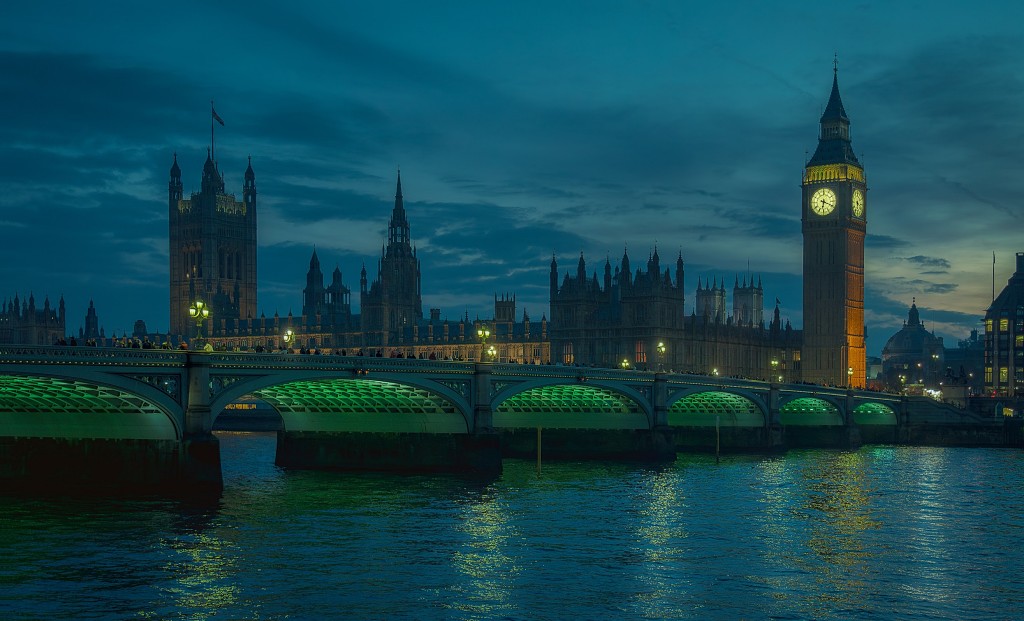
Big Ben is technically the name of the great clock bell, although people use it for the whole landmark. The tower is called Elizabeth Tower and forms part of the Palace of Westminster, home to the UK Parliament.
For a panorama we particularly love, cross Westminster Bridge and look back towards Parliament from the London Eye side of the river. At dusk, the illuminated bridge and buildings make a beautiful scene.
Here is another photo spot from our visit: cross the bridge with Big Ben behind you and, instead of turning left towards the London Eye, turn right and head down towards the passage beneath the bridge. It offers another well-known view of Westminster. There may be people waiting, so keep the pedestrian route clear.
Nearby is Westminster Abbey, which we saw from outside. You can visit the interior, including the Coronation Chair. It is a separate building from Parliament: check Westminster Abbey tickets and visiting hours if you want to include it.
St Paul’s Cathedral and the dome climb
The dome of St Paul’s Cathedral dominates one of London’s best-known skylines. The climb takes you through several galleries: the internal Whispering Gallery, the Stone Gallery and the Golden Gallery, with outdoor views across the city.
There are 528 steps in total to the Golden Gallery, rather than one climb followed by another separate ascent. The galleries are reached by stairs, so consider the effort before setting off with children. We thought the views were worth it.
Practical information: sightseeing requires a ticket and is normally available Monday–Saturday, with possible special sessions and exceptions in the calendar. Check St Paul’s opening dates, access arrangements and bookings.
Tower Bridge and the Tower of London

Tower Bridge and London Bridge are different bridges. Tower Bridge is the famous one with two towers and opening bascules. We were lucky enough to see it lift to let a sailing boat pass through.
Walking across the pavement is part of a normal stroll; visiting the towers, the high-level walkways with glass floors and the engine rooms requires a ticket. Check Tower Bridge’s visitor information and the scheduled bridge lifts if you would like to try to see it open.
There is an excellent view of the bridge from near the Tower of London. We did not visit the fortress interior, but it offers the Crown Jewels and the chance to meet its Yeoman Warders, or beefeaters. The ravens are another famous feature: legend says that if the six ravens leave the Tower, the fortress and kingdom will fall. Six belongs to the legend, rather than being a fixed count of the birds living there. Use the official Tower of London website to plan your visit.
Walking beside the Thames: Tower Bridge to Millennium Bridge
From Tower Bridge you can walk along the Southwark and Bankside riverfront towards Tate Modern, then cross Millennium Bridge to St Paul’s. There are many possible stops; visiting every interior would make this a much longer outing.
- HMS Belfast: a cruiser that served in the Second World War, now an Imperial War Museums museum ship permanently moored on the Thames.
- Golden Hinde: a galleon in the middle of London! This full-size reconstruction of Francis Drake’s ship brings a seafaring and privateering past into the city. You can visit, but check notices about restoration work or private events.
- The Clink Prison Museum: its prison and torture displays may be upsetting for young or sensitive children. It is a better choice for visitors interested in that kind of history.
- Borough Market: one of London’s great historic food markets, ideal for browsing produce and food stalls. Check the trading day, as its calendar has exceptions.
- Shakespeare’s Globe: a reconstruction of the theatre associated with Shakespeare’s company, near the original site. Tours and performances have their own schedules; the entire interior is not continuously open for sightseeing.
- Tate Modern: this major modern and contemporary art museum occupies the former Bankside Power Station. Its collection includes artists such as Picasso, Pollock, Dalí and Warhol, although works on display change. General collection admission is free; some exhibitions and activities are ticketed.
- Millennium Bridge: the pedestrian bridge linking Bankside with St Paul’s. Its “Wobbly Bridge” nickname refers to movements in its early days, which were corrected. It also appears at the beginning of Harry Potter and the Half-Blood Prince. Crossing it brings the walk back to the cathedral side of the river.
Piccadilly Circus

Piccadilly Circus is instantly recognisable. Its enormous screens, traffic and constant stream of people create a lively, colourful scene, particularly after dark.
The fountain popularly known as the Eros fountain, with its winged figure, is a familiar meeting point. From here, continue towards Regent Street or Soho, depending on how much walking you feel like doing.
Trafalgar Square
Trafalgar Square commemorates the 1805 battle in which the British fleet defeated the combined French and Spanish fleet. Nelson’s Column and the four huge bronze lions gave us another classic photograph from the trip.
At the top of the square is the National Gallery, with free admission to its permanent collection. A short, focused visit can be a good way to add some painting to your walk.
A ride on a red double-decker bus can be fun too. The old TfL heritage service no longer operates, so use the current regular routes and stops rather than relying on historic bus information.
The M&M’s store in Leicester Square

A family holiday has room for stops like this too. London’s M&M’s store is in Leicester Square, a walk from Trafalgar Square, and has four floors of colour, chocolate and giant characters.
You do not have to buy anything to browse and take a photograph. Our children loved it, so it had to make the guide.
Chinatown and the West End atmosphere
Chinatown is beside Soho and Leicester Square. Its lanterns, shopfronts and streets have a distinctive atmosphere, with a large concentration of Chinese restaurants and other Asian food options.
It is another place to look for a meal, comparing menus, opening times and prices before sitting down. Nearby is Shaftesbury Avenue, with its theatres and show posters: another area we enjoyed as evening fell.
London Eye: seeing London from above

The London Eye rises 135 metres above the Thames, giving you a chance to pick out Parliament, the bridges and many places you have explored on foot. We thought it was one of the best ways to see how the city fits together.
We recommend booking through the official London Eye website and choosing a slot that fits the rest of your day. Mid-afternoon worked well for us, but it does not guarantee shorter queues in every season. A Fast Track option provides priority entry for an additional charge: decide whether it is worth it for your family and allow time for checks and boarding even with a reservation.
We saw other places too, but that is part of the magic of travel: discovering somewhere new and collecting the little stories that become part of each family’s history.
Turisme Petit
Practical tips for visiting London with kids

- Plan without filling every minute. Decide how many days you have, group nearby sights and make necessary reservations before travelling. Leave room for a park, an ice cream or a rest.
- Passports and entry requirements. Requirements depend on nationality and personal circumstances. Visitors travelling on Spanish passports for an ordinary tourist trip generally need a valid passport and, unless exempt, an individual ETA, including for children and babies. Other nationalities may need a visa or may be exempt; British and Irish citizens do not need an ETA. Check and apply only through GOV.UK, the official UK government website.
- Healthcare and travel insurance. Eligible EU visitors can use a valid European Health Insurance Card for medically necessary state healthcare during a temporary stay in England, under NHS conditions. It does not replace travel insurance or cover costs such as repatriation. We have always travelled with insurance: compare cover and exclusions for your family and circumstances.
- Involve children in the trip. Our trick is to make a little fold-out guide with the plans divided into days, so they can mark what they have done. We pack a notebook, sticky tape and a pen in a folder. Back at the hotel or during quieter moments, we stick in tickets, jot down stories and add drawings. The result is a personal souvenir of the holiday.
- Oyster and contactless payment. We bought an Oyster card for each person on our trip and topped up at stations. Oyster remains an option, while adults can also use a compatible contactless bank card or mobile device. Each fare-paying traveller needs their own payment method; use the same card or device to touch in and out, and check your bank’s foreign transaction charges. Transport for London explains the conditions and fare caps. London buses do not accept cash, so you do not need coins to board.
- Check children’s fares before buying cards for everyone. Up to four under-11s can travel free with a fare-paying adult on the Tube and specified TfL services. Visitors aged 11–15 can ask staff to add a Young Visitor discount to an Oyster or Visitor Oyster card. Conditions and exceptions depend on the service: check TfL’s advice on travelling with children.
- Free museums are useful flexible options, with bookings where required. We liked being able to choose a few galleries without feeling obliged to see everything. Plan around the children’s interests and energy; free admission does not guarantee immediate entry or access at any time.
- Avoid the busiest periods where possible. Book a suitable slot, arrive with some time to spare and allow for entrance checks. In a large museum, a short list of things you want to see is often better than trying to cover every gallery.
- A guided walk early in the trip can help you get your bearings. Our guide gave us useful food suggestions and places to revisit independently. So-called free tours usually involve an expected voluntary contribution at the end. Compare duration, language and pace. After personally disappointing experiences with Civitatis, we prefer to consider other alternatives.
- Book popular attractions online. Booking ahead worked well for us at the London Eye. Check the difference between timed entry, priority access and a guided visit: they provide different things, and none removes every waiting time.
- Eating out with children. London offers pub fish and chips, takeaway food and restaurants serving many cuisines. Some pubs restrict children’s hours or access to particular areas. Ask before entering: there is no universal 9pm cut-off for every pub. Knowing where you can have a family dinner helps when everyone is hungry and tired.
Frequently asked questions about visiting London
How many days do you need in London with kids?
Four or five days are a useful starting point for combining some landmarks, museums, parks and markets. Extra time allows a more relaxed pace. Choose places that interest your family and leave room for breaks.
Do you need to book London’s free museums?
It depends on the museum. The Science Museum requires a free entry booking; the Natural History Museum recommends booking to guarantee entry, and the British Museum advises advance booking. Some exhibitions and activities have a separate charge.
Do children need an Oyster card in London?
Not always. Under-11s can travel free with an accompanying adult on the Tube and certain services, subject to limits and conditions. Visitors aged 11–15 can request a Young Visitor discount on Oyster or Visitor Oyster. Check your particular service with TfL before buying.
Do children need an ETA to visit London?
It depends on nationality and any applicable exemptions. Where an ETA is required, each traveller needs their own, including children and babies. British and Irish citizens do not need one. Check current requirements on GOV.UK before travelling.
London left us with big views and small memories: a skyline from above, a magic show, an unhurried walk or time together in a park. Choose the places that suit your family, and there are plenty of ways to enjoy the city and make it your own.
Advertisement
You might also like