This short walk from Caimari to Binibona follows a tarmac country road in the municipality of Selva, Mallorca. It is an easy countryside outing whose surface can accommodate a pushchair, provided you keep in mind that the road is shared with vehicles.
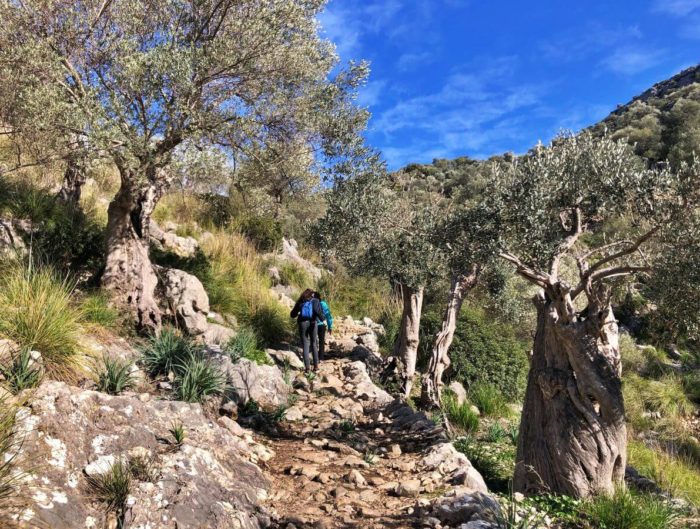
One of the pleasures of the walk is seeing almond and olive groves and enjoying Mallorca’s rural scenery. The physical effort is low, but you need to watch for traffic and keep children close throughout.
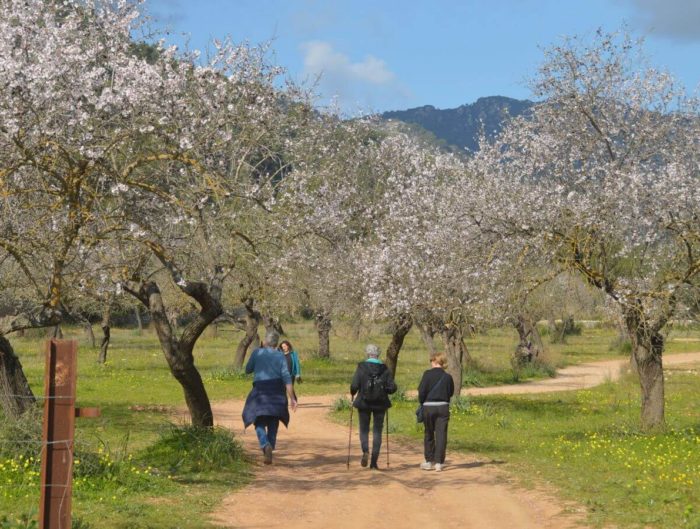
This is a lovely route for seeing almond blossom in Mallorca. As a guide, late January to mid-February is often a good period, although flowering can start earlier or later depending on the weather and variety. Outside the blossom season, the olive groves and mountain views still make it an appealing walk.
Binibona is a llogaret, or small hamlet, in the municipality of Selva at the foot of the Serra de Tramuntana. Despite its small size, it has several rural hotels. The town council records a tradition of Caimari residents coming here for the Easter Monday pancaritat gathering in the 1980s and 1990s.
Before setting out with a pushchair
With a pushchair and young children: tarmac makes the walking easier, but this is a road shared with traffic. Walk in daylight, keep little ones beside you and take extra care where visibility is limited. If there is not enough space to proceed safely, turn back. See the Spanish DGT guidance for pedestrians on country roads.
Starting the walk from Caimari to Binibona
Start on Plaça Major in Caimari, beside the church. To its right is the entrance to the municipal car park we used on our visit. Check current signs and respect reserved spaces and access points.
After parking, return to Plaça Major and take Carrer de Sant Jaume, then Carrer de Binibona, which leads towards Binibona.
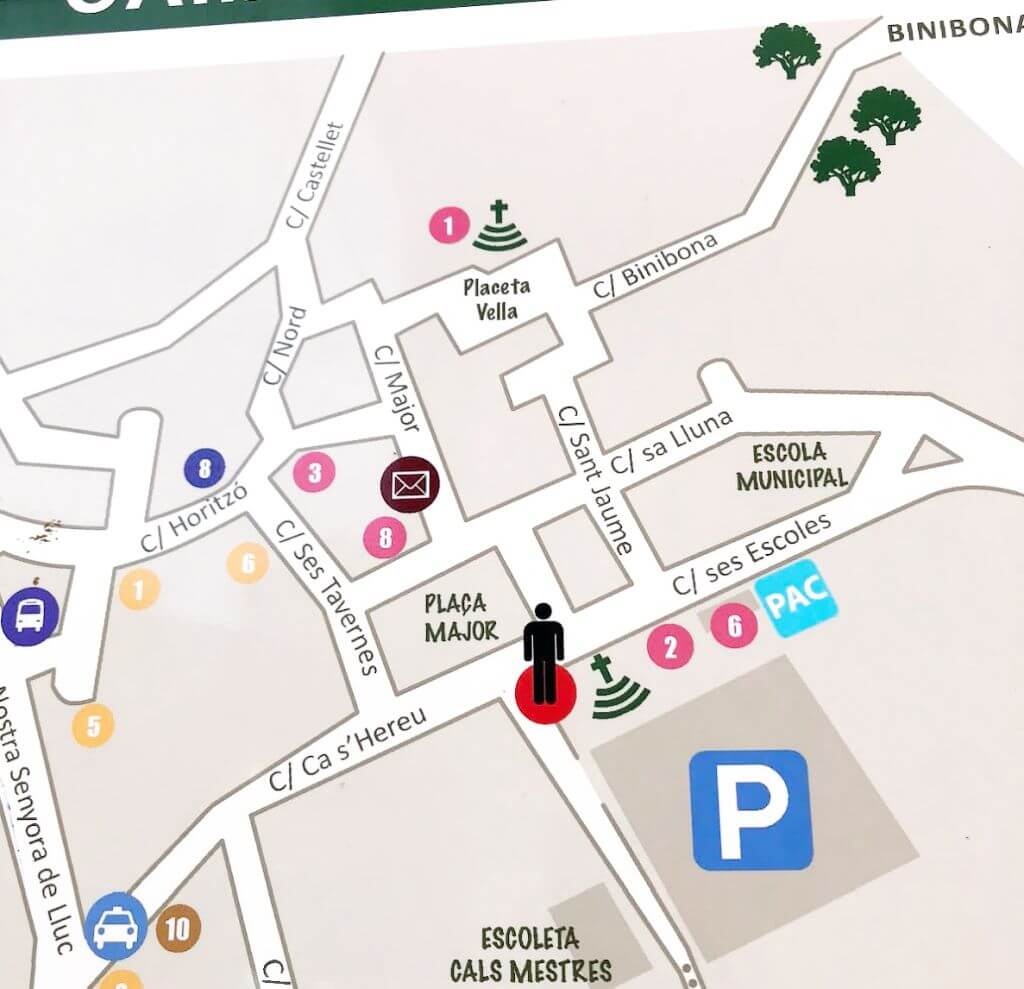
The route follows a tarmac country road for approximately 2.3 km each way. Traffic was light when we visited, but conditions can vary. There is no separation from road traffic along this country-road route: watch for cars and bicycles, particularly at bends and when pushing a pushchair.
Soon after leaving Caimari, you reach a fork with several signs. Keep left towards Binibona.
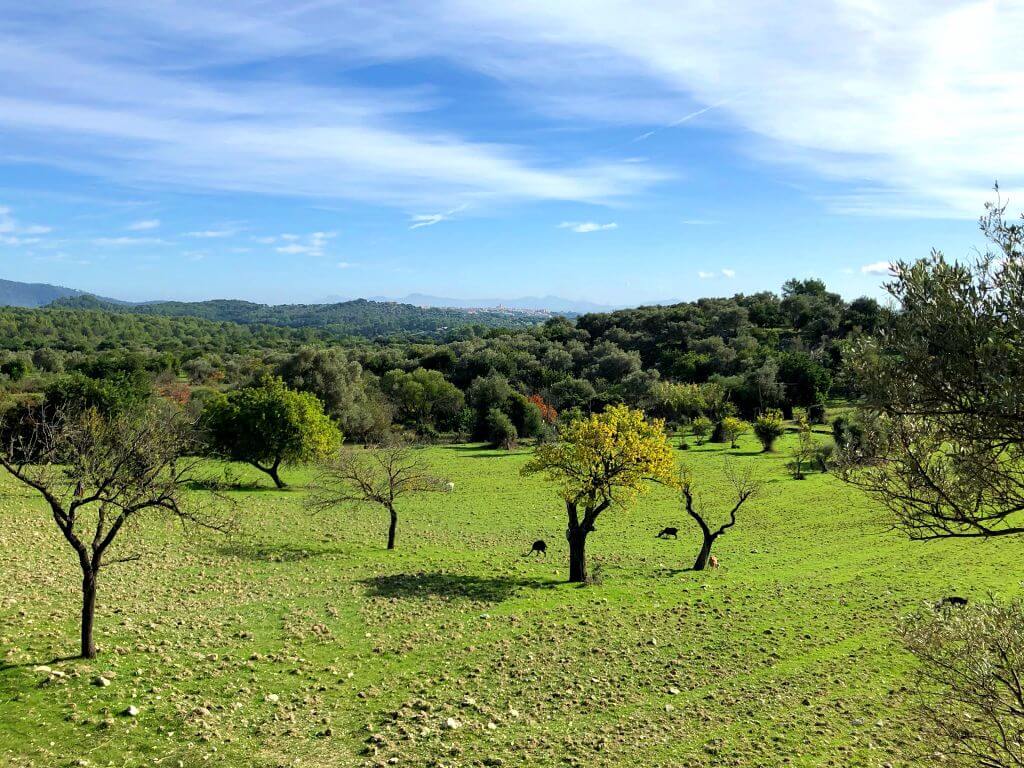
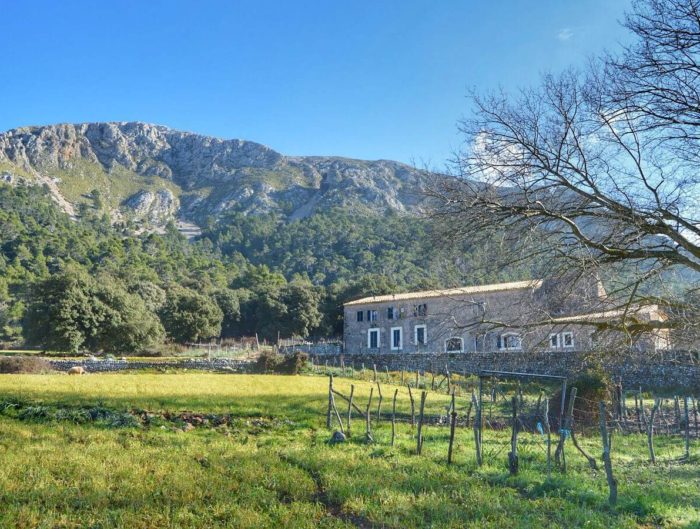
Along the way you can see several old country estates: s’Alqueria, Son Sastre, Son Riera, Subies and, finally, sa Vedelleta. There are also almond groves, particularly attractive when in blossom. These are private properties: enjoy the scenery from the road without entering the fields.
Once in Binibona, have a short stroll before returning along the same road. The out-and-back walk totals about 4.6 km. Our original estimate was around 70 minutes of walking; for a relaxed family outing, allow 70–90 minutes plus stops.
What to notice in Binibona
Take a few minutes to admire the stone façades and gateways of Can Beneït and Can Furiós, two notable houses in the hamlet. Look from public spaces and respect private entrances and the privacy of residents and guests. The municipal guide to Binibona describes its rural heritage.
Here is a small curiosity to share with children: medieval documents refer to the place as Binimala. The Selva town council’s historical account suggests that the change to Binibona may have been motivated by superstition, adding a little story to the countryside outing.
Optional circular return from Binibona to Caimari
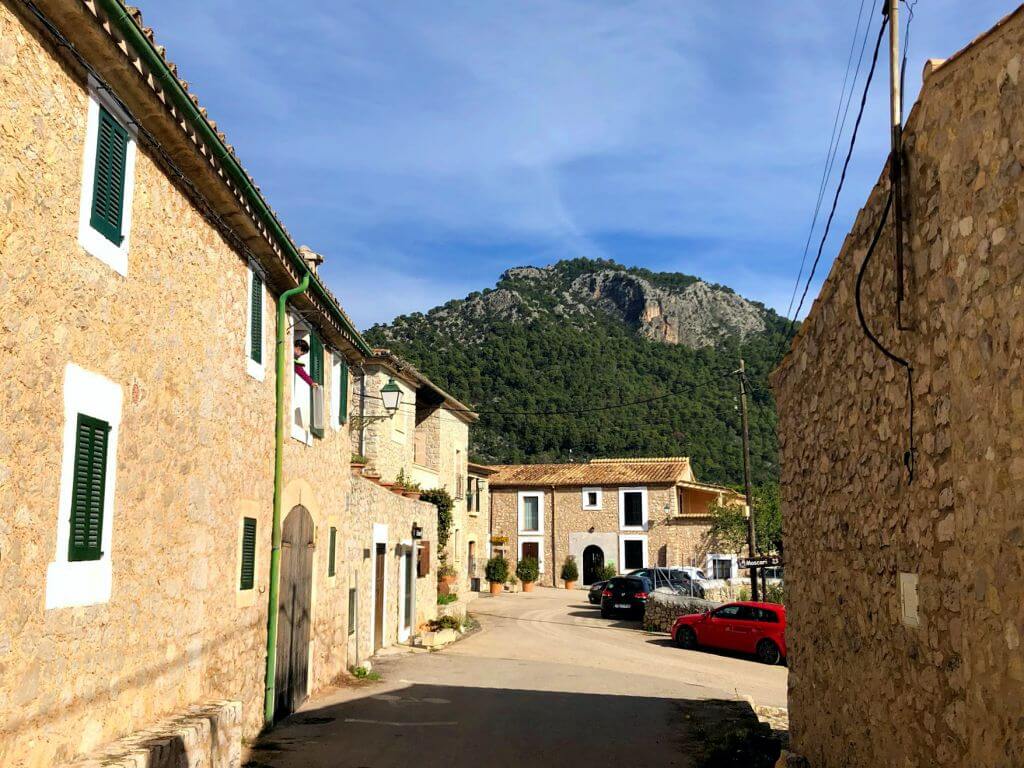
If the short walk leaves you wanting more, you can make the return journey into a loop. Our suggested alternative takes roughly 15 minutes longer than retracing the outward route, depending on your pace. It also uses roads open to traffic.
In Binibona, look for the road on the right with a wooden sign pointing towards Moscari, 2.3 km away. That figure is the distance to Moscari, rather than the length of our return to Caimari.
Follow this road to the first junction, then turn right towards Caimari. On our visit there was a dark brown wooden direction sign.
After a few more minutes, you reach another fork. Take the right-hand branch again to return to Caimari. The final stretch is uphill, which is worth remembering if you are pushing a pushchair. If signs have changed, check the direction to Caimari before continuing.
A little extra in Caimari
Back in Caimari, pause on Plaça Major and take a look at the Església Vella, the old church. For a different way to round off the day, the Caimari Ethnological Park, beside the sports centre, has recreations of traditional structures such as a lime kiln and a charcoal burner’s hut. Check visiting arrangements through the Caimari visitor information page before going. These visits are additional to the estimated walking time.
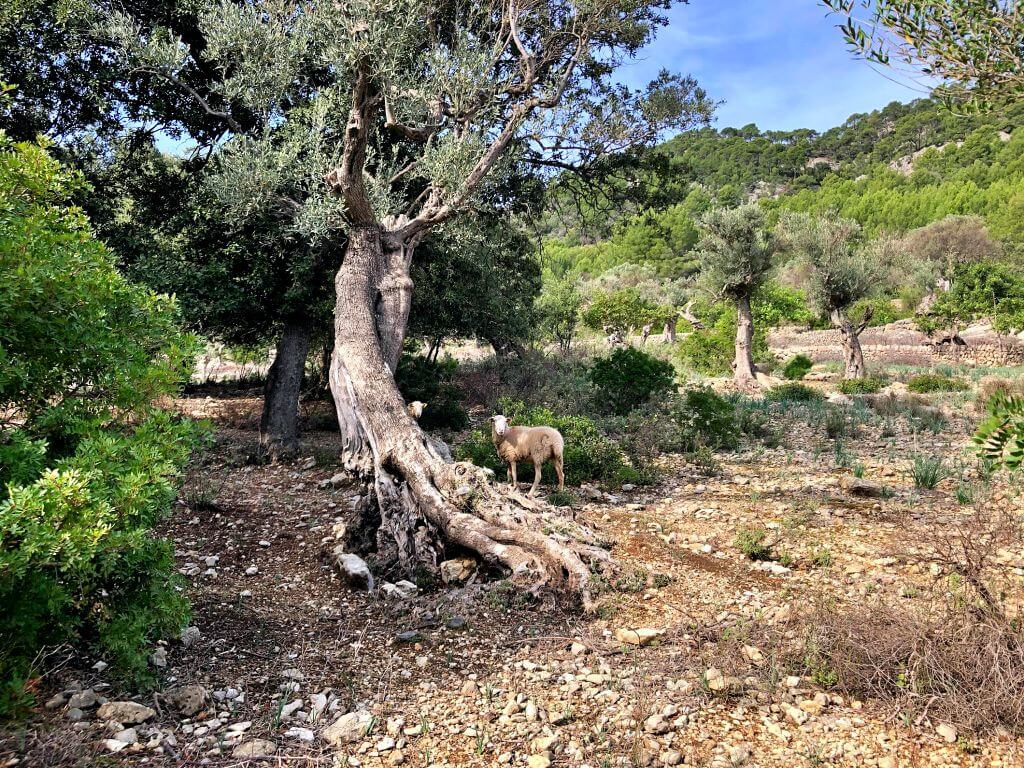
A simple game for children is to spot the difference between almond and olive trees by looking at their leaves and trunks. Stop only where you can keep clear of passing vehicles, and stay outside the fields.
Caimari to Binibona walk facts
Frequently asked questions
Can you walk from Caimari to Binibona with a pushchair?
Yes, the tarmac surface can accommodate a pushchair. Assess traffic and visibility, as the road is shared with vehicles. The optional circular return ends with an uphill stretch.
How long does this walk take?
The out-and-back route is approximately 4.6 km and takes 70–90 minutes of walking, plus stops. The circular alternative described adds roughly 15 minutes, depending on your pace.
Is this walk only worth doing during almond blossom season?
No. Blossom makes it especially attractive, but the olive groves, traditional buildings and scenery at the foot of the Serra de Tramuntana can be enjoyed at other times too. In summer, avoid the hottest part of the day.
Advertisement
You might also like