Sa Punta de n’Amer is an Area of Special Natural Interest (ANEI) between the beaches of Cala Millor and Sa Coma, in the municipality of Sant Llorenç des Cardassar. Its roughly 200 hectares combine dunes, pine woodland, Mediterranean scrub and rocky coast. It is a place of natural and historical interest to explore as a family, with several quite different stops along one walk.
What to see at Sa Punta de n’Amer
The main landmark is the Sa Punta de n’Amer watchtower, known as Es Castell, a 17th-century defensive building. When open, it is possible to look inside and climb to the roof terrace for the views. It belonged to Mallorca’s coastal defence system, like the Talaia d’Albercutx and Torre Picada, which we have also visited.
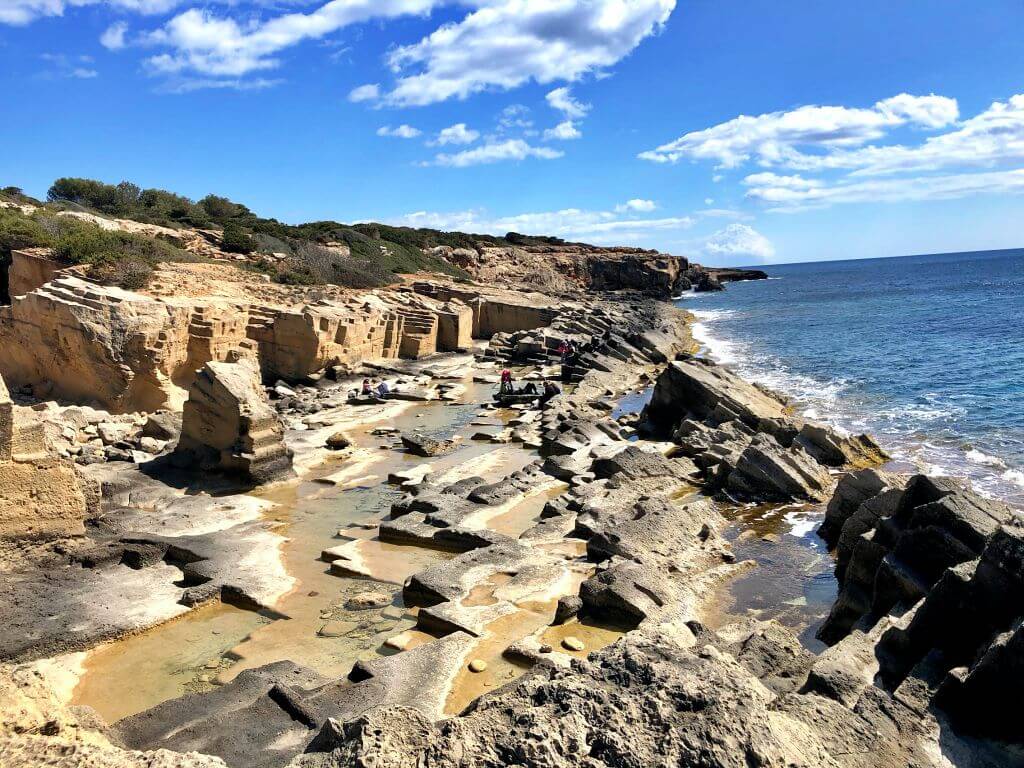
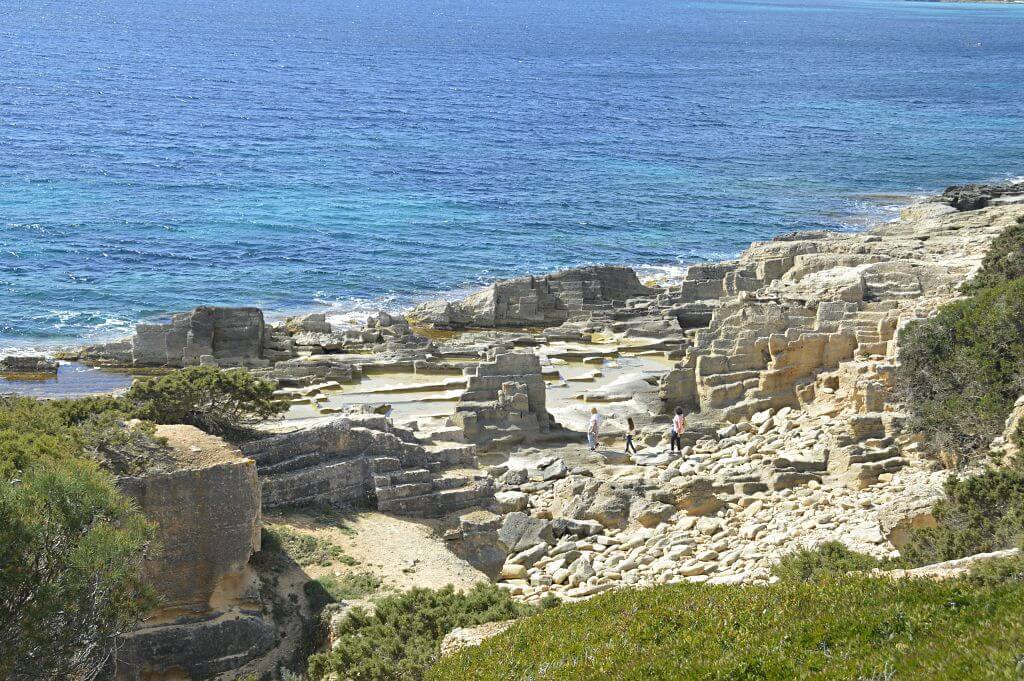
You can also see old marès sandstone quarries, where seawater forms small natural rock pools (guide in Spanish), and bunkers associated with the coastal defences of the Spanish Civil War. The landscape gives children concrete examples of how one place has been used to watch the sea, extract stone and protect nature.
This is privately owned protected land with walking routes. Stay on existing paths, respect signed access and avoid trampling the dunes. The official Sa Punta de n’Amer tourism information explains its natural interest.
Starting the walk from Cala Millor beach
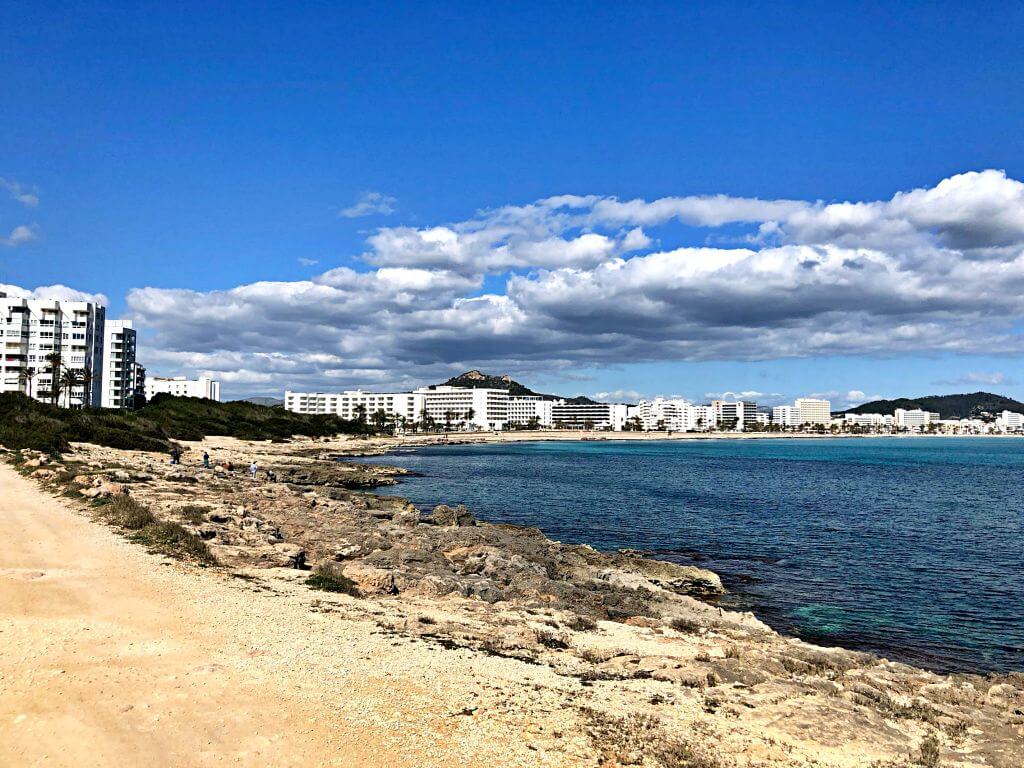
On our visit, we did not find the signs clear enough to improvise a circular route through all the trails. With children, we prefer an easy-to-recognise plan: start at Cala Millor, walk to the tower and return along the same path, adding side trips if you wish. We also keep the option of continuing to Sa Coma below.
Use permitted spaces or municipal car parks around Cala Millor beach. Parking is generally easier outside summer. The length of the approach depends on where you leave the car and where you start along the promenade.
For the watchtower, continue to the end of Cala Millor’s seafront promenade towards Sa Coma. Where the promenade ends, walk a short distance onto the beach to join the track towards the tower. This is a short cut beside the sea; use existing access paths rather than crossing dune vegetation.
We soon reach the dirt track and follow it to Es Castell. The tourism route gives about 1.3 km from the entrance to the natural area to the tower; from our starting point around Cala Millor we reckoned on an approach of roughly 2.4 km. Our reference includes the approach through Cala Millor. For the path inside the natural area, allow around 30 minutes or longer with children, depending on pace and stops.
You may share the path with cyclists, horses or ponies. We also encountered a vehicle on our visit; this does not make motor access permissible for visitors. Park in Cala Millor or Sa Coma and respect the natural area’s ban on motor vehicles.
Es Castell: the Sa Punta de n’Amer watchtower
Beside the tower is a bar-restaurant and a broad open area. On our visit, toilets were also available through the establishment, depending on its opening. We do not treat the open area as a freely accessible visitor car park.
The tower was completed in the late 17th century and restored in the 20th. It watched the coast and protected local people against attacks by corsairs and pirates. It stands roughly 35 metres above sea level, overlooking the bays of Cala Millor and Sa Coma.
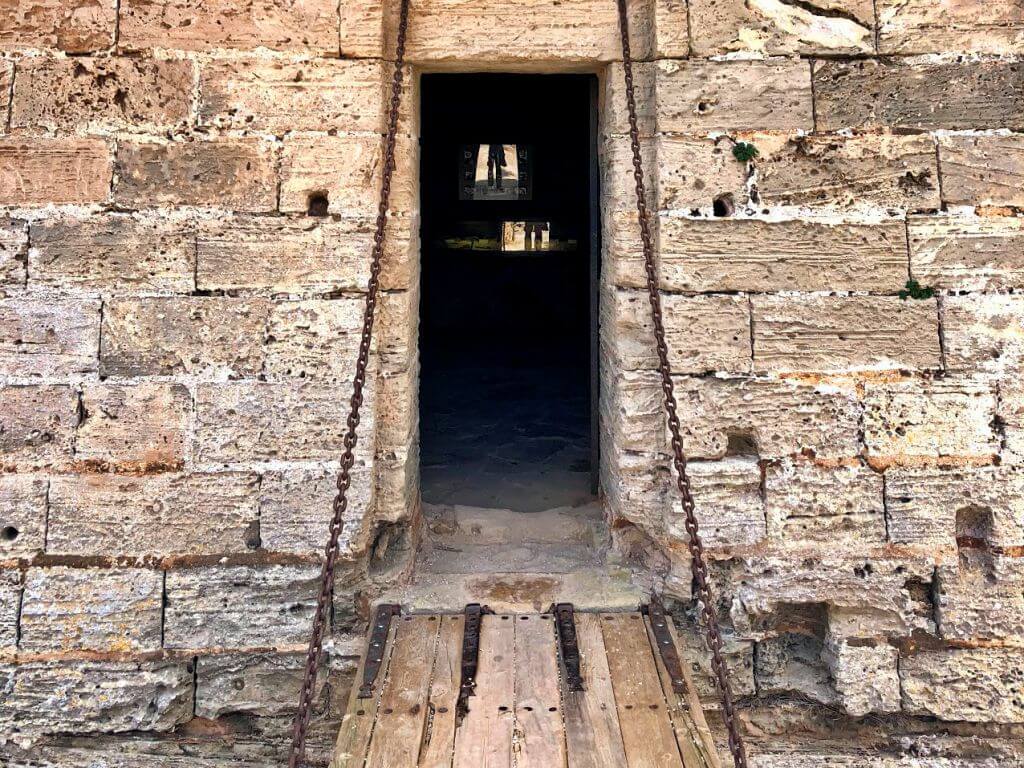
Entry is across a bridge over a moat cut into the rock, a useful detail for understanding its defensive purpose. On our visit, we went inside and up to the roof terrace, where we saw a bronze cannon. Accompany children closely on the bridge, staircase and upper platform.
Tourism information lists free admission to the tower. Opening hours can vary by season, with possible closing days in winter; the bar’s hours should not be confused with access to the tower interior. Check the official Es Castell information (in Catalan) or ask tourist information on +34 971 585 409. Do not assume that entry is possible at any time.
The side trip to the survey marker
Before continuing to the quarries, stand facing the tower entrance and look to your left. Several paths lead towards the coast and the headland.
Follow the left-hand path, keeping that reference at the fork, until you reach the Spanish National Geographic Institute’s survey marker. There is another panorama of Cala Millor, and you can see the tower at a distance, helping explain its role as a lookout.
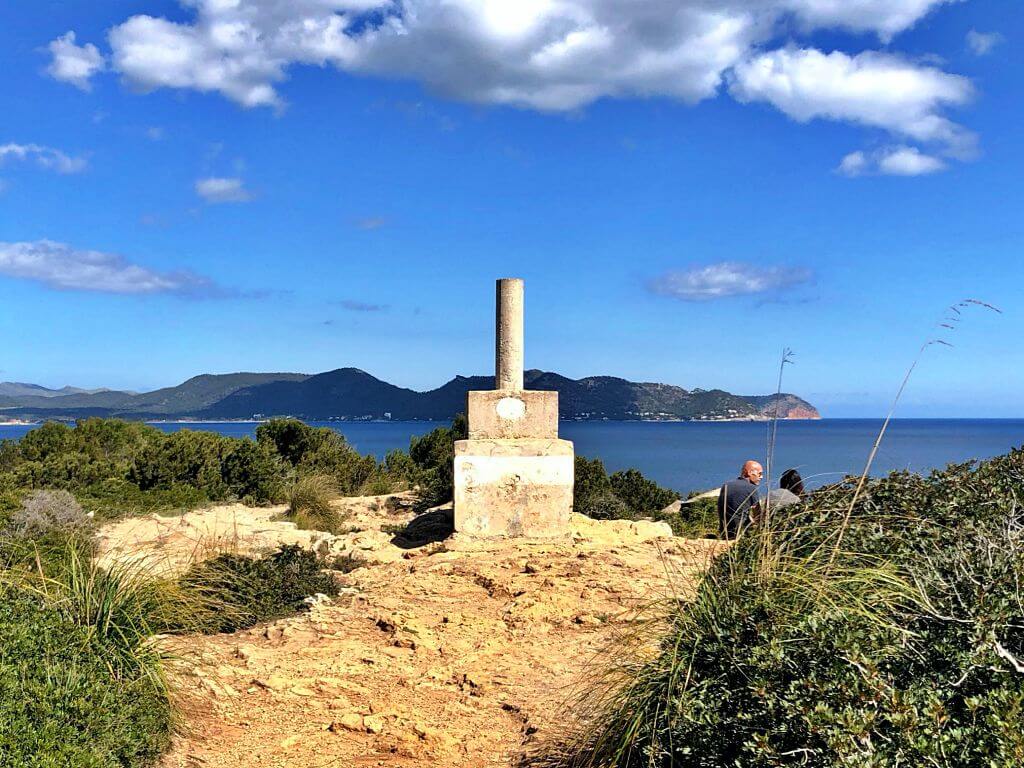
Then retrace your steps to the tower. The marker is used for surveying the land: an interesting detail to explain without climbing onto it.
The marès quarries and natural rock pools
From Es Castell, take the wider track towards Sa Coma, the one on the left when continuing our route from the tower. Follow it for only a short stretch.
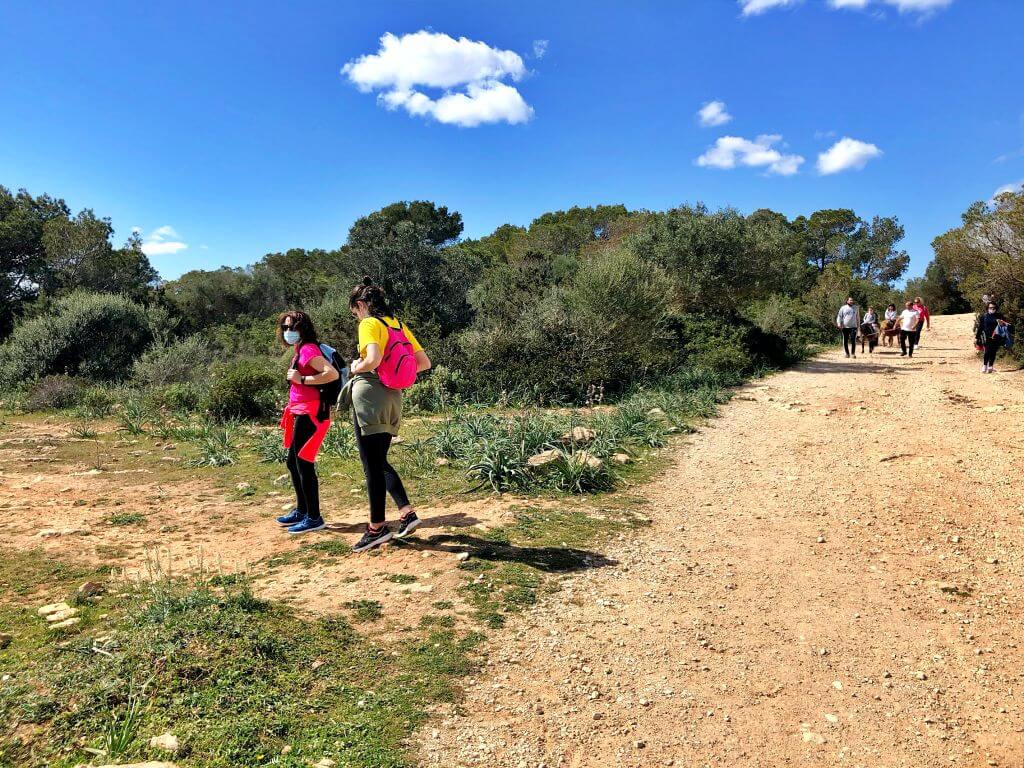
After roughly 400 metres, look for a turning on the left towards the old quarries. The photograph below helps identify the junction. This path reaches the upper edge of the stone cuts, with a view worth stopping for.
The descent to the sea has no single clear route that we can describe turn by turn. We found several possible ways down on our visit, but there are drops, unguarded edges and uneven rock. Choose only a passage that is clear and suitable for your family; otherwise enjoy the view from a safe position and return to the main track.
The contrast between sea and carved stone is striking. Straight cuts and stepped platforms show where marès sandstone was extracted for use in Mallorcan buildings. Seawater enters between the rocks, forming small pools.
On our outing we rested beside the sea and dipped our feet in the water, and saw children playing nearby. These are not managed swimming pools or a lifeguarded bathing area. Only consider approaching the water when the sea is calm, avoiding waves, wet rock and slippery surfaces. With children, simply watching the landscape can be just as enjoyable.
Bunkers, return route and the Sa Coma alternative
Looking towards Sa Coma, you can see one of the old bunkers not far away. From the quarries, there are two options, depending on the ground, sea conditions and how far you want to walk.
The shorter option is to approach the nearest bunker and pick up the inland path visible beside it. Walk back towards the tower, then return to Cala Millor by your outward route. Look at the buildings from outside and avoid openings or deteriorated structures.
The slightly longer option is to follow the coast to Sa Coma beach, provided the coastal passage is suitable for your group. From Sa Coma, take the broad track towards the tower, marked by a sign on our visit. Once back at Es Castell, return to Cala Millor along the familiar path. This option is not a full circular walk through the resort streets.
If you prefer not to descend to the quarries or cross the coastal rocks, turn back after the tower and survey marker. Bring water, a sun hat, sun protection and grippy footwear: much of the route has little shade. The total time varies with side trips; our reference for the outing was about two hours of walking, plus visits, stops and the extension towards Sa Coma.
Sa Punta de n’Amer walk fact sheet
Frequently asked questions about Sa Punta de n’Amer
Is the Sa Punta de n’Amer walk circular?
Our main proposal is out and back from Cala Millor, using the tower as a landmark and adding optional side trips. We also explain how to continue to Sa Coma and return via Es Castell. There is no need to complete a circuit of all the trails to enjoy the area.
Is Sa Punta de n’Amer suitable for a pushchair?
We do not recommend a pushchair for the full route described. Although some tracks are wide, sand, rocky sections, the quarries and tower access create difficulties. With a baby, consider a carrier and stay on the main paths.
Is Es Castell free to enter, and does it have opening hours?
Tourism information lists free admission to the tower. Opening depends on the season and may include closing days in winter. Check interior and roof-terrace access before the walk; the bar’s opening hours do not guarantee that the tower is open.
Are the quarry rock pools suitable for children?
These are pools among seaside rocks, without the conditions of a managed or lifeguarded swimming pool. There are drops and potentially slippery surfaces. Only consider approaching the water in calm seas with constant supervision; if the passage or waves are unsuitable, view the quarries from a safe spot.
You might also like