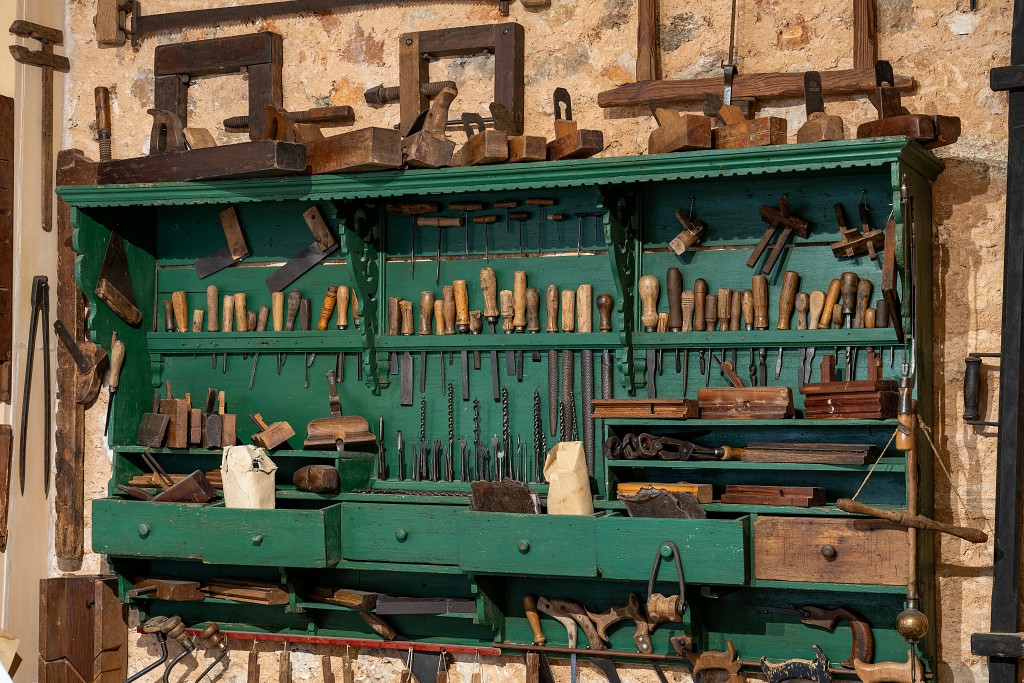
What did a Mallorcan kitchen look like a few decades ago? What tools did a shoemaker use? At Etnogràfic Campos, everyday objects tell the story of life in Mallorca. If you’re visiting with children, there’s plenty here to get them asking questions.
Etnogràfic Campos was founded by Miquel Ballester Julià, who has spent years collecting and preserving pieces of Mallorca’s heritage. The museum houses the island’s largest ethnographic collection, with objects grouped around farming, traditional trades, commerce and other services.
The museum occupies a former family winery in the centre of Campos. The building was first used to store farming tools and carpentry materials. Later, the family made wine there to sell in their shop in the village.
Across three floors you’ll find a kitchen with its original utensils, a shoemaker’s workshop and an old schoolroom, as well as tools used in farming, fishing and other traditional trades.
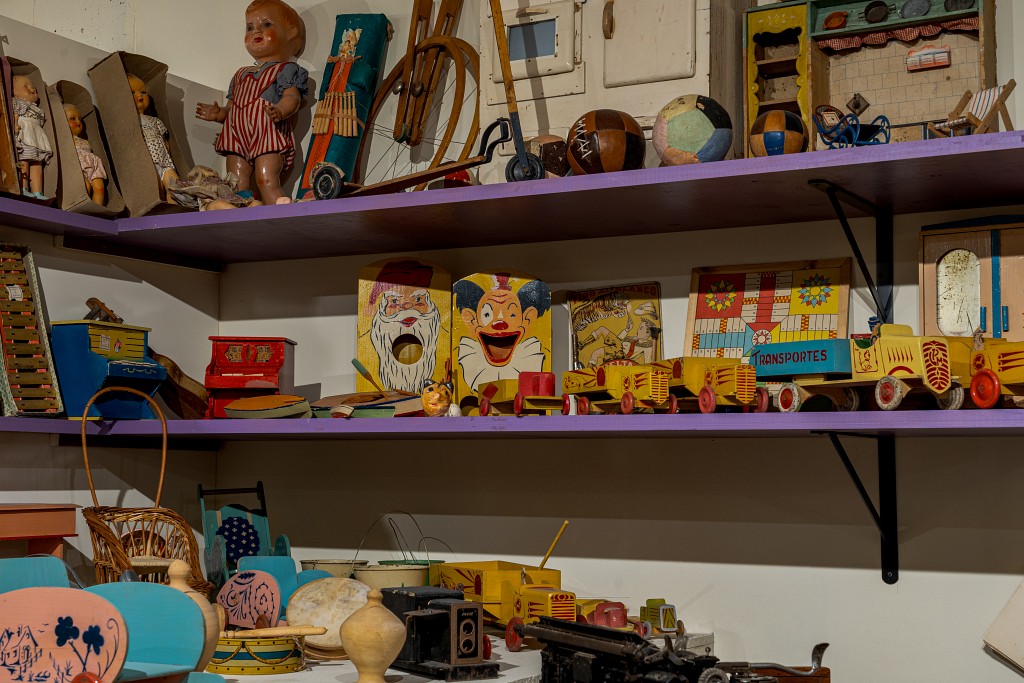
Visiting the museum with children
Visits are by guided tour and must be booked in advance.
Look out for a telephone from the 1940s, an old radio, wooden toys, sewing machines and farm carts. The display panels explain how these objects were used.
Things to do near Campos
After your visit, you can walk around Campos, stop for lunch or browse the market, held on Thursday and Saturday mornings.
For more things to do nearby, try Es Trenc (guide in Spanish), Ses Covetes or Sa Ràpita.
We like to combine the museum with a visit to Colònia de Sant Jordi, where you can follow the seafront promenade for about 3 km (guide in Spanish).
Why visit Etnogràfic Campos?
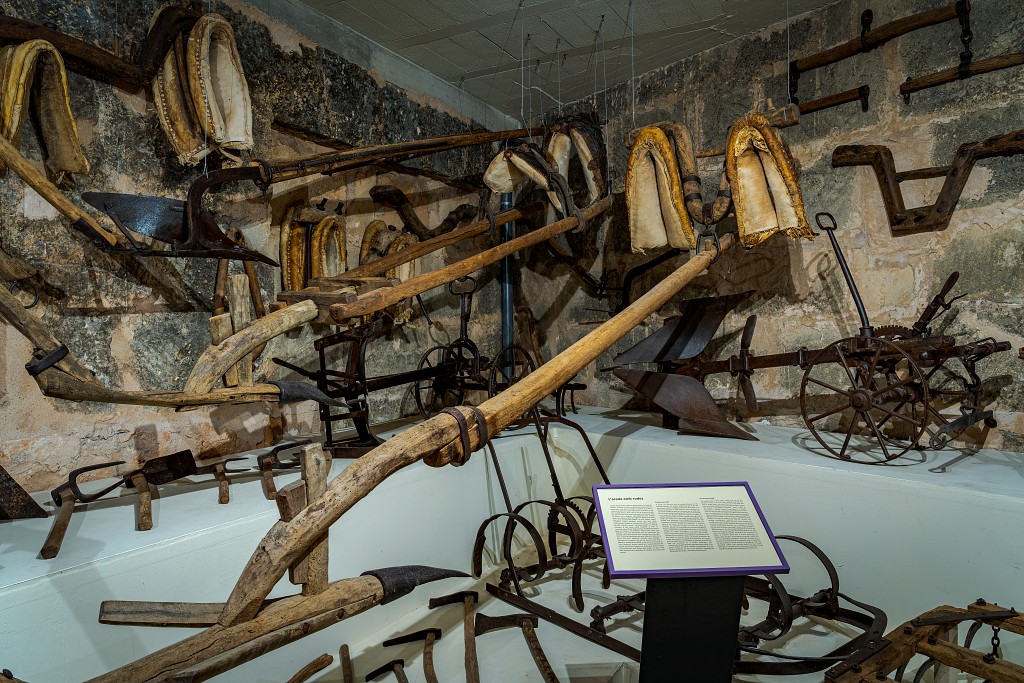
It’s a good opportunity to talk to children about how their grandparents or great-grandparents lived. If you’re interested in local history, take a little time in the workshops to look closely at the tools of each trade.
Planning your visit to Etnogràfic Campos
You might also like