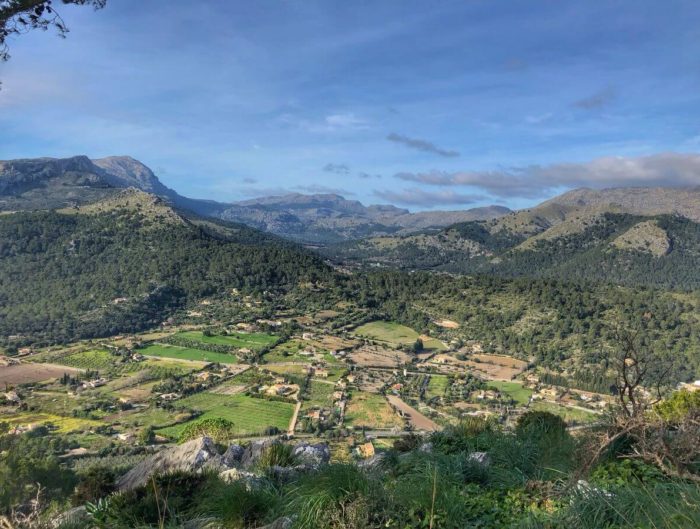

This road trip through Pollença and Formentor brings together three very different stops: the Calvari steps, the cliffs at the Creueta or Es Colomer viewpoint, and Formentor lighthouse. The journey itself is part of the pleasure, with mountains, bends and fresh glimpses of the sea appearing beyond the car window.
We recommend going outside the regulated season, when you can drive all the way to the lighthouse, on a clear day without strong winds. Mild days between autumn and spring offer a more relaxed setting than peak season. Allow a generous half-day, or a full day if you want to explore Pollença and enjoy lunch without rushing. This is a drive to savour rather than a series of quick photo stops.
You can drive to Formentor lighthouse outside the seasonal traffic-control period. Restrictions usually run from mid-May to mid-October, between 10 am and 10 pm. Outside that period, these seasonal restrictions do not apply, apart from exceptional road closures. Exact dates can change from year to year: check the calendar on the official Formentor access website. During restricted dates and hours, private cars without authorisation cannot reach the lighthouse; the bus alternative is explained below.
First stop: Pollença and the 365 Calvari steps

From Palma, follow signs for Pollença, the first stop. Make sure you have enough fuel and pick up drinking water or food here. Use the town’s signposted car parks: the area around Cecili Metel and Parc dels Banys Públics is a useful starting point for the walk. Check the signs and parking conditions for the space you choose.
On our visits, this park has made a handy stop with young children, with play areas, trees and somewhere to pause before continuing. Shade from the plane trees varies with the season, as they lose their leaves. If you need the park toilets, check that they are open rather than relying on them as your only toilet stop of the day.

From the park, head towards El Calvari along carrer de Sant Domingo. Continue along Antoni Maura and look for carrer del Calvari, which leads to the foot of the steps. Leave the car behind and enjoy the old town on foot, with its stone houses, small shops and squares.
The climb has 365 steps, traditionally one for each day of the year. Cypress trees and fourteen crosses line the way to the chapel, with views across Pollença and the surrounding countryside. There is no need to hurry: stopping and counting steps can become part of the fun with young children. For this staircase, a baby carrier is more practical than a pushchair.
El Calvari also hosts the Davallament on Good Friday, when a figure of Christ is carried down the steps in procession. On Sundays, you can combine your walk with the town-centre market. If you would rather spend the day around Pollença, the walk up Puig de Maria is another option worth allowing proper time for, rather than squeezing it into this whole itinerary.
Second stop: Creueta or Es Colomer viewpoint

Back in the car, head towards Port de Pollença, then take the Ma-2210 towards Formentor, following current signs. The road climbs through a series of bends to the Creueta viewpoint, also known as Mirador des Colomer. The car park is small: use permitted spaces only and take care crossing, as cars, buses and bicycles pass through.
The viewpoint path links several terraces above the cliffs, more than two hundred metres over the sea. The outline of Es Colomer islet, the rock faces and the mountains explain why this is one of Mallorca’s most photographed views. There are steps and sections exposed to wind; keep children close and enjoy the scenery from the designated areas.
Beside the entrance is a monument to engineer Antoni Parietti, associated with both the road and the viewpoint. Follow the prepared path, as the perspective changes from one terrace to the next. Afternoon light can be beautiful, but leave enough time to finish the route and return without rushing or unnecessarily driving the mountain road in darkness.
Optional walk to Albercutx watchtower
Opposite the viewpoint, a road climbs towards Talaia d’Albercutx, an old watchtower at around 380 metres above sea level. If you feel like walking, see our Albercutx watchtower walk: it is roughly four kilometres there and back from the viewpoint, with an uphill climb and a rocky final section. This optional extension offers views towards the bay and Formentor beach; you do not need to add it to enjoy the three main stops.
Third stop: Formentor lighthouse

Return to the Ma-2210 and continue towards Formentor lighthouse when car access is permitted. It is around thirteen kilometres from the viewpoint, although driving time depends heavily on traffic. Expect bends, narrow sections and limited visibility. Drive slowly, wait for a clear opportunity before passing cyclists and give them plenty of room. Enjoy the views from designated stopping places, never by stopping in the carriageway.
The lighthouse stands at Cap de Formentor, at the tip of the peninsula, one of Mallorca’s most remote corners. The approach is particularly striking as the white building appears above the cliffs, surrounded by sea. Photograph it along the way only if you can stop safely in a permitted place without blocking the road.
The lighthouse entered service in 1863. Its tower is around 22 metres tall and its focal plane stands 210 metres above sea level, higher than any other lighthouse in the Balearic Islands. Building it in this isolated location was a challenge long before the present road existed. The Formentor entry on Fars de Balears has more about its history.
The visitor facilities within the lighthouse complex include a café and toilets, useful when travelling with children. Check opening on arrival and bring water and some food anyway: these services should not be assumed to operate at all hours. Using these facilities and walking around the grounds does not mean that the tower or lantern room is open for visits.
The main difficulty on arrival is the tiny car park. Even outside restricted dates, queues and awkward manoeuvres are possible. Be patient, keep the road clear and be ready to change your plan if there is no space. Goats are also a common sight here and may appear close to the road. Slow down, watch them from a distance and do not feed them.
This is the last stop. You return along the same road, so allow enough time and daylight. Choose a day with good visibility and avoid the cape when strong gusts are forecast: the scenery is spectacular without approaching cliff edges or leaving visitor areas.
Formentor access restrictions and the bus alternative
The following controls apply only during the published restricted dates and hours. Distinguish between the road towards Formentor beach and the section continuing to the lighthouse. Access to the first section also depends on capacity and signs. Permission or a parking space at the beach does not authorise you to continue to the lighthouse. Check the DGT’s published access and authorisation rules, particularly if you need access for a passenger with reduced mobility.
The alternative is TIB bus 334, Alcúdia–Port de Pollença–Formentor, when operating. It stops at Mirador des Colomer, Formentor beach, Cala Figuera–Cala Murta and the lighthouse. Check the current timetable and last return bus. This is a seasonal service, not a connection to assume runs throughout the year.
During the regulated season, driving in before restrictions begin does not allow you to remain within the restricted section during controlled hours. Plan your stops around public transport in that period. Outside the regulated season, you can drive the complete route to the lighthouse, apart from exceptional road closures. The lighthouse car park is still tiny and queues are possible.
Road trip at a glance
The drive from Pollença to the lighthouse is roughly thirty kilometres one way, excluding the journey from your accommodation and the return trip. The walking sections include steps and viewpoints, so travelling by car does not make every stop equally accessible.
More lighthouses and routes around Mallorca
If you enjoy coastal roads and wide-open views, our guide to Mallorca’s most beautiful lighthouses has more ideas for other days. Another classic drive leads to Sa Calobra and the Torrent de Pareis (guide currently in Spanish), along a road that also calls for a calm approach. For villages, beaches and walks to combine during your stay, save our guide to Mallorca with kids.
Advertisement
You might also like