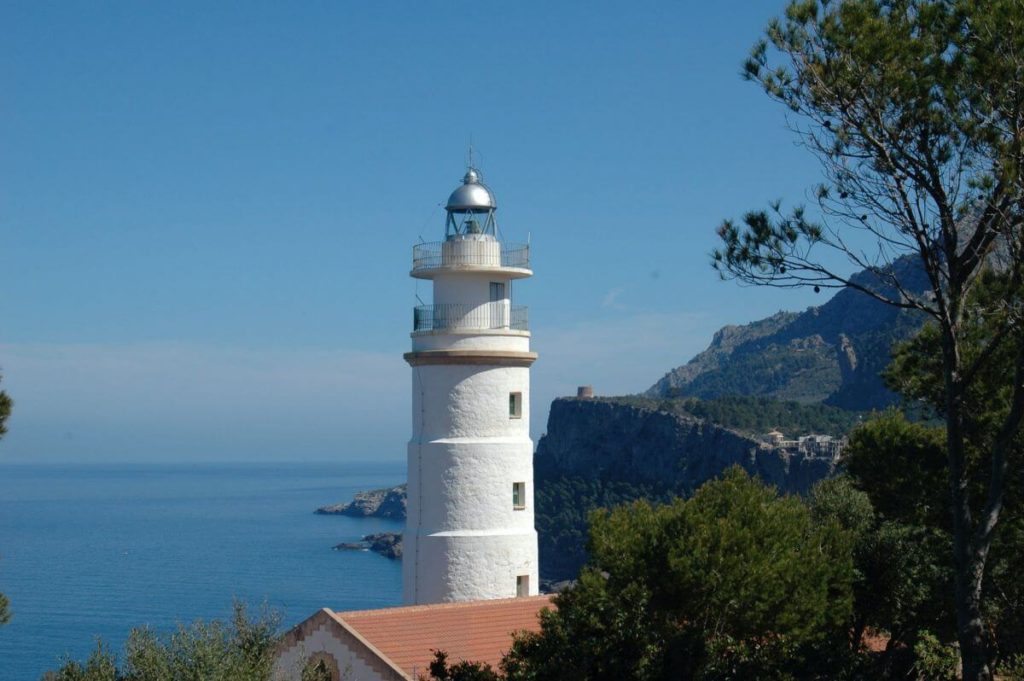
For those of us who love seeking out lighthouses and photographing them, Mallorca offers plenty of days out. This guide brings together ten of my favourite stops. Sometimes it’s worth getting right up to the tower. At other places, like Portocolom, the view you’ll remember is across the water.
Lighthouses guide boats and lead us to corners of the island we might otherwise miss. Split the stops across a few days. With children, Aucanada and s’Arenal in Portocolom are easy places to see a lighthouse from the beach. At Formentor you can visit the headland, while at Portopí you can book a visit to the exhibition.
Mallorca’s list includes 14 lighthouses, including La Riba, which is no longer in use. The lighthouses at sa Mola and Cala Figuera in Calvià are separate from those at Port de Sóller and Torre d’en Beu in Santanyí featured below. Cabrera, Sa Dragonera, Menorca, Ibiza and Formentera also have lighthouses. To read their stories, explore Lighthouses of the Balearic Islands.
List of Mallorca’s lighthouses
The list includes 14 lighthouses. The 10 linked names take you to their individual guides. The other four are listed for reference.
- Sa Mola (Andratx)
- Cala Figuera (Calvià)
- Capdepera
- Cap Gros (Muleta)
- Cap Blanc
- Aucanada (Alcanada)
- Portocolom
- Cap Salines
- Sa Creu
- Torre d’en Beu (Santanyí)
- Punta de l’Avançada
- Formentor
- La Riba (no longer in use)
- Portopí
Capdepera Lighthouse
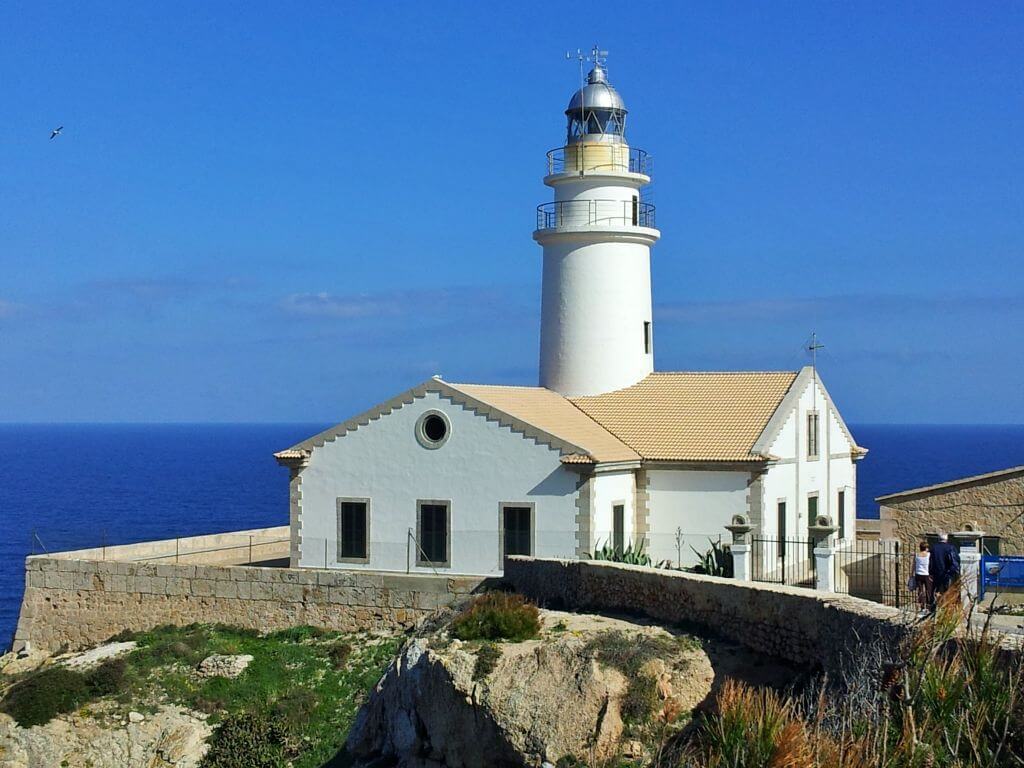
Where · Cala Ratjada, at the end of Carrer d’Atunes
History · In service since 1861
Getting there and where to see it · Road access and parking nearby
Visiting · Exterior only
This lighthouse and Artrutx Lighthouse in Menorca mark the channel between the two islands. Capdepera has the classic outline of a lighthouse, with its tower beside the keeper’s house on a windswept stretch of coast. The keepers rescued the victims of several shipwrecks, and in 1869 they received the Cross of Beneficence for their work during a severe storm.
Combine it with a walk along the Cala Ratjada seafront (in Spanish), time at one of the local beaches or a visit to Capdepera Castle. At the lighthouse, enjoy the view from the path and give the cliff edges a wide berth, especially in windy weather.
Cap Gros Lighthouse (Muleta)
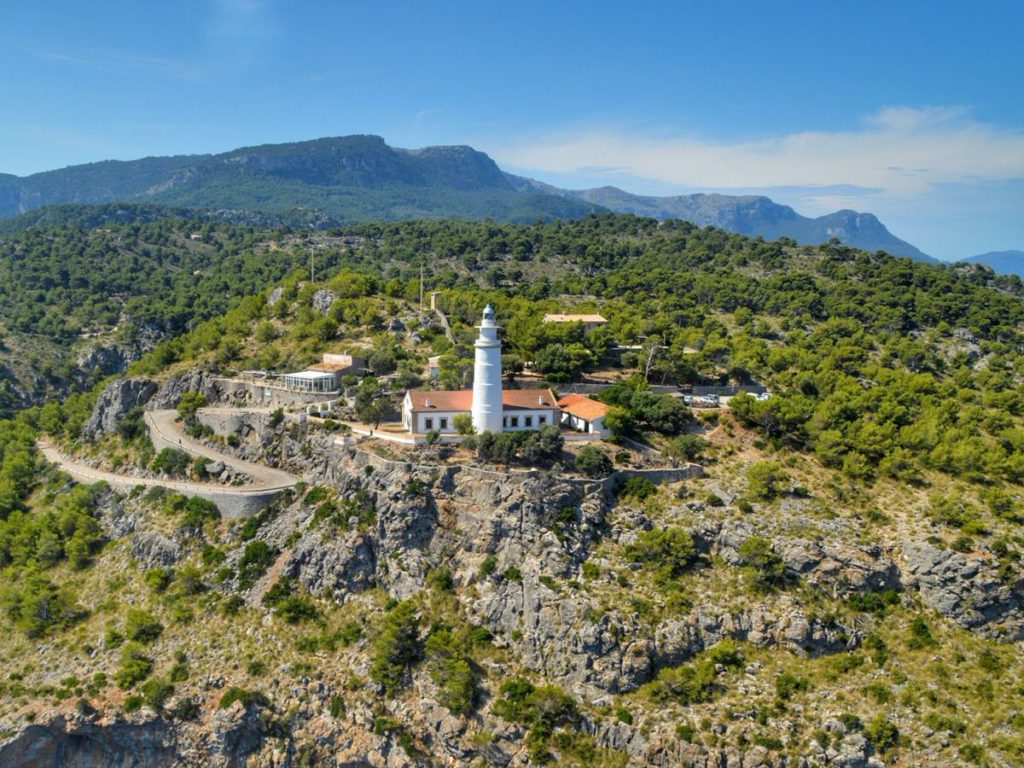
Where · Port de Sóller, Camí des Far
History · In service since 1859
Getting there and where to see it · Narrow access road and limited parking
Visiting · Exterior only
Sóller’s town council had the tower built in 1842, but it wasn’t lit until 1859, when it entered service as a fourth-order lighthouse. Next to the grounds is Muleta mountain hut, run by the Consell de Mallorca.
The viewpoint looks out over Port de Sóller, Cavall Bernat in the Tramuntana mountains and Sa Creu Lighthouse across the harbour entrance. For a day out in the area, visit the town of Sóller, take a stroll by the harbour or try the Sa Torre Picada walk with the children.
Cap Blanc Lighthouse (Cabo Blanco)
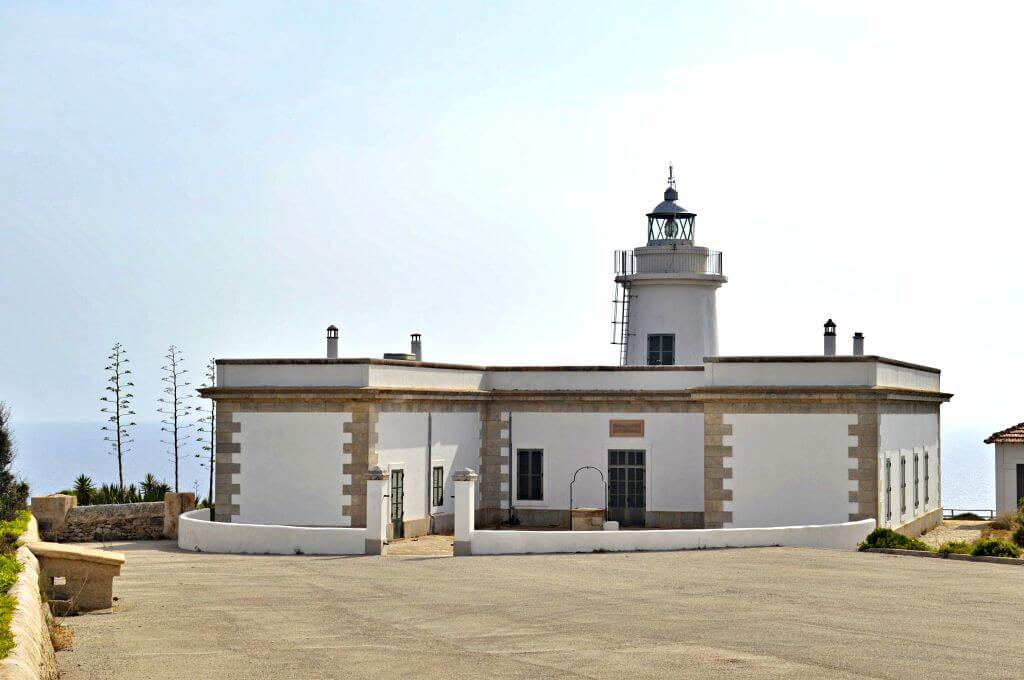
Where · Llucmajor, signposted turn-off from the Ma-6014
History · In service since 1863
Getting there and where to see it · Road access to the area outside the grounds
Visiting · Exterior only
Coming from Badia Gran, look for the signposted turn-off about 10 km further on. Cap Blanc opened on 31 August 1863, the same day as Cap Salines. It was so isolated in its early years that some supplies arrived by boat. Fuel was carried up a path on the cliff.
On our original visit, the path to the left around the grounds reached the foot of the Cap Blanc watchtower in about ten minutes. The other side opened up to views of the lighthouse and cliffs. The grounds are fenced. If a gate is closed or access is marked as restricted, turn back. There are unprotected cliff edges nearby, and the steps up the watchtower are unsuitable for children.
It’s one of my favourite places to watch the sun go down. One of my favourite stories about Cap Blanc is how the lighthouse keepers taught local children who had difficulty getting to Llucmajor for school. Cala Pi, about 10 km further along, is another stop you can add to the day.
Aucanada Lighthouse (Alcanada)
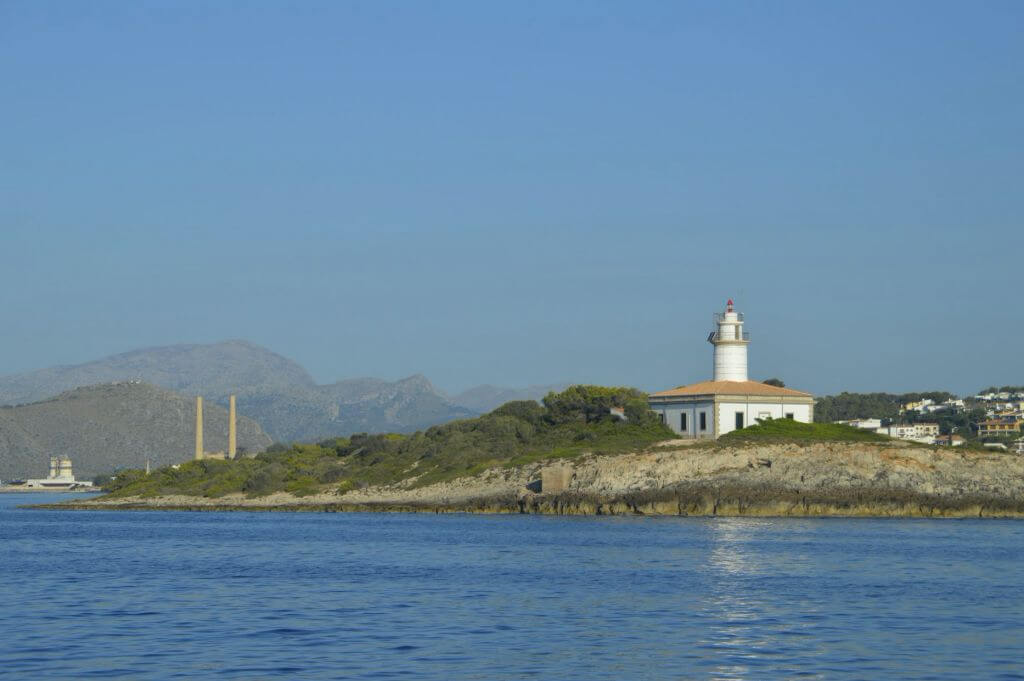
Where · Aucanada islet, Alcúdia
History · In service since 1861
Getting there and where to see it · Visible from Aucanada beach
Visiting · Interior closed to visitors
The lighthouse stands on its namesake islet, about 150 m off the coast and about 5 km from Port d’Alcúdia. For the view and a photo, head to Aucanada’s pebble beach. Look for parking on the nearby streets. With children, the shore is the best place to stop and take in the view.
You can round off the outing with a stroll around Port d’Alcúdia, time on its beach or a visit to the Ermita de la Victòria.
Portocolom Lighthouse
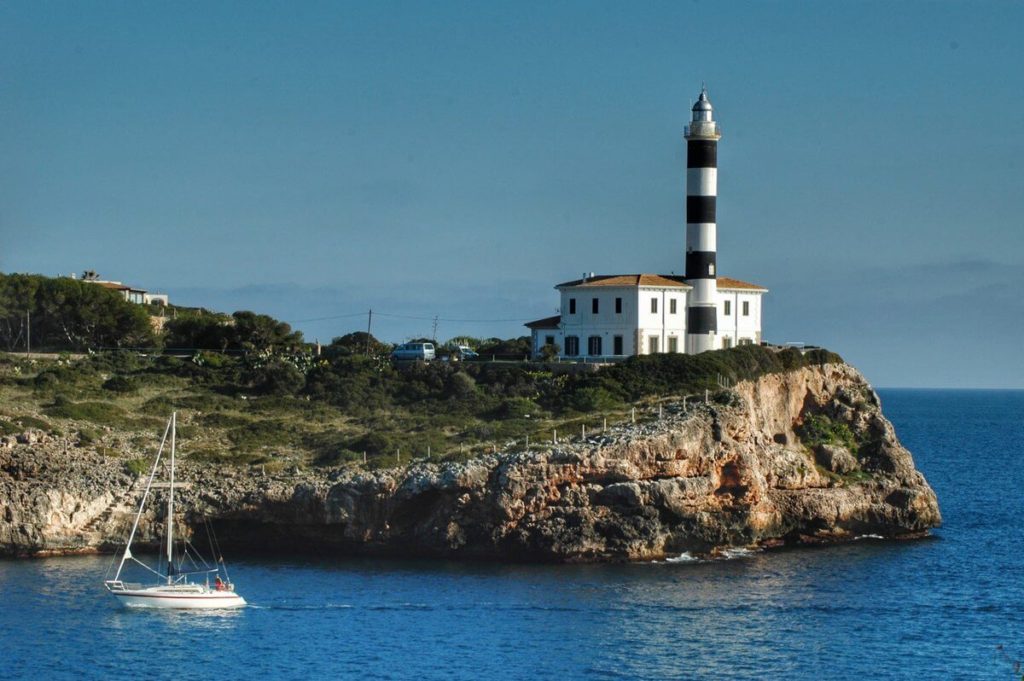
Where · Punta de ses Crestes, Portocolom
History · In service since 1863
Getting there and where to see it · Views from S’Arenal and Carrer del Bergantí
Visiting · Grounds closed to the public
Designed by Emili Pou, the lighthouse guides boats entering and leaving the harbour. Its black-and-white tower is 25 m tall and the light sits 42 m above sea level. When a boat was in trouble, the keepers raised a white flag and blew a conch shell to alert the harbour guards.
Driving along Carrer del Far brings you to a gate, with no visitor parking for the grounds. For a good view of the lighthouse, I prefer S’Arenal beach (in Spanish) or the small viewpoint on Carrer del Bergantí near numbers 18 and 20. You can already see the lighthouse from street level, so with little ones you can stay up at the viewpoint.
One of my favourite photographs is from Sa Cova Foradada, where the rock frames the lighthouse. The descent is short, uneven and can be slippery, especially when the rock is wet or the sea is rough. On my photography blog I explain how to find Sa Cova Foradada and how I took the photograph (in Spanish).
Cap Salines Lighthouse
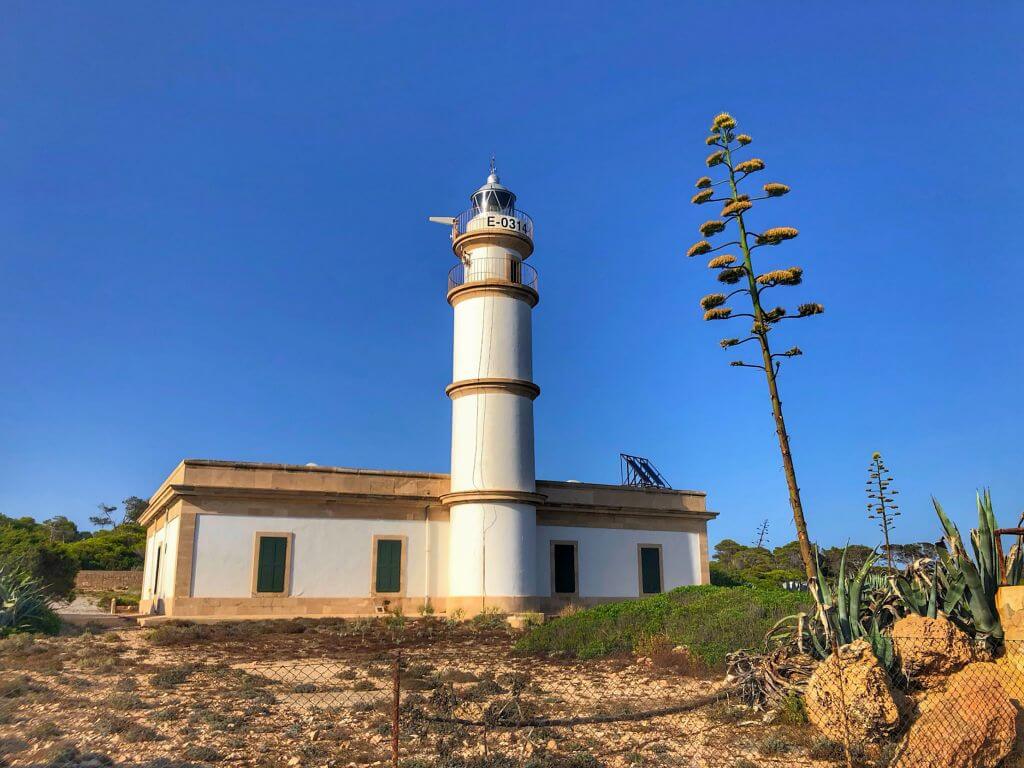
Where · End of the Ma-6110, signposted from the road between Ses Salines and Es Llombards
History · In service since 1863
Getting there and where to see it · Roadside parking where permitted
Visiting · Exterior only
The lighthouse at Mallorca’s southern tip opened on 31 August 1863. It was Spain’s first lighthouse to run on solar panels, according to the Balearic Port Authority’s lighthouse guide (in Spanish). You can see the outline of the Cabrera islands from the coast.
Allow about 40 minutes on foot from the lighthouse to Es Caragol beach. The approach road gets busy with cars in summer. For a shorter walk, the little beach at Cap Salines is closer. Spring is a good time for the walk.
The longer route continues past Cala en Tugores, Es Carbó and Es Dolç to Colònia de Sant Jordi. If you walk the whole way, plan how you’ll get back to the car before setting out.
Sa Creu Lighthouse
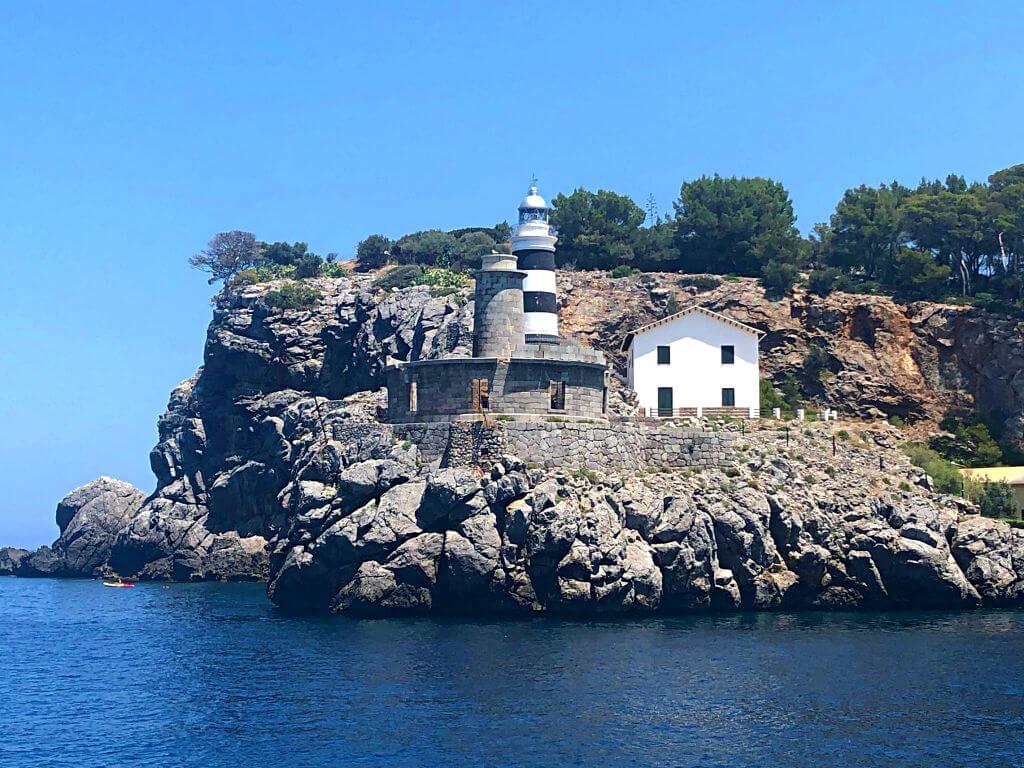
Where · Port de Sóller harbour entrance
History · Old tower from 1864 and current lighthouse in service since 1944
Getting there and where to see it · Views from the harbour and Muleta viewpoint
Visiting · Grounds closed to the public
Two towers stand side by side at the entrance to Port de Sóller. In storms, seawater shot up through a blowhole and crashed down onto the old lighthouse. The replacement was built higher up, further from the blowhole.
See the towers from the harbour promenade or the viewpoint at Muleta. At sunset, look for the two lights that still guide boats into the bay, Sa Creu and Cap Gros.
Torre d’en Beu Lighthouse
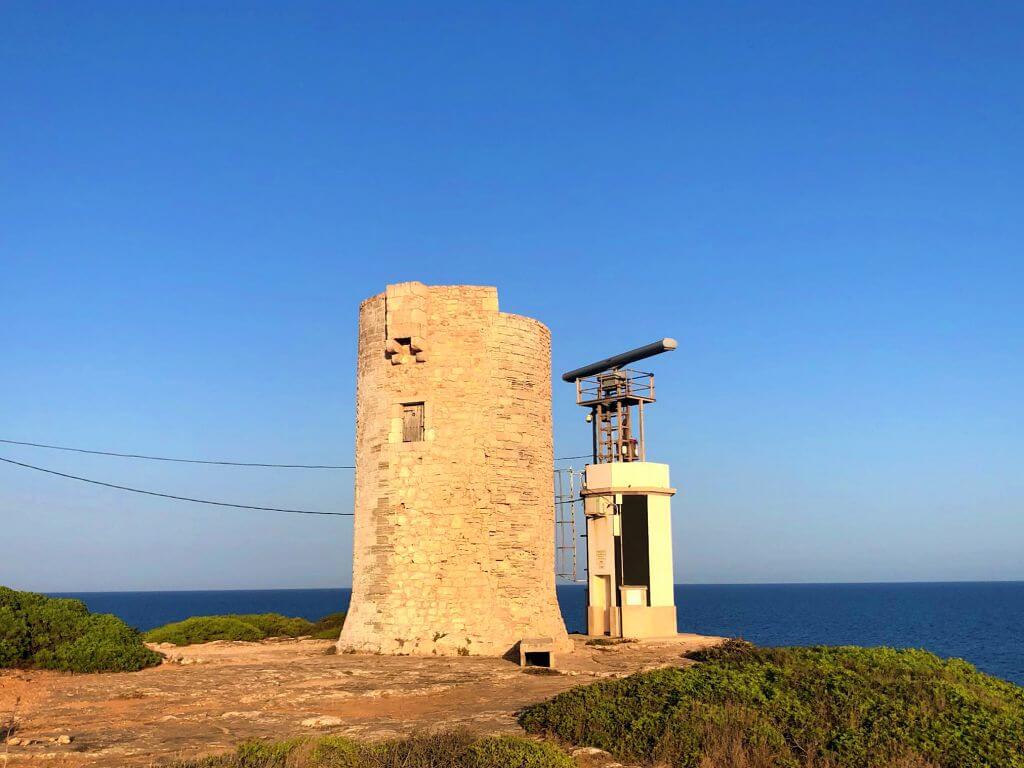
Where · Cala Figuera, Santanyí
History · Navigational light requested by the town council in 1953
Getting there and where to see it · Take the Camí de sa Torre d’en Beu on foot from the harbour or by road
Visiting · Exterior only
This is the least conventional lighthouse on the route. Cala Figuera’s fishing crews pressed for a light to guide them into the harbour after dark, which led to the octagonal tower you see today. A few steps away is the old watchtower, built in 1569 to warn of raids from the sea.
Cala Figuera harbour still feels like a fishing port. Walk past the boats and look out for restaurants serving fish. You can walk up to the lighthouse from the harbour. Once at the top, enjoy the views from the path above the steep cliffs.
Formentor Lighthouse
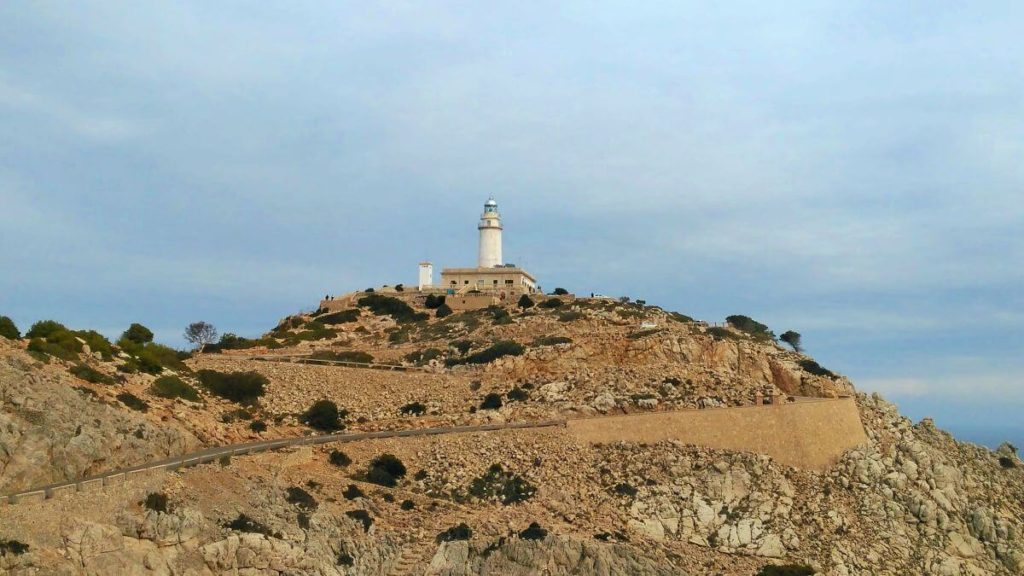
Where · End of the Ma-2210 from Port de Pollença
History · In service since 1863
Getting there and where to see it · Seasonal road restrictions
Visiting · Visit the headland around the lighthouse
It took years to build the lighthouse. The old approach was a difficult path from Cala Murta. The tower is 22 m tall and its light is 210 m above the sea, the highest in the Balearic Islands. One of its old lenses is on display at Portopí.
Check the DGT’s Formentor traffic rules (in Spanish) before setting out. Dates, hours and road sections covered by the restrictions are published each season. While the restrictions are in force, TIB bus 334 runs from Port de Pollença to the lighthouse. Outside that period, check the road status if you’re driving. Parking at the top is limited.
On the way, stop at the Sa Creueta or Es Colomer viewpoint (in Spanish). If access is open, you can also walk up to Talaia d’Albercutx.
Portopí Lighthouse
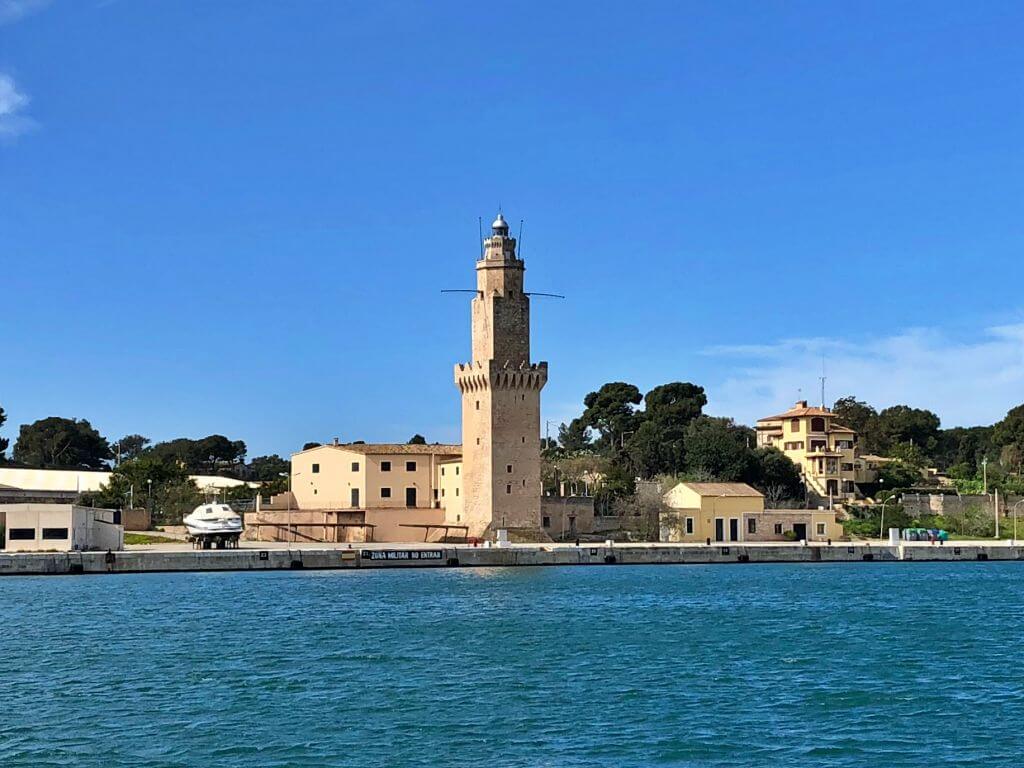
Where · Dique del Oeste, Palma
History · Recorded since 1300, at the current tower since 1617
Getting there and where to see it · Restricted port area
Visiting · Book ahead for the exhibition
The lighthouse is mentioned in a document dated 1300. Its original site is now occupied by Sant Carles fort. Cannon fire shattered the glass of the lantern, so in 1617 the light moved to the Signal Tower. Balls raised on the tower already signalled where boats came from and how many were entering the harbour. It’s one of Spain’s oldest working lighthouses.
Inside is a maritime signals exhibition, where large lenses and lamps show how lighthouses work. The visit does not include climbing the tower. Book through the Balearic Port Authority (in Spanish). The meeting point is outside the Dique del Oeste access checkpoint.
You can also visit the Sant Carles Military History Museum (in Spanish) just before the port entrance, with views across Palma Bay.
You might also like