A family travel guide to Mallorca would be incomplete without a detailed walk around our capital. In 2015, the British newspaper The Sunday Times named Palma the best place in the world to live. One of the things it singled out was how well the city lends itself to family life.
Here’s an easy walk that takes in Palma’s highlights with children and lets you in on some of its best-kept secrets. You can follow it at your own pace.
We start our walk at Parc de la Mar
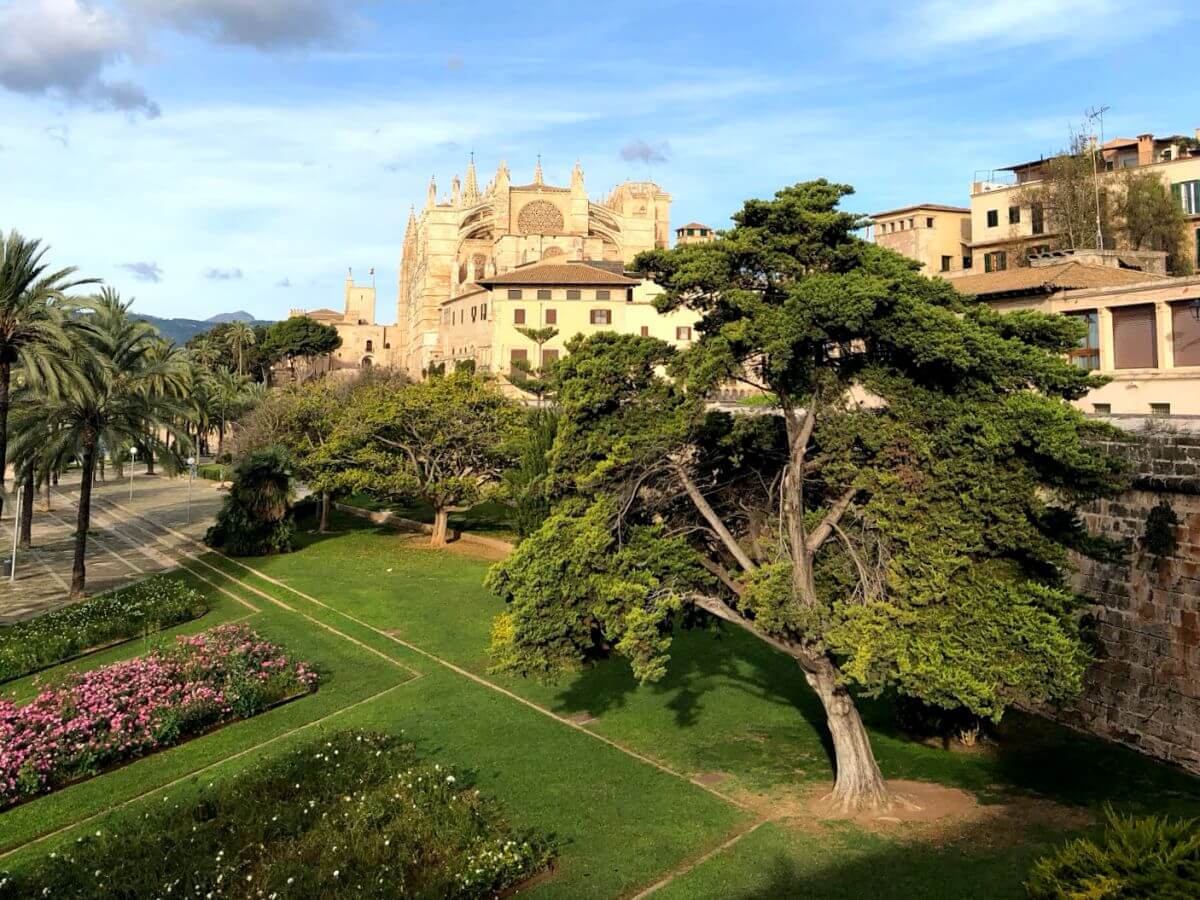
If you’re coming by car, we recommend using the Parc de la Mar underground car park, next to the park (in Spanish) where our city walk begins.
One of the best things about the park is its location at the foot of Palma Cathedral. It’s a spacious area with an artificial lake that reflects the cathedral, a large playground with a giant slide, grass and plenty of shade.
A “crocodile” in Parc de la Mar that children will love
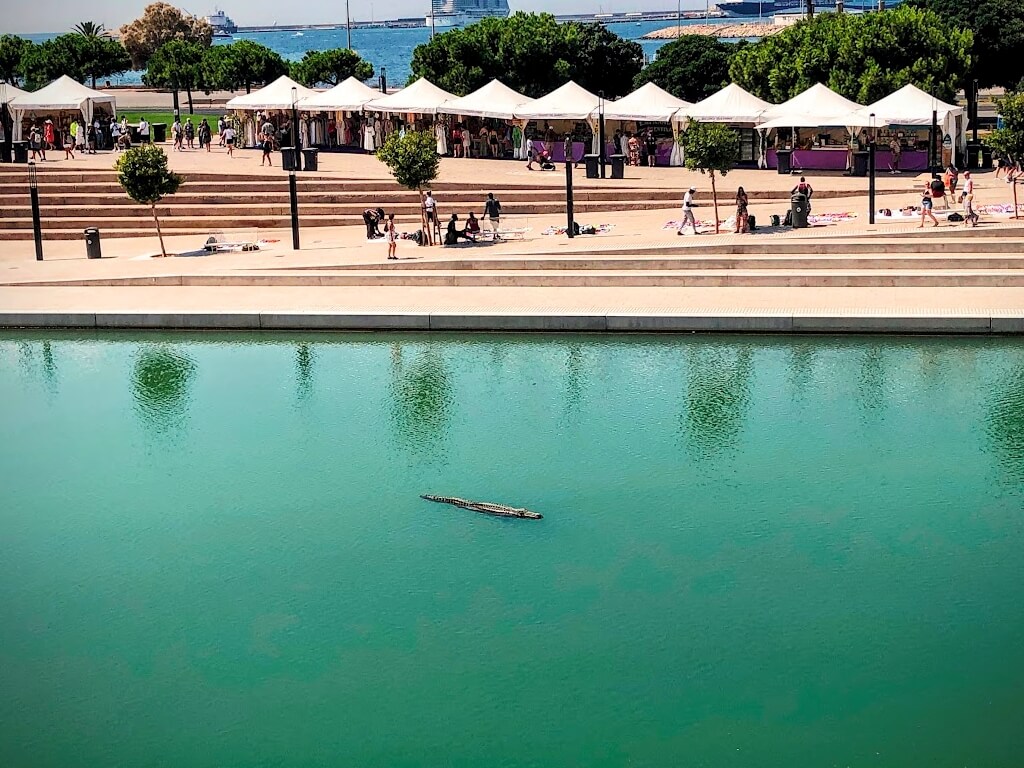
In the lake at Parc de la Mar, look out for a floating sculpture that drew plenty of attention when it was installed in 2025. It looks like a crocodile, but it’s really the Drac de na Coca. It’s the work of artist Ricard Chiang, measures about three metres, was made from hard-wearing materials that float and was anchored to the bottom of the lake.
The sculpture brings an old Palma legend back to life. The mysterious creature was first thought to be a dragon, though it might have been a crocodile that arrived by boat centuries ago. Chiang wanted to surprise people and spark the imagination of anyone who spotted it.
The artist donated the sculpture to the city. It brings together local history, culture and contemporary art and was presented during Palma’s bid to become European Capital of Culture in 2031.
S’Hort del Rei gardens
From here, head to the start of Avinguda d’Antoni Maura, where you’ll find S’Hort del Rei gardens. They sit just below the Royal Palace of La Almudaina and were once part of the castle grounds.
Until a few years ago, many Mallorcans came here for photos after special occasions, particularly weddings and first communions. It’s busier with visitors these days and still has its charm. Among the plants and sculptures, look for El Foner, Llorenç Rosselló’s figure of one of the legendary Balearic slingers. Just behind it is the entrance to a small pond that was once home to two beautiful swans.
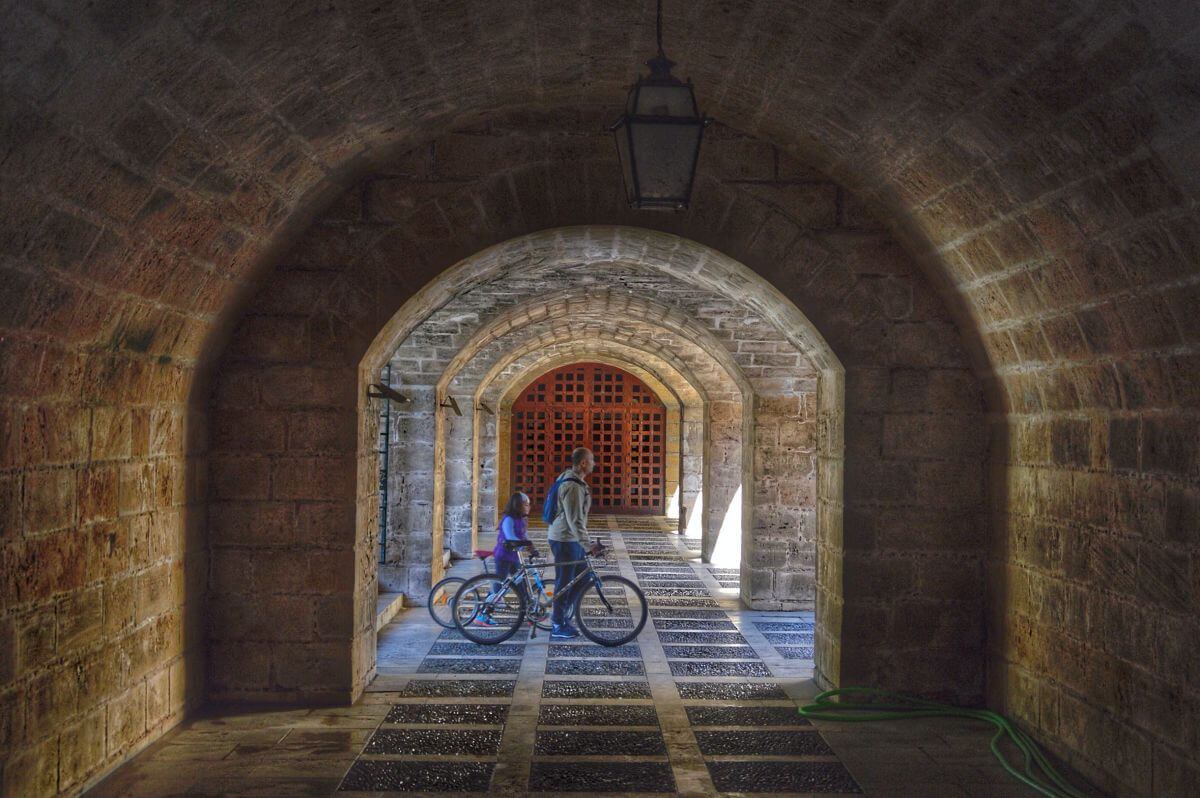
To the left of the gardens, before you reach Plaça de la Reina, you’ll see the steps known as Costa de la Seu. You can take them if they’re open and you’re walking without a pushchair. With a pushchair, take Carrer del Conquistador on your left and turn right when you get to the top.
Palma Cathedral and La Almudaina Palace
When you get to the top, look to your right for Palma Cathedral in all its glory and the exterior of La Almudaina Palace.
There’s a lovely lookout here over Parc de la Mar, with the sea beyond. You can often see sailing boats in the distance.
Ask the children to look up and see how many different gargoyles they can spot on the cathedral. Legend has it that they were there to scare away evil spirits.
The animals on Palma City Hall
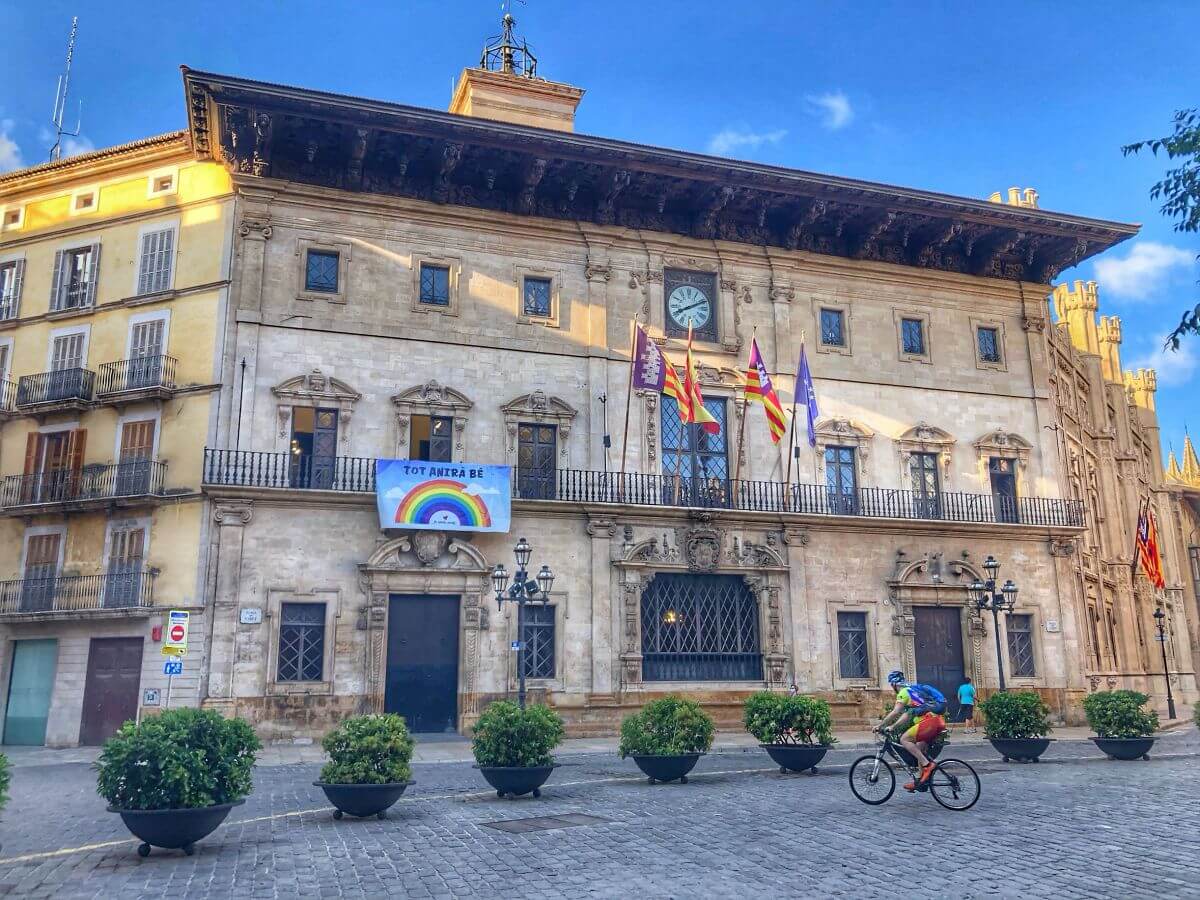
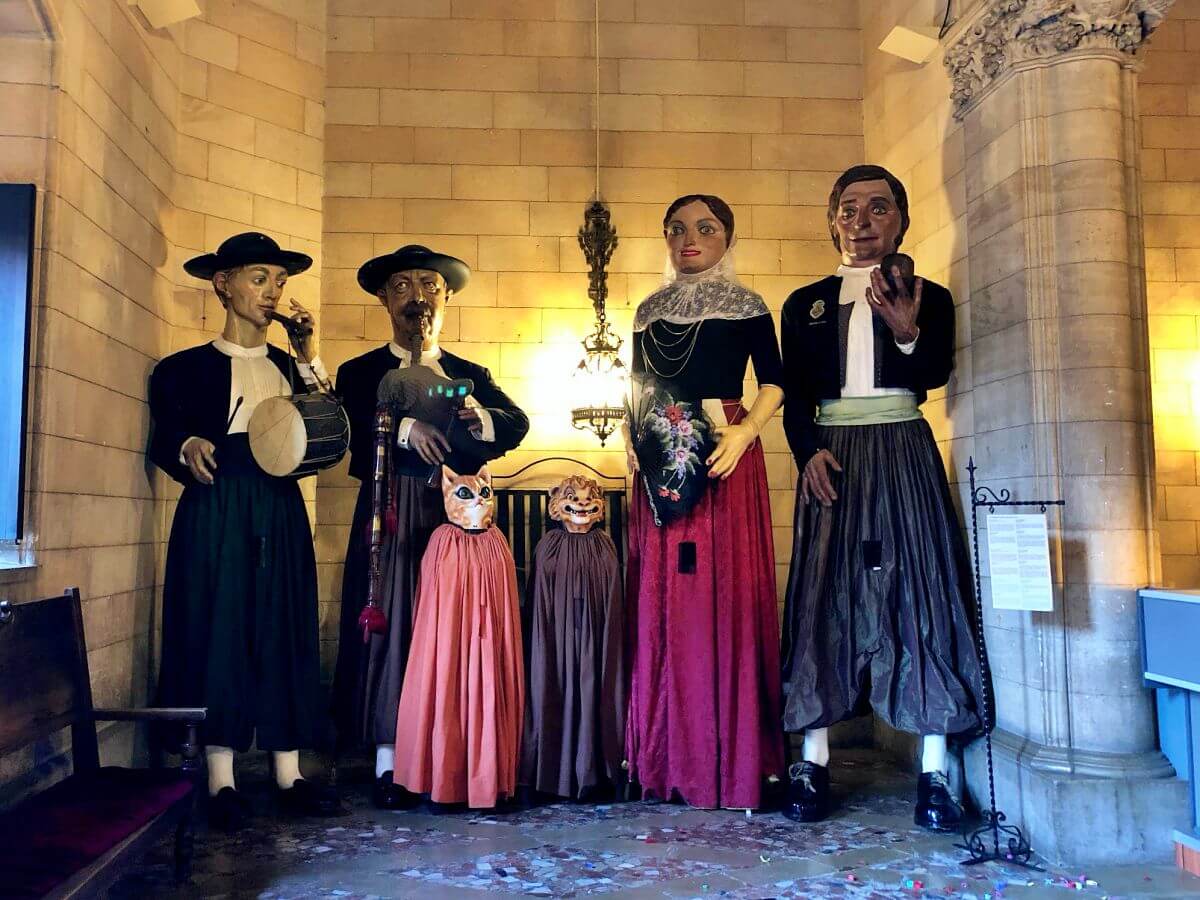
Go back along the same street and carry straight on past the turn for the steps to reach Plaça de Cort and the City Hall. Just before the square, look on the right for the Palau del Consell, home to Mallorca’s island council. If the entrance hall is open to the public, pop in and ask about the council’s giant figures: Jaume II, Esclarmunda de Foix, Jaume III and Sanç I. The Consell also offers guided tours for groups.
At City Hall, there’s a game for the children before going inside. The Baroque façade is full of curious details. Look for a dragon and a snail, one on either side of the pilasters near the jambs of the left-hand doorway.
The two carvings represent the nicknames of two of the builders who worked on City Hall between 1649 and 1680. Tell the children what to look for and see if they can spot them. Inside, look for the grand staircase and its wooden banister. The building houses the giants Tòfol and Francinaina, two traditional xeremiers or bagpipers, the big-headed figures that enliven local festivals and the legendary Drac de na Coca. Check with City Hall about access and which figures are on display on the day you visit.
In the same square stands the Olive Tree of Cort. It was transplanted in 1989 from Pedruixella Petit, in the Tramuntana mountains near Pollença, and planted here as a symbol of peace and local roots. When the owner found out where it was going, he gave the tree to the city. Look closely at the trunk for the shape known as the “Ear of Mallorca” and the face of a witch or an old woman.
Our Plaça Major
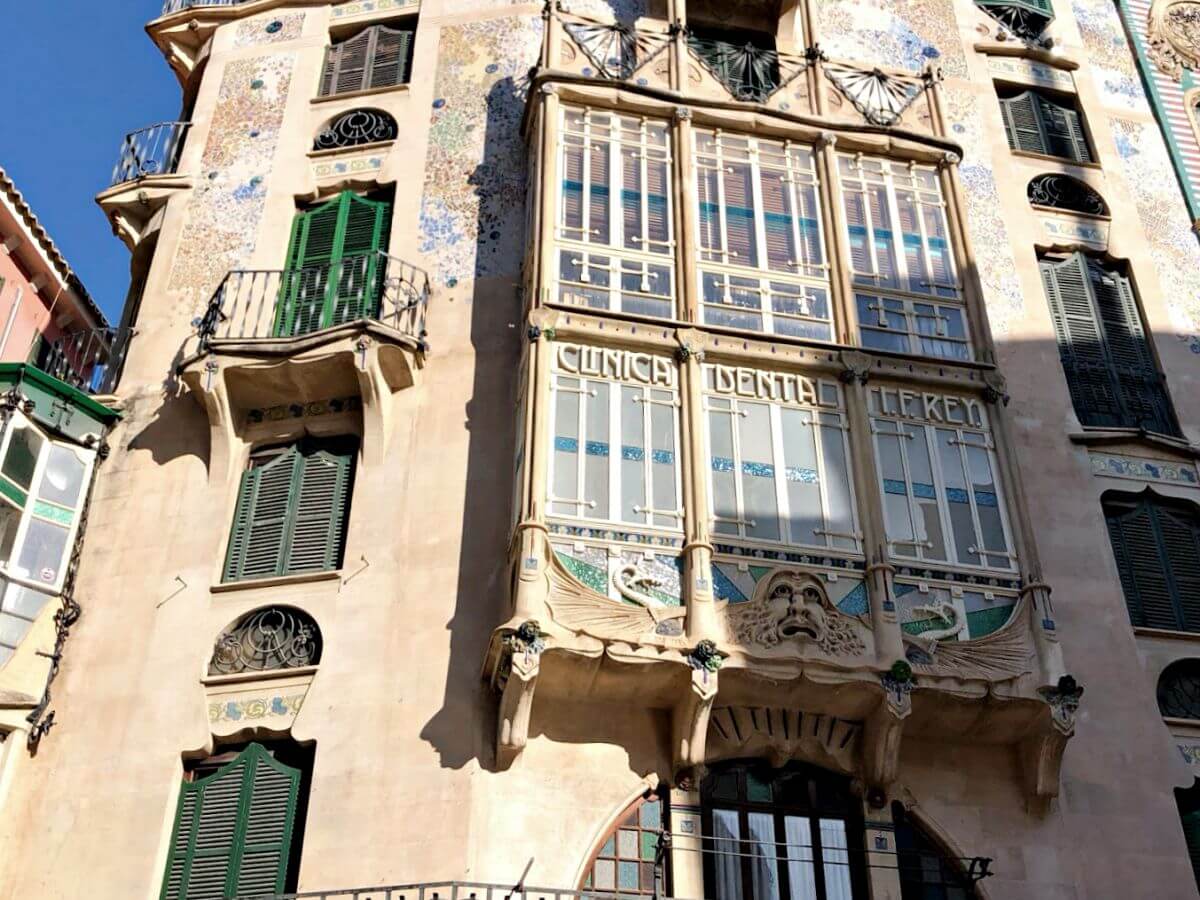
Now follow Carrer de Colom to Plaça Major. Just before the square, stop to admire Can Forteza-Rey, one of Palma’s most distinctive Modernista buildings. There’s a face that looks as though it’s smiling, which tends to catch children’s attention.
Every capital deserves a lovely main square and Palma is no exception. The rectangular Plaça Major is framed by buildings up to four storeys high. There’s plenty of space, several restaurants and stalls selling local crafts on market days.
Shopping streets surround the square. Challenge the children to find a colourful bird drawn on one of its façades after the last restoration. Street performers often gather here too.
Plaça de l’Olivar
Head towards Carrer de Sant Miquel, one of Palma’s main shopping streets. Along it you’ll find the Basilica of Sant Miquel, considered one of the city’s oldest churches. Inside is the shrine of Our Lady of Health (Mare de Déu de la Salut), Palma’s patron saint. According to legend, King Jaume I brought the image here on his galley in the 13th century.
Plaça de l’Olivar is just a short walk from the church. Stop at the Mercat de l’Olivar, one of Palma’s traditional markets. The colourful fruit stalls and the refurbished fish hall are worth seeing. Try a small plate of calamari at one of the market bars, or go for oysters with cava or sushi.
Plaça d’Espanya, a meeting place
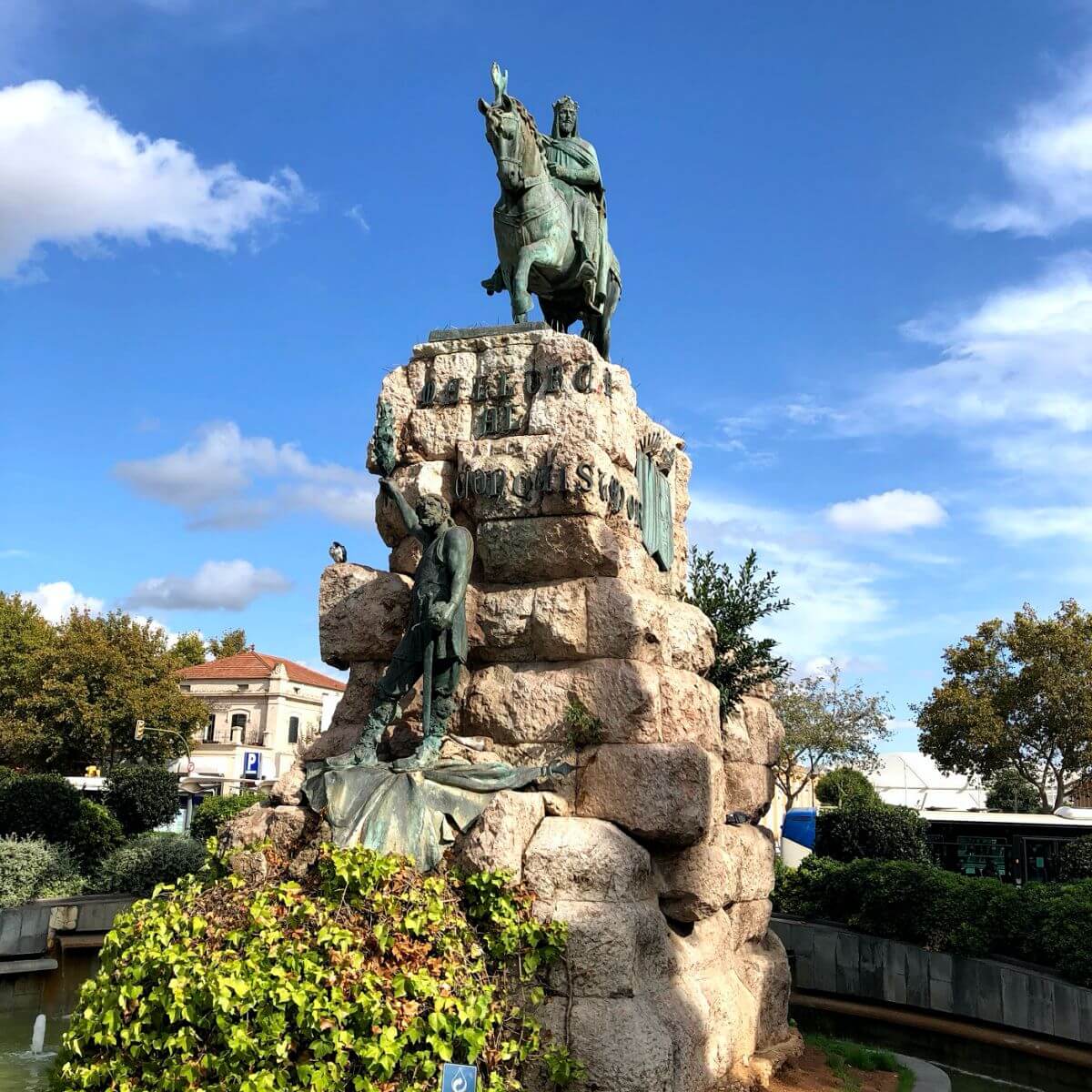
We’re close to Plaça d’Espanya, a popular meeting place for locals with restaurants and bars. Look for the equestrian statue of Jaume I and Gaspar Bennàssar’s barometer, restored when the square was refurbished in 2024.
Nearby is the Augusta cinema, one of the few still open in the centre. You’ll also find the main city bus stops and the Estació Intermodal, Mallorca’s main train and metro station.
Close by is the spacious Parc de ses Estacions, which has two playgrounds, a large one and a smaller one for younger children.
La Rambla
Start the return leg along Carrer dels Oms, which is directly behind you as you face the statue of the king. Walk down the street to the start of La Rambla. It’s another of the loveliest parts of Palma, and the flower stalls bring the promenade to life.
Follow La Rambla to the far end until you reach the steps up to Plaça Major. Turn right here for Plaça del Mercat. Before you get there, look left for the Teatre Principal, one of the city’s oldest theatres and the venue for Palma’s first cinema screening.
The Gran Hotel
At Plaça del Mercat, make sure to look at the Gran Hotel building, now home to CaixaForum Palma. It’s a beautiful example of Modernista architecture by Lluís Domènech i Montaner, completed in 1903. You can find temporary exhibitions and children’s activities in the CaixaForum Palma programme.
The Turtle Square and Passeig del Born
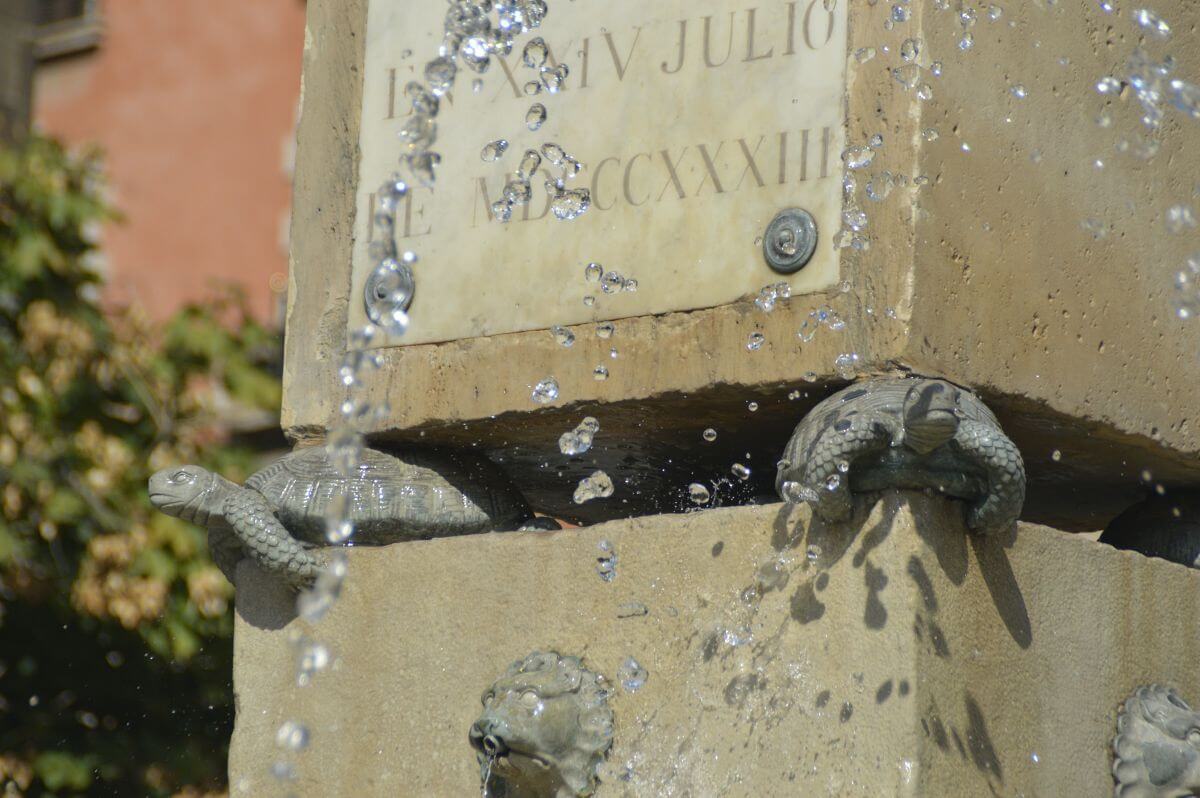
Now follow Carrer de la Unió to Plaça del Rei Joan Carles I. Locals call it the Turtle Square, and it’s where we celebrate Real Mallorca’s football titles. Look for the sculpted turtles at the foot of the obelisk and the bat at the top, one of the symbols on the city’s coat of arms.
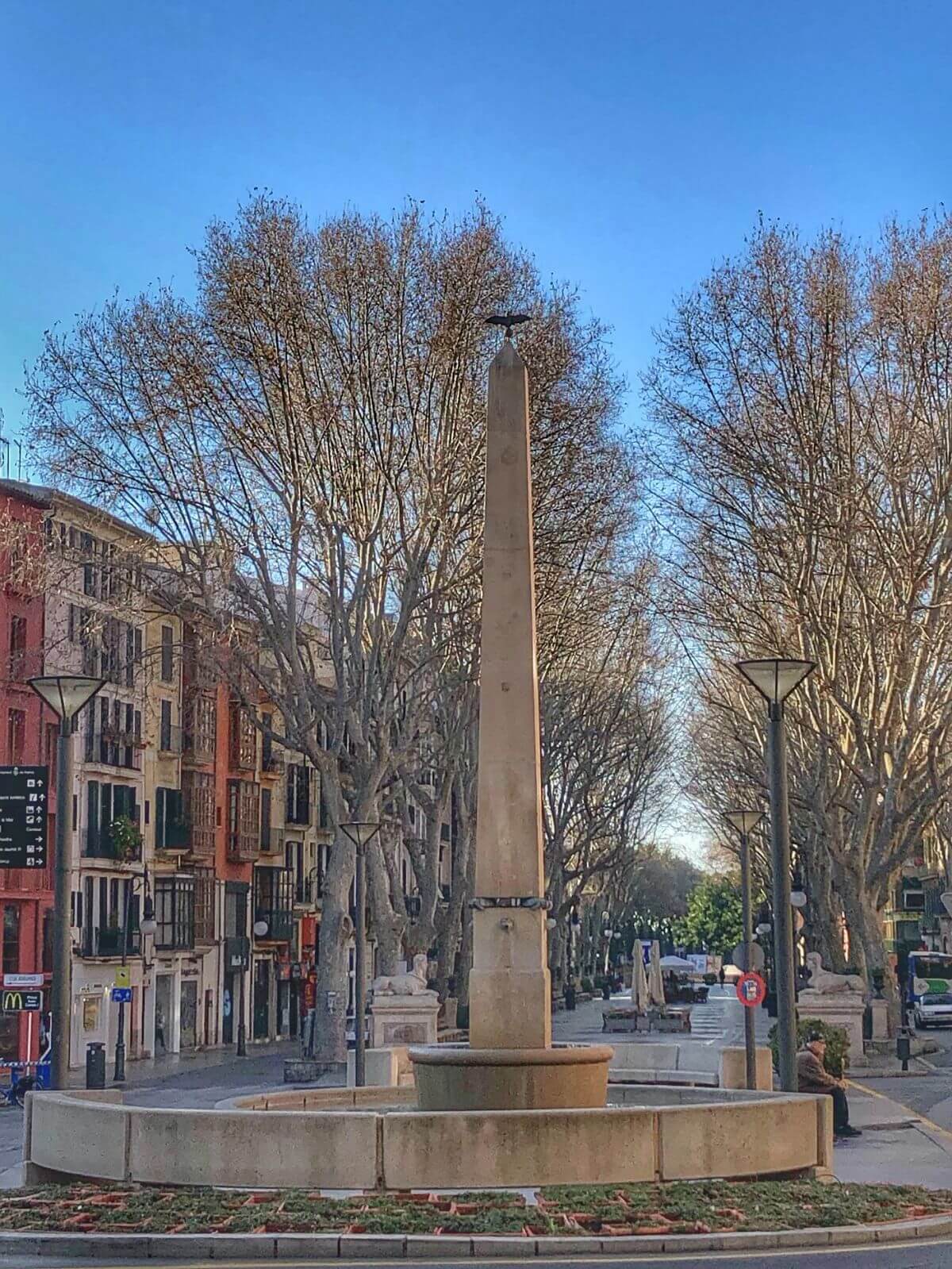
To finish the walk, follow Passeig del Born. If you have time, pop into Casal Solleric, a free exhibition centre inside a traditional Mallorcan palace.
At the end of the promenade, you’ll reach Plaça de la Reina with its lovely fountain. Carry straight on to get back to Parc de la Mar and collect the car.
Palma with kids walk at a glance
Area: Palma.
Suggested age: 4 and up.
Start: Parc de la Mar.
Difficulty: Easy.
Route: Circular.
Time: 120 minutes, with options to make it longer or shorter.
Parking: Yes, paid underground parking.
Facilities: Everything you’d expect on a city walk.
Pushchairs: Yes.
Baby carrier: Yes.
Advertisement
You might also like