The walk from s’Estanyol to s’Estalella Tower, in the municipality of Llucmajor, follows the sea past a small landing place, former fishermen’s cottages, a navigation beacon and a coastal watchtower. It is a varied coastal outing for families, with care needed on the rocky ground.
Where our walk from s’Estanyol started
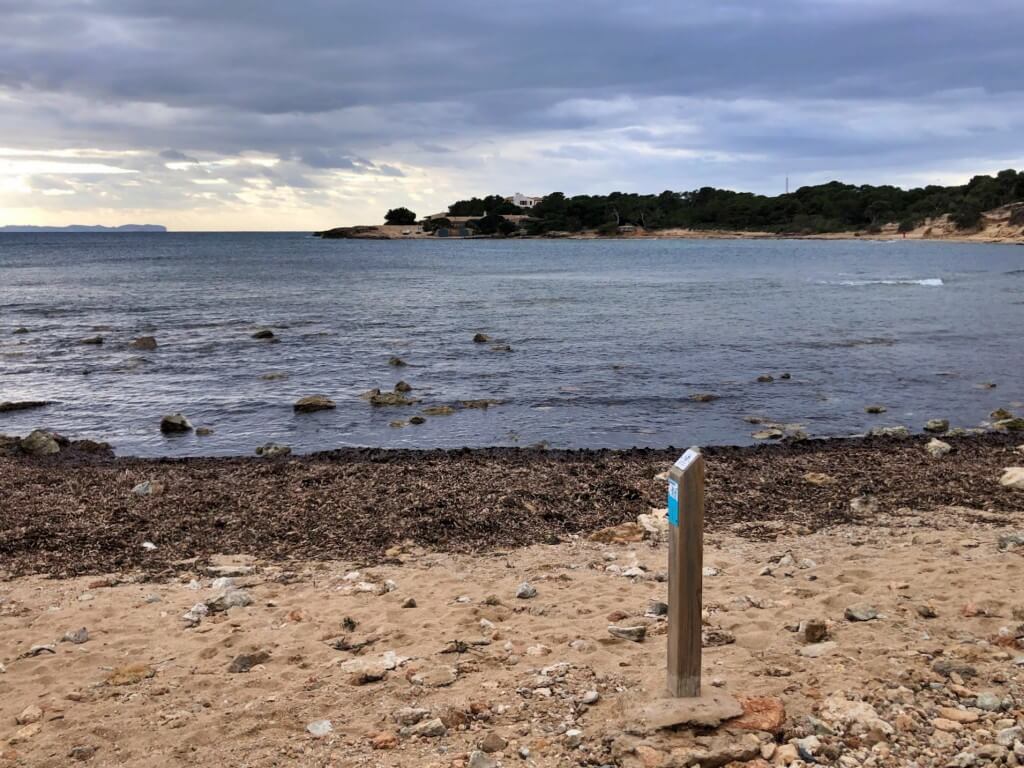
We started in s’Estanyol de Migjorn and parked near the Club Náutico de s’Estanyol. Finding a space is usually easier outside the main season, but always follow parking signs and keep access clear.
Our walk began at es Racó de s’Arena, the small beach beside the marina on Via de la Mediterrània, s/n. We found an information board at the entrance to the cove. These are the landmarks for the starting point we used.
We found six points of interest on our visit:
- Machine-gun emplacement.
- Small landing place.
- Fishermen’s cottages.
- S’Estalella lighthouse.
- S’Estalella Tower.
- Cova de sa Torre, in front of the tower; descent optional.
We followed part of municipal walking route no. 6. Low wooden posts carried a green number 6 on a blue background when we visited. The municipal itinerary continued towards Vallgornera, in the direction of Cala Pi; we turned back at the tower. Our route stays beside the coast, rather than taking shortcuts inland through the estate.
As documented by the GOB, paths within the estate have been fenced off. Our walk follows the coast: respect the fences and avoid inland shortcuts. Fencing may narrow the passage or lead it over rougher rocks; take care and avoid trampling vegetation.
Machine-gun emplacement and landing place
We crossed the beach and followed the shoreline. The posts helped us choose between different paths, and beside one was a wooden sign reading “FAR”, meaning lighthouse. Waves can affect access across es Racó de s’Arena: if the sea blocks the way, do not force a crossing or improvise shortcuts over the rocks.
Within a few minutes we reached the machine-gun emplacement. It was in poor condition and dirty on our visit, but interesting to look at from outside.
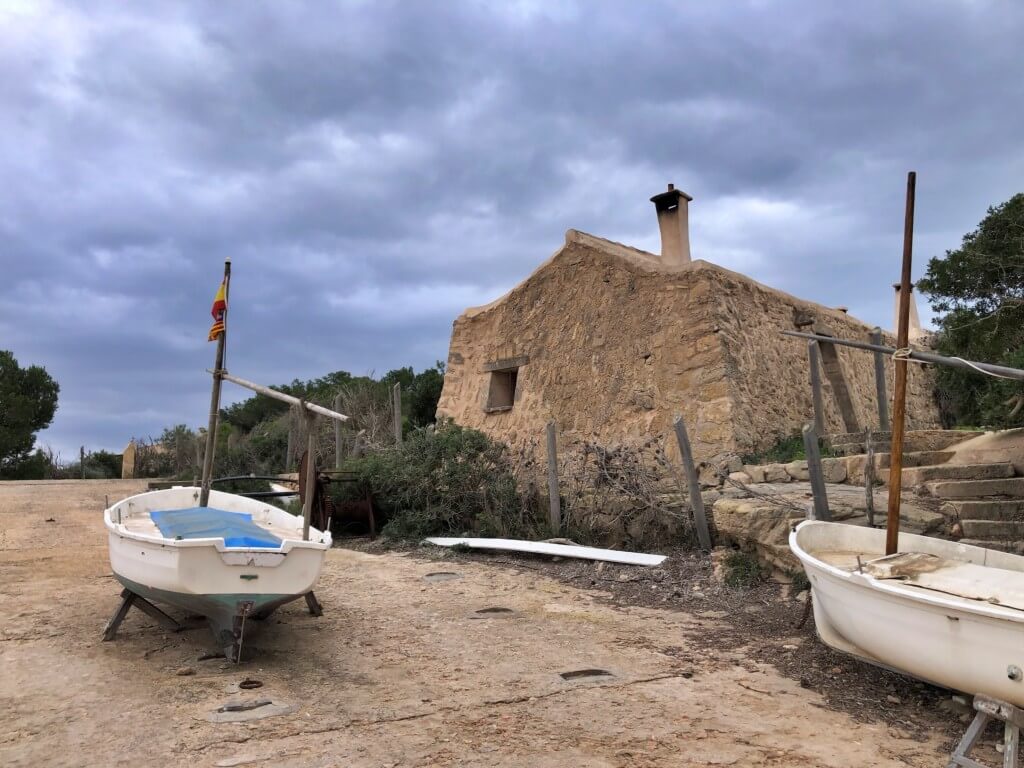
A little further on was the small landing place at sa Punta de s’Estalella, one of the most distinctive spots along the route.
S’Estalella lighthouse and fishermen’s cottages
Following the posts, we passed several restored fishermen’s cottages. Some are used as tourist accommodation. The former fishing settlement is a protected Asset of Cultural Interest for its ethnological value, as recorded in its official heritage designation (in Spanish). View the buildings from the route and respect private areas.
We crossed a former marès sandstone quarry, where small pools form among the rocks, and passed more cottages. Marès is widely used in traditional Mallorcan buildings. For more places like this, see our guide to natural rock pools in Mallorca (in Spanish).
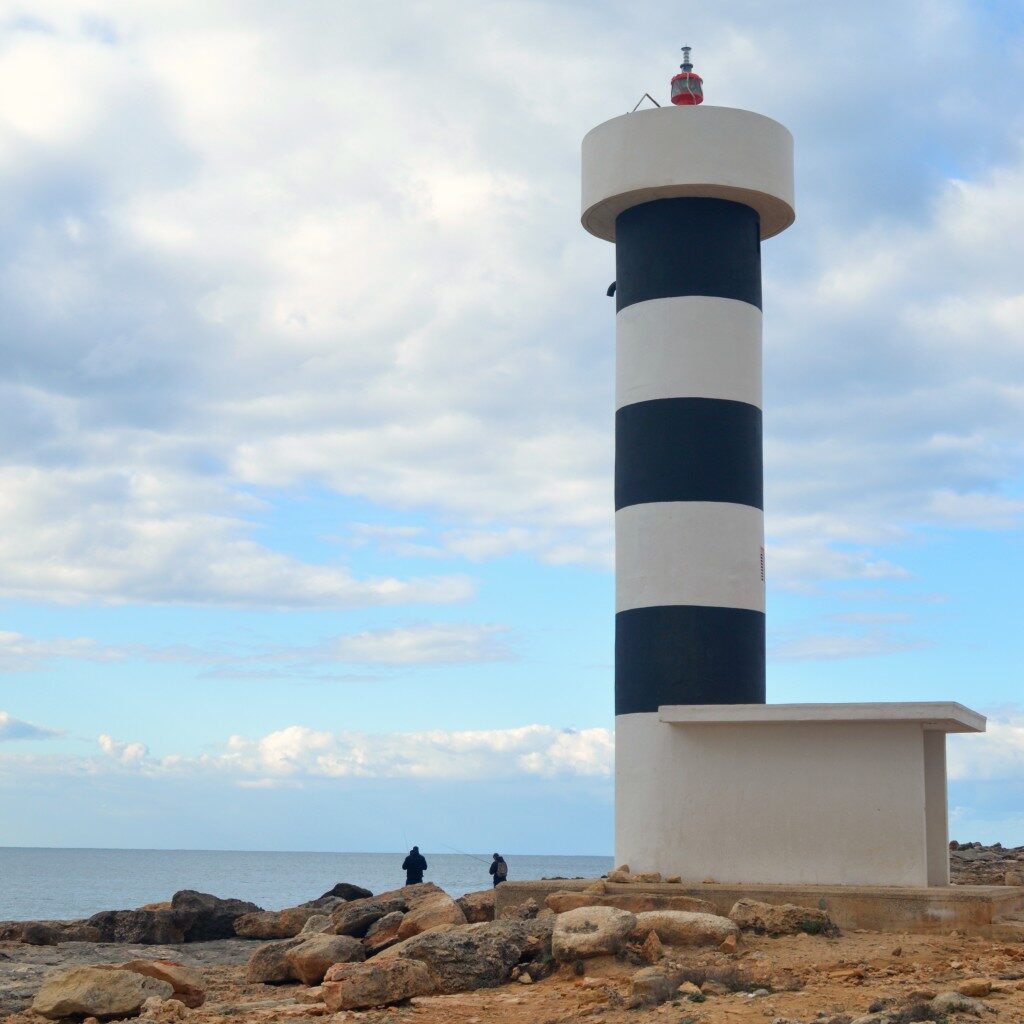
Soon afterwards we reached the familiar s’Estalella lighthouse, whose shape resembles the navigation light at Colònia de Sant Jordi. Our guide to Mallorca’s lighthouses has more ideas for outings with sea views.
Although commonly called a lighthouse, the settlement’s official heritage documentation refers to it as the s’Estalella beacon. It is a navigation mark: the small blue-and-white tower seen here differs from larger lighthouses with a keeper’s house.
From here we enjoyed views towards Cabrera, particularly rewarding on days with good visibility.
S’Estalella Tower and Cova de sa Torre
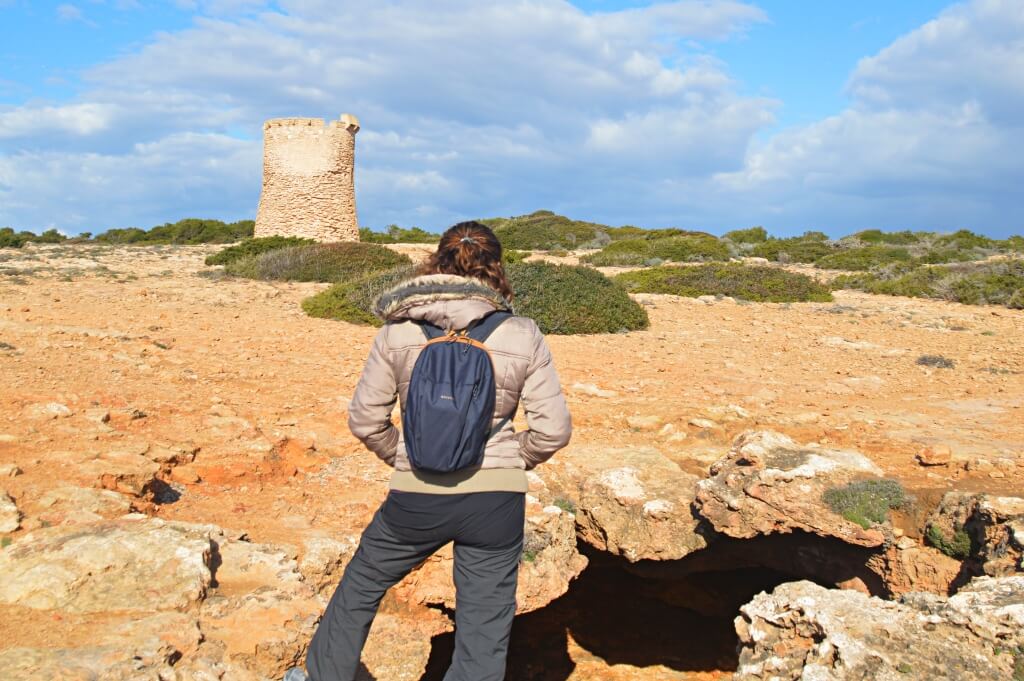
The tower was already visible from the beacon. We continued along the coast through largely undeveloped surroundings and took 15–20 minutes from the light to the tower. Allow extra time to stop and enjoy the scenery.
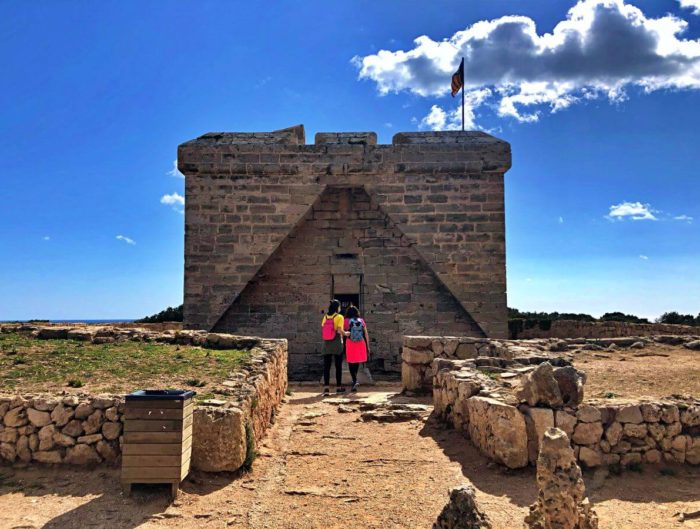
S’Estalella Tower is part of Mallorca’s network of coastal watchtowers. Llucmajor Town Council restored it in 1984. It can be viewed from outside; the interior is not open to visitors. Other walks on our website explore more towers and their lookout role.
S’Estalella Tower was built in 1577 by master builder Simó Carrió. Its upper half is cylindrical and its lower half conical. It stands 9.2 metres high, with a base 7.64 metres in diameter, according to Llucmajor’s municipal watchtower information (in Spanish).
The coastline continues towards Vallgornera and Cala Pi. We chose to turn back at the tower. Going further makes the walk considerably longer and involves other sections that should be planned separately.
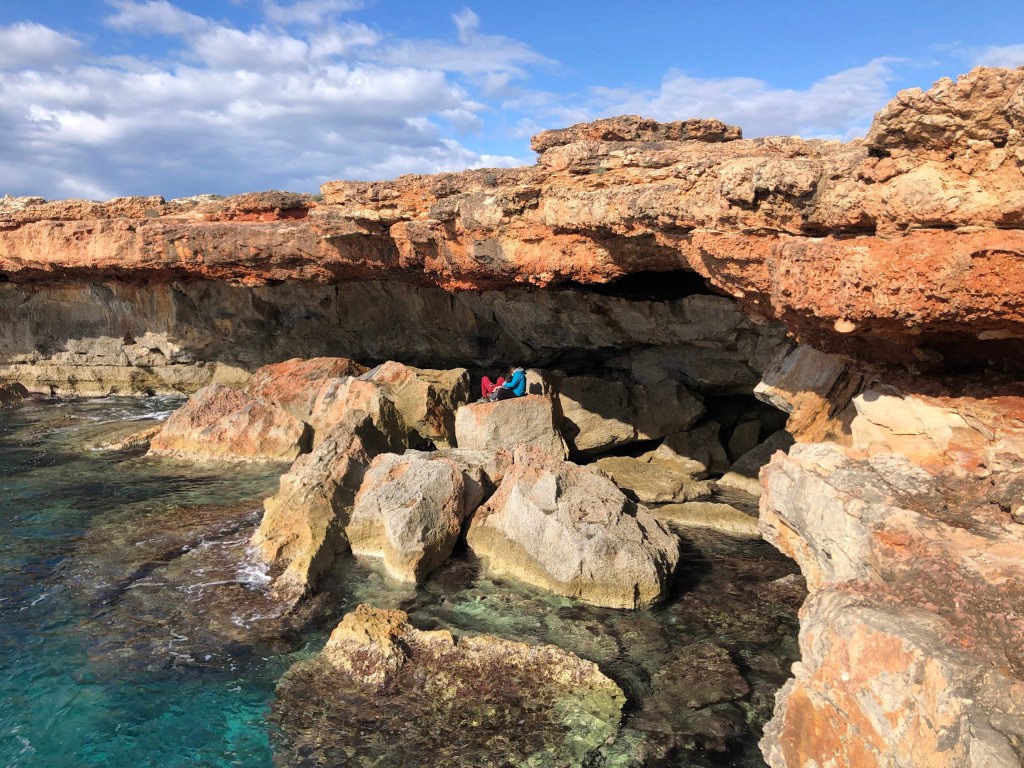
Before returning we found another surprise: a large opening in front of the tower, facing the sea, leads to Cova de sa Torre. We have kept it as a landmark, but descending is optional and is outside the recommended family walk: there are drops, uneven rocks and exposure to waves. With young children, view the surroundings from a safe position, keep away from the edge and do not descend into the cave.
We returned to the car along the same coastal path, enjoying different views of the landscape on the way back.
S’Estanyol to s’Estalella Tower walk facts
Frequently asked questions
How long does the walk to s’Estalella Tower take?
Our coastal out-and-back walk is around 5 kilometres and takes roughly 90 minutes of walking. Allow extra time for stops and adjust the pace to your children.
Can you go inside s’Estalella Tower?
No. The tower can be viewed from outside; our visit did not include access to the interior.
Is the walk suitable for pushchairs?
No. The ground is uneven and rocky, so we do not recommend doing this walk with a pushchair.
You might also like