
Valldemossa, Port de Sóller, Cala Pi and other places in Mallorca form part of the world of La caza. Tramuntana. The second season of the series, released in 2021, made the island’s landscape more than a backdrop: its villages, harbours and traditions help shape the story.
Here we bring together Mallorca filming locations and places connected with the series, with ideas for visiting and details that caught our attention while watching. We avoid revealing how the case ends, although we mention situations that help identify the settings.
You do not need to have watched the series to enjoy these places. Nor should you try to fit them all into one day: they are spread across different municipalities and deserve outings with time to wander.
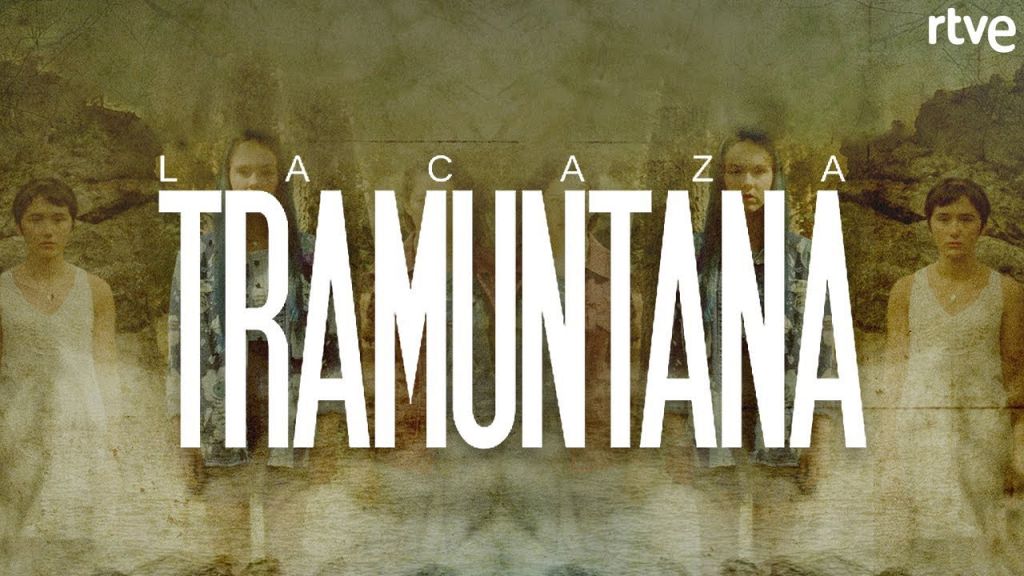
The first season, La caza. Monteperdido, was set in Aragón, with exterior scenes in Benasque and Cerler, in Huesca’s Ribagorza region. In Tramuntana, Valldemossa stands in for the fictional village at the centre of the investigation. Filming combined Mallorca locations with work in Madrid.
Guardia Civil sergeant Sara Campos, played by Megan Montaner, returns to an island where she spent part of her childhood. That connection to Mallorca is important to understanding her past. Alongside her are Víctor Gamero (Alain Hernández), Sergeant Selva (Félix Gómez) and characters such as Madó Teresa, played by Mallorcan actress Llum Barrera.
The saga continued with Guadiana and Irati, and Movistar Plus announced La caza. Gomera, set on the Canary Island. The cases and landscapes change, but Tramuntana remains part of Sara Campos’s story and a lovely reason to rediscover Mallorca.
Valldemossa: the fictional village of Tramuntana

The main setting is Valldemossa. Its stone streets and corners such as plaça de la Cartoixa, Miranda des Lledoners and the old washhouses on carrer de Catalina Homar appear repeatedly.
Explore on foot, noticing the façades, small squares and valley views. Our guide to things to see and do in Valldemossa has more ideas for your visit.
Miramar and the Trinitat hermitage

The settings in this area include Miramar and the Santíssima Trinitat hermitage. These are different places near Valldemossa: RTVE connects the hermitage with scenes involving Dani and Julia, while the Miramar estate also offers an introduction to an important part of Mallorca’s history.
The monastery and language school at Miramar were founded in 1276, on the initiative of Ramon Llull with the support of King Jaume II. In 1872, Archduke Ludwig Salvator of Austria bought the property, the first of his estates in the Serra de Tramuntana.
Miramar is roughly five kilometres from Valldemossa on the road towards Deià. We still recommend the house museum, gardens, sea viewpoints and the seven bridges shown in our photograph. This is a private property with paid visits and parking; confirm which areas are open and the visiting conditions. The Valldemossa tourism information (in Spanish) distinguishes the two sites.
For a walk, see our Valldemossa hermitage circular route. Respect the silence and the hermits’ way of life. Another outing nearby takes you to Cala Deià.
Sa Calobra and the Torrent de Pareis

Sa Calobra plays an important part in the case previously investigated by Víctor Gamero. RTVE includes it among the places connected with the story, although it has less screen time than other settings.
It belongs to Escorca. The small settlement of Sa Calobra is distinct from the pebble beach at the mouth of the Torrent de Pareis, reached along the seafront path and through the tunnels.
The Pareis, Gorg Blau and Lluc torrents were declared a natural monument in 2003. Visiting the river mouth is different from tackling the demanding gorge crossing. Here is our guide to visiting Sa Calobra and the Torrent de Pareis (in Spanish).
Port d’Andratx

A phone call and an escape place another part of the action in Port d’Andratx. The harbour retains a working fishing side, with its fish market, boats and nets, alongside the more tourist-oriented waterfront.
Nearby coves include Cala Llamp and Cala Egos. They are not all sandy beaches: rocky shores and small inlets are part of this coastline’s appeal.
The promenade makes a pleasant family stroll, with boats to watch and somewhere to stop for an ice cream. During our visit, the ducks moving between the water and the shore also caught our attention. Restaurants and views complete a gentle outing.
Port de Sóller and Cap Gros or Muleta lighthouse

Port de Sóller features in several scenes, including an amusing detail for anyone familiar with Mallorca: during a chase, a character turns a corner and emerges in Cala Pi. In reality, Cala Pi is in Llucmajor, far from the harbour. That is the magic of editing!
The port has two beaches, a waterfront promenade, the Museu de la Mar and an unusual way to arrive: the Sóller tram. Cap Gros and sa Creu mark the entrance to the bay, alongside the old sa Creu lighthouse. Walks nearby include Torre Picada and camí de sa Figuera.
We are also keeping our sweetest recommendation: Fet a Sóller ice cream, particularly the Sóller orange flavour.
Cap Gros lighthouse, also known as Muleta lighthouse, appears in wide and aerial shots and in a significant scene. You can take the road up from the port or walk; the walk is uphill and the time needed depends on your starting point and pace.
The Muleta Refuge is close by. Overnight stays and meals must be booked in advance. There are also outdoor tables nearby for a break or picnic, following the signs and local conditions. See our mountain huts guide and Sóller to Muleta Refuge walk for more information.
Cala Pi

Cala Pi beach provides another recognisable Tramuntana landscape: turquoise water, rock walls and fishermen’s boathouses in a narrow, deep inlet.
It is in Llucmajor, roughly 17 kilometres from the town centre. Its name refers to the pine trees. Reaching the sand involves a long staircase of around 147 steps; remember the climb back up if you are visiting with small children. This is not an easy pushchair access.
The beach is roughly fifty metres wide, with the escars boathouses and the stream mouth nearby. The settlement above has accommodation, shops and restaurants, so it should not be pictured as a completely isolated cove.
The Torre de Cala Pi overlooks the inlet, part of the coastal defence system against corsairs and pirates. The Talayotic settlement of Capocorb Vell is nearby and offers another way to round off a day in this area.
Port des Canonge and Son Bunyola

Port des Canonge, in Banyalbufar, is another confirmed exterior filming location. Fishermen’s boathouses, boat ramps and reddish rocks give it a very different character from the larger harbours.
The shore is stony and may have accumulations of washed-up Posidonia seagrass. Summer brings more visitors, but it remains a lovely place to pause and watch the sea. Access is along a narrow, winding road, and there are a few restaurants in the settlement.
We particularly recommend arriving on foot along sa Volta des General from near Banyalbufar: an enjoyable outing for families used to walking.
Next to it is Son Bunyola beach, with pebbles and reddish cliffs. This coast’s sandstone preserves an ancient geological heritage, including documented fossil tracks. Children can enjoy looking closely at the rocks, without taking stones or disturbing the remains.
Other exteriors: RTVE also documents Cala Tuent and the s’Entreforc viewpoint as filming settings, and mentions the Santa Ponsa viewpoint and Esporles in connection with the episodes. Check its guide to the locations (in Spanish) and production information (in Spanish).
Mallorcan traditions in La caza. Tramuntana

The season draws much of its atmosphere from Mallorca’s cultural heritage. Away from the thriller’s unsettling use of these elements, they are part of the island’s living traditions.
The Cant de la Sibil·la
This chant of medieval tradition is performed at Christmas Eve services in many Mallorcan churches. The singer wears ceremonial clothing and carries a sword. The sibyl comes from the classical world, and her prophecy was incorporated into the Christian idea of the Last Judgement.
Mallorca’s Cant de la Sibil·la has been on UNESCO’s intangible cultural heritage list since 2010. The reference can be recognised in the opening minutes of the season.
Siurells
Siurells are fired-clay figures with a built-in whistle. Their best-known appearance combines white with green and red brushstrokes, although there are other variations. Women have played an important role in making them, particularly in the workshops of Marratxí.
They have served as toys and objects of popular culture, taking the form of people, animals or devils. In the series, a devil-headed example is connected with Sara’s recurring dreams.
Caparrots
Caparrots, or large-headed figures, appear alongside gegants at festivals in many Mallorcan towns. Each place has its own characters, sometimes drawn from oral tradition or recognisable local figures.
The Museu de Sant Antoni i el Dimoni in Sa Pobla introduces this tradition and its characters. In Tramuntana, a caparrot features in the scene that sets the investigation in motion, and these figures become important to the story.
Olive trees, other trees and set dressing
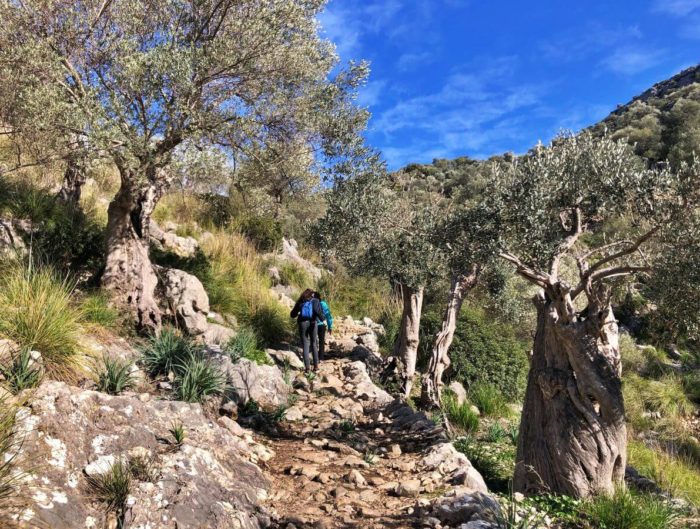
Olive trees with twisted trunks are part of the Serra de Tramuntana landscape, alongside terraces and old estates. Olive oil production has a long history on the island and its own protected designation of origin, Oli de Mallorca.
In plaça de Cort in Palma, there is a tree whose shapes we enjoy examining: with a little imagination, you can make out a witch’s face.
It is also worth distinguishing the landscape from props. The large trunk installed in Valldemossa for filming should not be sought as a permanent tree on the walk: local reporting documented its installation near the Cartoixa (in Spanish) and described it as a carob trunk. It was set dressing, rather than an olive tree belonging to that square.
The “Cúber lake”: fiction and the real reservoir
In the fifth episode, several young characters go swimming at the “lake”; in episode seven, it is named as Cúber. Cúber Reservoir does exist, but the swimming scene does not depict that location. It is another example of the series taking geographical liberties. RTVE confirms that part of the season was filmed in Madrid, although we have not found a source identifying the exact location used for this sequence.
Cúber and Gorg Blau are reservoirs in the Serra de Tramuntana supplying drinking water. They are different kinds of places from wetlands such as s’Albufera. Swimming is not allowed in the reservoirs, as stated in the EMAYA visitor protocol (in Catalan).
What we do recommend is the circular walk around Cúber Reservoir, beneath Puig Major. It is a way to enjoy the real landscape while keeping the screen story separate from what visitors can do there.
Planning your visits to the locations
For an unhurried visit, choose one outing for Valldemossa and Miramar, another for Port de Sóller and Muleta, and separate days for Sa Calobra, Port d’Andratx or Cala Pi. Sa Volta des General turns Port des Canonge into a walking day out. Mountain roads, stops and parking make trying to see everything at once impractical.
Frequently asked questions about La caza. Tramuntana locations
Does the village of Tramuntana in the series exist?
Tramuntana is the fictional name of the village in the story. Valldemossa provides its streets and several recognisable corners, but the season uses settings across Mallorca and was also filmed in Madrid.
Can you visit all the locations in one day?
We do not recommend it. The places are separated by mountain roads and journeys of varying length. Group them by area and choose a few stops so you have time to enjoy each visit.
Can you visit the locations with children?
Yes, many villages, waterfront walks and visits work well for families when adapted to the children’s ages and the access conditions. That does not make the series suitable for young children: RTVE Play rates it as unsuitable for under-16s.
Following these locations invites us to look at Mallorca a little differently. Once you recognise a street or a landscape, the best part is staying a while, wandering and discovering what the place offers beyond the series.
Advertisement
You might also like